Table of Content
- Step 1: Decide What Kind of Store You're Actually Building
- Step 2: Choose the Right Platform
- Shopify
- WooCommerce
- Custom / Headless Ecommerce
- Step 3: Understand the Real Cost Structure (Not Just the Sticker Price)
- Step 4: Build the Core Store Structure
- Step 5: Optimize for AI Search and Discovery (New in 2026)
- Step 6: Go Mobile-First, Not Mobile-Responsive
- Step 7: Test, Launch, and Monitor
- FAQ: Creating an Online Store in 2026
- How much does it cost to create an online store in 2026?
- Is Shopify or WooCommerce better for a new store?
- How long does it take to build an online store?
- Do I need a developer to build my online store?
- Can I sell on my online store and a marketplace (like Amazon) at the same time?
- Do I need a mobile app in addition to a website?
- How Digisoft Solution Helps in Create an Online Store in 2026
Digital Transform with Us
Please feel free to share your thoughts and we can discuss it over a cup of coffee.
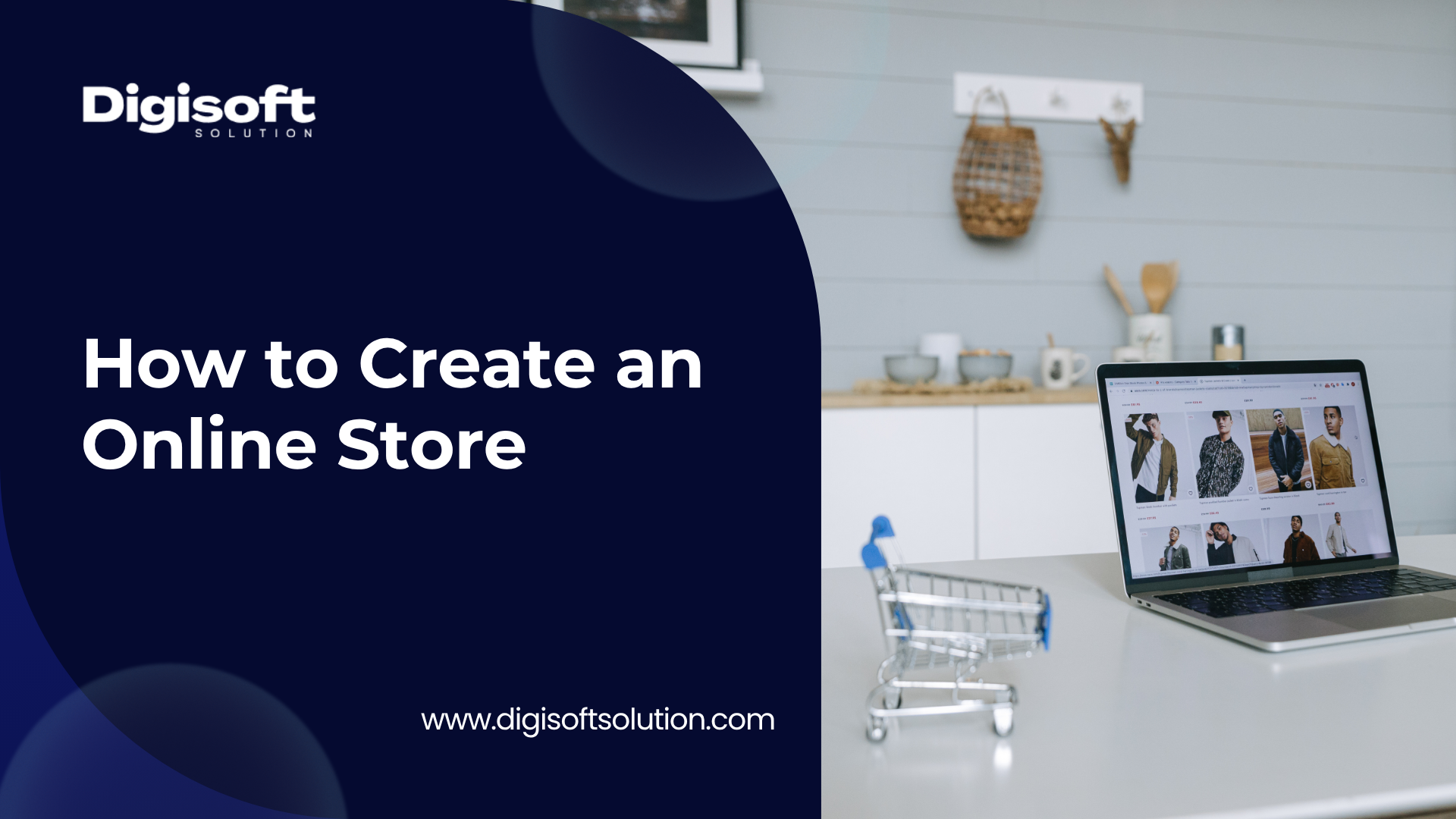
To create an online store in 2026, choose a platform based on your catalog size and growth plans (Shopify for speed and scale or WooCommerce for control and lower long-term cost), set up product listings, payment gateways, and shipping rules, then optimize for mobile, AI search, and checkout speed before launch. Most stores go live in 3 to 8 weeks.
That single paragraph answers the headline question, but "creating an online store" in 2026 is a different exercise than it was even two years ago. AI shopping assistants now influence a meaningful share of purchase discovery, checkout abandonment is still the single biggest revenue leak most merchants have, and the platform you pick locks you into a cost structure that either scales with you or against you. We've built and migrated stores on Shopify, WooCommerce, and fully custom stacks, so this guide walks through the real decisions, not just the checklist.
Step 1: Decide What Kind of Store You're Actually Building
Before touching a platform, answer three questions honestly:
- How many SKUs will you list in year one, and how many by year three?
- Do you need multi-currency, multi-warehouse, or B2B pricing tiers?
- Will a marketing team or a developer be maintaining the site day to day?
A 50-product apparel brand and a 5,000-SKU industrial parts distributor should not be building on the same stack, even though both are technically "online stores." Getting this wrong is the number one reason merchants end up doing a costly re-platform 18 months in.
Step 2: Choose the Right Platform
There is no universally "best" platform. There's a best fit for your catalog, budget, and internal technical capacity.
Shopify
Shopify is a hosted platform, meaning Shopify manages servers, security patches, and PCI compliance for you. That's genuinely valuable if you don't have an in-house dev team. The tradeoff is that you're renting the infrastructure and paying transaction fees unless you use Shopify Payments, plus app subscription costs stack up fast once you need more than basic functionality.
WooCommerce
WooCommerce is a WordPress plugin, so you own the hosting and the codebase outright. It's genuinely cheaper at scale because you're not paying a percentage of revenue back to the platform, but "free plugin" is misleading marketing. You still need hosting, a developer for updates and security, and paid extensions for anything beyond basic cart functionality. The total cost of ownership is lower long-term for merchants with technical support in place, but higher upfront if you have to hire that support.
Custom / Headless Ecommerce
For high-traffic or highly differentiated brands, a headless build (separating the frontend from the commerce backend, often using Shopify's or another provider's API) gives you full control over page speed and UX without owning the entire backend infrastructure. This costs more to build but removes template constraints entirely.
If you're weighing these options against your specific catalog and budget, our team walks through this exact tradeoff on our ecommerce website development page, and it's worth reading before you commit to a platform.
Step 3: Understand the Real Cost Structure (Not Just the Sticker Price)
This is where most "how to build an online store" articles are misleading. They quote a monthly plan fee and stop there. The real cost includes transaction fees, apps/plugins, theme customization, and ongoing maintenance. Here's a more honest breakdown.
|
Cost Component |
Shopify |
WooCommerce |
Custom / Headless |
|
Platform / hosting fee |
$39 to $399/mo (Basic to Advanced plans) |
$10 to $50/mo hosting (self-managed) |
Varies, often $100+/mo for scalable hosting |
|
Transaction fees |
0% with Shopify Payments, 0.5% to 2% with third-party gateways |
None from WooCommerce itself; gateway fees only (Stripe/PayPal ~2.9%) |
Depends on gateway integration |
|
Apps / plugins |
$200 to $2,000+/mo once you add reviews, upsells, subscriptions, SEO tools |
$100 to $1,000+/mo for equivalent premium plugins |
Built into custom development, no recurring app tax |
|
Design/theme customization |
$1,500 to $15,000 one-time (varies by complexity) |
$2,000 to $20,000 one-time |
$15,000 to $80,000+ depending on scope |
|
Developer maintenance |
Optional, but recommended for custom apps |
Essential (security patches, plugin conflicts) |
Essential |
|
Best suited for |
Fast launch, non-technical teams, growth-stage brands |
Cost-conscious merchants with dev support, WordPress-native content |
High-traffic, high-differentiation, enterprise brands |
The number that actually matters isn't the platform fee, it's the app/plugin line. A Shopify store that looks like it costs $39/month often runs $500 to $1,500/month once you add the apps most stores actually need for reviews, email flows, and upsells. WooCommerce isn't "free" either, since premium plugins and a developer retainer for security and updates add up to a similar range, just distributed differently.
Step 4: Build the Core Store Structure
Regardless of platform, every functional online store needs these built correctly, not just installed:
- Product catalog architecture - categories, tags, and filters that match how customers actually search, not just how your inventory system organizes SKUs internally.
- Payment gateway setup - at minimum, a card processor and one digital wallet (Apple Pay, Google Pay). Offering only one payment method is a proven cause of cart abandonment.
- Shipping and tax rules - configured by region, not left on default settings, especially if you sell across state or country borders.
- Checkout flow - the fewer steps and form fields, the higher your conversion rate. One-page checkout typically outperforms multi-step checkout for stores under 200 SKUs.
- Inventory sync - if you sell on multiple channels (marketplace, in-store POS, wholesale), your store needs real-time inventory sync or you will oversell.
If you're building on Shopify specifically, our Shopify development services team handles this exact build sequence, including the app-stack decisions that keep monthly costs predictable instead of creeping up app by app.
Step 5: Optimize for AI Search and Discovery (New in 2026)
Search behavior has genuinely shifted. Shoppers are increasingly starting product research inside AI assistants and AI Overviews rather than typing a query into a traditional search box and scrolling results. This changes what "SEO" means for a store launch:
- Product descriptions need to answer questions directly (specs, sizing, compatibility) in plain sentences an AI system can lift and cite, not just keyword-stuffed marketing copy.
- Structured data (schema markup) for products, reviews, and pricing needs to be technically correct, since AI systems rely on this markup to trust and surface your listings.
- Page speed matters more than ever, because both traditional crawlers and AI retrieval systems deprioritize slow-loading pages.
- FAQ content on product and category pages performs well for both classic featured snippets and AI-generated answers.
This is a layer most store builders skip entirely, and it's increasingly the difference between a store that shows up in AI-driven discovery and one that doesn't.
Step 6: Go Mobile-First, Not Mobile-Responsive
There's a real difference between a site that "works" on mobile and one designed mobile-first. Mobile traffic makes up the majority of ecommerce sessions for most verticals now, so decisions like thumb-reachable navigation, simplified filters, and native mobile payment options (Apple Pay, Google Pay, Shop Pay) aren't nice-to-haves, they directly affect conversion rate. If your store or budget can support it, a dedicated ecommerce app alongside the web store gives you push notification capability and better retention for repeat buyers, which a mobile browser experience can't replicate.
Step 7: Test, Launch, and Monitor
Before launch:
- Run a full checkout test with a real card, in every payment method you offer.
- Test on at least three real mobile devices, not just browser dev tools.
- Verify tax and shipping calculations for every region you sell to.
- Load-test if you're expecting a launch spike (paid ad campaign, press coverage, etc.).
- Set up analytics and conversion tracking before, not after, launch day.
After launch, the store isn't "done." Cart abandonment recovery, A/B testing on product pages, and ongoing app/plugin audits (to catch cost creep) are what separate stores that grow from stores that plateau.
FAQ: Creating an Online Store in 2026
How much does it cost to create an online store in 2026?
A basic store on Shopify or WooCommerce typically runs $2,000 to $10,000 to build, with $100 to $1,500 in ongoing monthly costs depending on apps and hosting. Custom or headless builds start higher, often $15,000 and up, but reduce long-term platform fees.
Is Shopify or WooCommerce better for a new store?
Shopify is better if you want a faster launch and don't have in-house technical support. WooCommerce is better if you already run on WordPress, want full ownership of your codebase, and have (or can hire) developer support to manage it.
How long does it take to build an online store?
A standard Shopify or WooCommerce store typically takes 3 to 8 weeks from planning to launch. Custom or headless builds with complex integrations can take 3 to 6 months.
Do I need a developer to build my online store?
Not necessarily for a simple store on a template theme. You do need developer support once you require custom features, third-party integrations, multi-currency setups, or anything beyond what the platform's default theme and apps support out of the box.
Can I sell on my online store and a marketplace (like Amazon) at the same time?
Yes, but you need real-time inventory sync between your store and any marketplace channels, or you risk overselling. This is typically handled through the platform's native integrations or a middleware tool.
Do I need a mobile app in addition to a website?
Not always. If most of your revenue comes from repeat buyers, a mobile app improves retention through push notifications. If you're primarily acquiring new customers through search or social ads, a well-optimized mobile website is usually sufficient at launch.
How Digisoft Solution Helps in Create an Online Store in 2026
We build ecommerce stores end to end, not just theme installs. That means we help you pick the right platform based on your actual catalog and growth plan (not the platform we happen to resell), architect the product and category structure so it scales past your first few hundred SKUs, and configure payment, tax, and shipping rules correctly the first time so you're not fixing checkout errors post-launch.
If you already know your platform, our team can move faster:
- For Shopify builds, our hire Shopify developer service gives you a dedicated developer who handles theme customization, app integration, and performance tuning without the agency markup of a full project team.
- For WooCommerce, our hire WooCommerce developer service covers plugin configuration, security hardening, and WordPress-specific performance optimization that generic WordPress developers often miss.
- For merchants still deciding between platforms or planning a full custom build, our team scopes the right site architecture before a single line of code gets written.
Whether you're launching your first store or migrating off a platform that's stopped scaling with you, we'd rather spend an hour understanding your catalog and cost structure than sell you a template. Reach out and we'll tell you honestly which path fits your business
Digital Transform with Us
Please feel free to share your thoughts and we can discuss it over a cup of coffee.