Table of Content
- What Most Articles Get Wrong About Choosing an iPhone App Development Company
- What Separates the Best iPhone App Development Companies From the Rest
- Top 5 iPhone App Development Companies in 2026
- 1. Digisoft Solution
- 2. Appinventiv
- 3. Telusdigital
- 4. Netguru
- 5. STRV
- Why Digisoft Solution Is the Right iPhone App Development Partner for Your Business
- iOS Technology Stack That Powers Great iPhone Apps in 2026
- iPhone App Development Cost in 2026: What You Actually Pay and Why
- iOS App Development Trends That Matter in 2026
- Industries Where iPhone Apps Are Driving Real Business Growth in 2026
- How to Evaluate an iPhone App Development Company Before You Sign
- Questions to Ask Before Hiring an iPhone App Development Company
- Frequently Asked Questions
- How long does it take to build an iPhone app in 2026?
- Should I build natively in Swift or use a cross-platform framework like React Native or Flutter?
- What does iPhone app maintenance cost after launch?
- How does Apple Intelligence affect my iPhone app?
- What is the App Store review timeline?
- How do I know if my app idea is technically feasible on iOS?
- Conclusion
Digital Transform with Us
Please feel free to share your thoughts and we can discuss it over a cup of coffee.
The iPhone is not just a device in 2026. It is the primary commerce, health, finance, and communication platform for the most valuable consumer segment on earth. Apple's App Store crossed $155 billion in global consumer spending in 2025, reflecting a year-over-year surge that shows no signs of slowing down. With over 2 billion active Apple devices worldwide and iOS users consistently spending more per transaction than any other mobile audience, building for iPhone is not a strategic choice, it is a business imperative.
What has changed dramatically is the complexity and expectation level of what a great iPhone app needs to deliver. In 2020, a clean UI and a few core features were enough to generate reviews. In 2026, iOS users expect on-device AI, real-time performance, seamless multi-device continuity across iPhone, iPad, Apple Watch, and Vision Pro, airtight privacy compliance, and interfaces that respond with the kind of fluency that SwiftUI and Apple's latest frameworks now make possible. An app that does not meet these standards does not just underperform; it damages your brand.
This is why choosing the right iPhone app development company in 2026 is one of the most consequential decisions a business can make. The wrong partner delivers an app that passes App Store review but fails in the market. The right partner builds something that earns five-star reviews, drives retention, and compounds in value over time.
This article covers exactly what you need to know: the top five iPhone app development companies in 2026, what makes each one worth considering, what the real technology landscape looks like, what things actually cost, and how to evaluate any company before you commit your budget.

What Most Articles Get Wrong About Choosing an iPhone App Development Company
Most "top companies" lists on the internet are built from sponsorship placements, directory submissions, and keyword rankings, not real evaluation criteria. They list names without explaining what those names actually deliver, what their technical depth looks like, or what happens when a project runs into trouble. They skip cost realities, ignore post-launch support, and never discuss the questions that determine whether a partnership succeeds or fails.
This article is built differently. The companies listed here were selected based on verified portfolios, technical capability in Swift and SwiftUI, real client outcomes, honest pricing transparency, App Store track records, and the ability to deliver across industries. Digisoft Solution is ranked first because it consistently delivers across all of these dimensions, particularly for businesses outside the Fortune 500 that still need enterprise-grade quality without enterprise-grade overhead.
What Separates the Best iPhone App Development Companies From the Rest
Before looking at specific companies, it is important to understand what great iOS development actually requires in 2026. Most businesses cannot evaluate technical capability directly, which means partners with weak engineering can disguise mediocrity behind polished sales decks. Here is what the best companies do that average companies do not.
They architect for Apple's ecosystem, not just one device. The best iPhone app development companies in 2026 build for the full Apple stack: iPhone, iPad, Apple Watch, Mac Catalyst, and with awareness of Vision Pro as it scales. An app built only for iPhone that ignores continuity, Handoff, and adaptive layouts will feel broken to users who own multiple Apple devices. This is not optional polish, Apple's Human Interface Guidelines make it a baseline expectation.
They treat Swift and SwiftUI as the standard, not the upgrade. Companies still building on UIKit without a clear reason are building technical debt into your product from day one. SwiftUI in 2026 is production-ready at full scale. It delivers 30% faster development cycles, tighter integration with Apple's system features including dark mode, accessibility, and animations, and a foundation that will remain current as Apple evolves its platforms. Any company defaulting to UIKit for new projects owes you a specific technical justification.
They integrate Apple Intelligence and on-device ML as functional features, not demos. Apple's Core ML, Create ML, and the Natural Language API are mature in 2026. The best development companies know how to embed AI that runs on-device, meaning no latency, no privacy risk, and no dependency on an external API call that can fail. This is qualitatively different from bolting on a ChatGPT integration and calling it AI.
They have an App Store rejection track record that approaches zero. Apple rejects approximately 40% of app submissions on the first attempt due to guideline violations, metadata issues, or privacy non-compliance. Companies that know the App Store submission process deeply get apps approved the first time. Each rejection cycle adds one to three weeks to your timeline and signals inexperience with Apple's standards.
They build security into architecture from the start. iOS apps handling user data must implement secure keychain storage, certificate pinning, proper authentication frameworks, and compliance with GDPR, HIPAA, or PCI-DSS depending on your industry. The best companies do not add security at the end of development, they design it in from the first architecture conversation.
They provide a clear post-launch support model. The App Store does not care that your vendor considers a project complete. Apple releases major iOS updates annually and point releases more frequently. Apps that are not maintained break, get removed from search, or lose compatibility with new devices. Great partners build post-launch maintenance into the engagement model from the start, covering OS compatibility, performance monitoring, and feature iteration.
They are honest about what they cannot do. The most trustworthy partners tell you when your use case falls outside their expertise, when your timeline is unrealistic, and when your budget will not support the scope you have described. Any company that promises everything is possible, immediately, at your stated budget, is setting you up for disappointment.
Top 5 iPhone App Development Companies in 2026
After evaluating portfolios, client reviews from Clutch, GoodFirms, and DesignRush, technical depth in Apple's ecosystem, App Store track records, and post-launch support models, here are the five companies that stand out in 2026.
1. Digisoft Solution

Founded: 2013 Team Size: 100+ engineers Best For: Startups, SMEs, and enterprises seeking full-cycle iOS development with AI integration, transparent pricing, and dedicated post-launch support
Digisoft Solution is the top iPhone app development company in 2026. With over 12 years of full-cycle delivery experience and more than 700 projects shipped across mobile app development, iOS app development, and enterprise software, Digisoft has built a reputation for transparent engineering, honest timelines, and apps that earn reviews not just approval.
What Digisoft delivers that others miss:
Digisoft's iOS app development services are built on native Swift and SwiftUI development, with full support for Core ML on-device AI, ARKit integration, Apple Watch companion apps, and real-time backend architecture using cloud-native infrastructure. Every project begins with a structured discovery phase where their engineering team maps your user workflows, data architecture, and integration requirements before writing a single line of code. This prevents the scope creep and mid-project pivots that destroy timelines at weaker firms.
Their development process runs on two-week Agile sprints with daily standups and working feature demos at the end of every sprint. You see real progress, not status updates. Every iOS app ships with 85% or higher automated test coverage across unit, integration, and UI layers, which means App Store submissions pass on the first attempt at a rate that reflects deep familiarity with Apple's review guidelines.
Post-launch, Digisoft provides structured maintenance plans covering iOS version compatibility, device support for new hardware, performance monitoring, crash analytics, and feature iteration based on real user behavior data. They do not disappear after launch, which is where the majority of iOS development relationships collapse.
Key iOS services Digisoft delivers:
Digisoft's iOS app development practice covers the full lifecycle from discovery through launch and beyond. Their Swift and SwiftUI development applies clean architecture patterns, MVVM, TCA, and modular component systems that make apps maintainable over multi-year product roadmaps rather than just functional at launch. They build Core ML and Create ML integrations that run AI workloads on-device, delivering personalization, predictive features, and intelligent automation without privacy tradeoffs. ARKit development for retail, education, healthcare, and real estate applications brings spatial computing to industries where it generates genuine business value.
Their Apple Watch and visionOS companion apps extend your iOS product into Apple's emerging device ecosystem without requiring a separate development engagement. Backend architecture using Node.js, Python, AWS, and Google Cloud is designed for mobile-first performance, with GraphQL and REST APIs that return data in formats optimized for iPhone screen rendering and battery consumption. Their UI/UX design team works within Apple's Human Interface Guidelines from the first wireframe, which means designs arrive at development already compliant, with no rework during implementation.
For businesses in regulated industries, Digisoft's mobile app development process includes compliance architecture for HIPAA, PCI-DSS, GDPR, and SOC 2, with documented security controls that satisfy enterprise procurement requirements.
2. Appinventiv

Website: https://appinventiv.com/
Headquarters: USA (with India delivery center); Founded: 2015, Best For: Large-scale enterprise iOS apps, retail and ecommerce, complex multi-role systems
Appinventiv has grown into one of the more recognized names in global iOS app development, particularly for enterprise projects that require complex backend architecture, multi-role workflows, and integration with existing enterprise systems. Their team has shipped iOS applications across retail, healthcare, fintech, and logistics, with notable work in AR-based product preview experiences and enterprise mobility platforms.
Their strength is in scale. For organizations that need a large delivery team with broad coverage across iOS, Android, and backend, Appinventiv provides the staffing depth to execute complex programs in parallel. Their process includes discovery, UX research, development, and QA phases that are well-documented and auditable, which enterprise procurement teams value.
The limitation worth noting for smaller businesses and startups is that Appinventiv's model is calibrated for large enterprise engagements. Project minimums, communication overhead, and timeline structures can make them a difficult fit for companies that need a lean, fast-moving iOS build.
3. Telusdigital

Website: https://www.telusdigital.com/
Founded: 2008 Best For: Premium consumer-facing iOS apps, brand-critical digital products, design-led mobile experiences
WillowTree has built a strong reputation for producing iPhone apps where visual quality and user experience are the primary competitive advantage. Their work includes large-scale streaming applications, financial services apps with sophisticated authentication flows, and consumer products for major brands where App Store ratings are a direct business metric.
Their iOS engineering team works natively in Swift, and their design practice aligns with Apple's Human Interface Guidelines in ways that go beyond compliance into genuine craft. Motion design, animation, and accessibility are treated as core deliverables, not optional enhancements.
WillowTree operates at a premium price point and primarily works with organizations that have the budget to match. Their client list skews toward Fortune 500 companies and venture-backed growth-stage businesses. For startups and mid-market companies seeking WillowTree-quality output without WillowTree pricing.
4. Netguru

Website: https://www.netguru.com/
Founded: 2008 Best For: Fintech iOS apps, ecommerce mobile products, consumer iOS apps for European and US markets
Netguru has built a particularly strong track record in financial services iOS development, with apps that handle secure authentication, real-time transaction logic, and regulatory compliance for banking and investment platforms. Their Swift-native development team ships clean, well-documented code that holds up over multi-year product maintenance cycles.
Their design practice emphasizes user research and usability testing before development begins, which reduces the risk of shipping features that users do not engage with. They are also experienced with integrating third-party financial APIs, open banking standards, and payment processing frameworks that iOS fintech apps require.
Netguru's engagement model works well for companies that can work effectively with a European delivery team and are comfortable with the time zone differences that entails. For US and Canadian businesses that prefer overlapping business hours and real-time communication during development,
5. STRV

Website: https://www.strv.com/
Founded: 2004 Best For: Consumer iOS apps with premium visual design, lifestyle and productivity applications, SwiftUI-first development
STRV has earned recognition in the iOS community for producing consumer-facing apps with immaculate visual execution. Their motion design and SwiftUI-based interfaces consistently earn design awards and App Store feature placements. They work with lifestyle brands, productivity tool makers, and startups targeting the Apple ecosystem's design-conscious consumer base.
Their technical approach is iOS-first: SwiftUI from the ground up, SwiftData for persistence, and Swift Concurrency patterns that eliminate the performance bottlenecks that older callback-based code creates. STRV understands what makes an app feel native versus ported, and they build to that standard.
Why Digisoft Solution Is the Right iPhone App Development Partner for Your Business
Every company on this list can build an iPhone app. The question is which one can build your iPhone app, with your budget, your timeline, your industry requirements, and the post-launch support commitment that most engagements need but few vendors provide. Digisoft Solution answers that question consistently across use cases that the other companies on this list do not serve equally well.
For startups: Digisoft builds MVPs that are technically sound from the first version rather than requiring expensive rewrites at Series A. Their discovery process identifies the core workflows that need to be validated before building features that will be changed anyway. Engagement begins with a free consultation, and pricing is structured to fit pre-revenue and early-revenue companies without sacrificing the engineering quality that App Store success requires.
For growth-stage businesses: Digisoft's mobile app development approach applies scalable architecture from the beginning, cloud-native infrastructure, modular codebase design, and API structures that add new features without engineering debt accumulation. Two-week sprint cycles with working demos mean your product roadmap stays aligned with real development progress rather than projections.
For enterprises: Digisoft's iOS app development process includes the compliance architecture, security documentation, and procurement-ready delivery structures that enterprise organizations require. They integrate with existing ERP, CRM, and backend systems through RESTful and GraphQL APIs, and they support complex multi-role apps where different user types require different interfaces from the same codebase.
For regulated industries: Fintech, healthcare, and insurance applications built by Digisoft include security controls compliant with HIPAA, PCI-DSS, GDPR, and SOC 2 from the architecture level. These are not add-ons applied at the end of development — they are built into the data model, authentication design, and API security from the first sprint.
The first step with Digisoft is a free strategy consultation. Their engineers read your brief, review your requirements, and respond within 24 hours with a structured engagement proposal. There is no commitment required at that stage, and the consultation itself delivers value regardless of whether the project proceeds.
Get a free consultation with Digisoft Solution
iOS Technology Stack That Powers Great iPhone Apps in 2026
Understanding the technology decisions behind an iPhone app helps you evaluate whether a development partner is building for the long term or cutting corners to hit a deadline. Here is what the best iOS development companies are building with in 2026.
- Swift and SwiftUI represent the current standard for iOS development. Swift is Apple's primary programming language, fast, safe, and designed for the full Apple device ecosystem. SwiftUI is the declarative UI framework that has reached full production maturity in 2026 after years of iteration. It builds interfaces faster than UIKit, integrates natively with system features including accessibility, dark mode, and dynamic type, and deploys the same codebase across iPhone, iPad, Mac, and Apple Watch. Apps built using Swift 6 run measurably faster than those built on older Swift versions, with compile-time safety checks that prevent common crash categories before the code ever ships.
- Core ML and Create ML are Apple's frameworks for on-device machine learning. In 2026 these are not experimental — they power features in apps across fintech, healthcare, retail, and productivity. On-device ML means inference happens on the user's device without sending data to a server, which delivers lower latency and eliminates privacy exposure that a server-side AI call creates. The best iPhone app development companies use Core ML to build personalization, predictive text, image recognition, and anomaly detection features that work even without a network connection.
- ARKit 6 extends augmented reality capability with enhanced object tracking accuracy, realistic lighting and shadow physics, and LiDAR sensor support on compatible iPhone and iPad models. Industries including real estate, ecommerce, education, and healthcare are using ARKit to build genuinely useful AR experiences, not technology demonstrations. Companies that understand ARKit's capabilities and limitations deliver AR features that retain users; companies that do not deliver features that users enable once and never open again.
- Swift Concurrency using async/await and the actor model is now the baseline expectation for iOS apps that handle network requests, concurrent data operations, or real-time updates. Apps built with older GCD-based patterns accumulate race conditions and threading bugs that become exponentially harder to fix as the codebase grows. Development companies that default to modern concurrency patterns ship more stable apps with fewer production issues.
- SwiftData replaces Core Data for most new iOS apps with a declarative, Swift-native data modeling approach that integrates naturally with SwiftUI's data flow. It produces less boilerplate code, fewer persistence bugs, and a cleaner architecture for apps with non-trivial local storage requirements.
- Backend architecture for high-quality iPhone apps in 2026 relies on cloud-native infrastructure on AWS, Google Cloud, or Azure, with backend-for-frontend (BFF) API patterns that return data formatted specifically for iPhone rendering rather than generic JSON payloads. This reduces network overhead, improves battery life, and makes the app feel faster. Real-time features use WebSockets or GraphQL subscriptions. Authentication uses industry-standard frameworks like Auth0 or Sign in with Apple, not custom session management that introduces security surface area.
- Security standards applied by serious iOS development companies include the OWASP Mobile Top 10 checklist as a baseline, covering insecure data storage, weak authentication, excessive permissions, and insufficient transport layer security. Apps handling financial data add PCI-DSS controls. Healthcare apps add HIPAA-compliant data handling. GDPR and CCPA compliance applies to any app collecting user data for EU or California users.
Digisoft Solution's iOS app development practice applies all of these technologies as standard elements of the development process, not premium add-ons that require additional negotiation.
iPhone App Development Cost in 2026: What You Actually Pay and Why
Cost confusion is one of the most common problems businesses encounter when shopping for iOS development. Vendors quote ranges so wide they communicate nothing, or provide artificially low estimates to win the engagement and expand scope later. Here is an honest breakdown of what iPhone app development costs in 2026 and what drives those numbers.
- Simple utility apps with a single core function, no user accounts, and no backend data processing cost between $15,000 and $40,000. These are appropriate for tools, calculators, reference apps, or single-workflow automations. The low end of this range reflects minimal design complexity and standard iOS components; the high end reflects custom visual design, multiple device targets, and thorough QA.
- Mid-complexity apps with user accounts, a backend API, payment processing, and four to eight core features cost between $40,000 and $120,000. This range covers the majority of startup MVPs, business utility apps, and consumer apps launching to test a market. The primary cost drivers at this level are backend architecture complexity, API integrations with third-party services, and the QA matrix for testing across multiple iOS versions and device types.
- Enterprise and AI-powered apps with complex multi-role workflows, real-time data processing, Core ML integration, and deep third-party system integration cost between $120,000 and $300,000 or more. These are applications where performance under high concurrent load matters, where compliance documentation is a deliverable, and where the engineering architecture has to support a multi-year product roadmap. Security architecture, penetration testing, and App Store submission support all add to this range.
- Developer rates vary significantly by geography. US and Western European developers charge between $100 and $200 per hour. Eastern European teams charge between $50 and $90 per hour. South and Southeast Asian teams charge between $25 and $50 per hour. Rate alone does not predict quality, a $40/hour team that requires three times more revision cycles is more expensive than a $100/hour team that ships correctly the first time. What matters is the total project cost relative to the delivered quality, not the hourly rate in isolation.
- Hidden costs that kill budgets in iOS development include App Store submission cycles when a vendor is unfamiliar with Apple's review process (each rejection adds one to three weeks of developer time), scope expansion when discovery was skipped at the start, third-party API licensing fees that were not included in original estimates, and ongoing maintenance that was not contracted at project start. Budget 15 to 20 percent of original development cost annually for ongoing maintenance and iOS compatibility updates after launch.
- SwiftUI versus UIKit matters for cost. Apps built in SwiftUI develop approximately 30 percent faster than equivalent UIKit-based apps, and they require less refactoring when Apple updates iOS. If a vendor is quoting UIKit development for a new project started in 2026, ask specifically why. In most cases, SwiftUI delivers the same outcome in less time at lower cost.
Digisoft Solution's iOS app development pricing is scoped from a real discovery process rather than estimated from a category bucket. Their free consultation produces a detailed engagement proposal with timeline and cost ranges tied to specific deliverables, not a ballpark number that will change once the project starts.

iOS App Development Trends That Matter in 2026
The iOS development landscape changes faster than any other mobile platform because Apple controls the hardware, the operating system, the development tools, and the distribution channel simultaneously. Here are the trends that are materially affecting what great iPhone apps look like in 2026.
- Apple Intelligence and on-device AI have crossed from early adoption into baseline expectation. Apple's machine learning infrastructure allows apps to deliver personalization, predictive features, intelligent search, and contextual automation without data leaving the device. Apps that leverage Core ML for genuinely useful features are outperforming apps that treat AI as an optional enhancement. The best development companies build AI into the product architecture rather than adding it as a feature after launch.
- SwiftUI dominance is now complete. The "is SwiftUI ready for production" debate ended in 2025. SwiftUI's animation system, adaptive layouts, and Swift Concurrency integration make it the default choice for every new iOS project at serious development firms. The spring-physics-based animation system produces motion quality that users notice as "smooth" even when they cannot articulate what makes an app feel better than a competitor's.
- Apple Vision Pro awareness is affecting architecture decisions for forward-looking apps. visionOS uses the same Swift and SwiftUI foundation as iOS, and apps with clean, component-based SwiftUI architecture can extend to spatial computing with less rework. Development companies that understand this are advising clients to make architecture choices now that preserve optionality for Vision Pro without adding cost to the current project.
- Privacy-first design has become a competitive differentiator as global regulations tighten and Apple continues making privacy controls more prominent in iOS. Apps that collect only what they need, explain their data practices in plain language, and give users meaningful control over their data receive better reviews and higher trust scores. Apple's App Tracking Transparency framework and App Privacy Report features make privacy architecture visible to users in ways it was not two years ago.
- 5G-native app design treats high bandwidth and low latency as an available resource for apps targeting markets with 5G penetration. Real-time video features, large media transfers, and live data synchronization that were impractical on 4G are viable product features on 5G. Apps designed without 5G awareness are not wrong, but apps designed to leverage it where available deliver meaningfully better experiences to users who have it.
- Subscription-first monetization has become the dominant revenue model in the App Store, with subscription apps generating significantly more lifetime value than one-time purchase apps at equivalent download volumes. Apps with outcome-driven onboarding — showing users tangible value before asking for payment — consistently outperform apps with feature-gated paywalls. Development companies that understand App Store economics can advise on monetization architecture that maximizes revenue, not just install count.
- Green development practices are gaining real traction as Apple's sustainability guidelines push developers toward energy-efficient code, reduced on-device storage, and cloud operations with lower environmental impact. Brands that can point to efficient app architecture as part of their sustainability positioning gain reputational advantage in markets where this matters.
Industries Where iPhone Apps Are Driving Real Business Growth in 2026
iPhone app development is not equally valuable in every industry. Here are the sectors where iOS apps are generating measurable competitive advantage in 2026, and what specific capabilities they require.
- Fintech and financial services applications on iOS benefit from Apple Pay integration, Face ID biometric authentication, secure keychain storage, and the trust that the iOS platform conveys in transactions. The highest-performing fintech apps combine real-time account data, intelligent spending analysis powered by Core ML, and frictionless payment flows that reduce the drop-off rate between intent and completed transaction. Compliance with PCI-DSS, BSA, and open banking API standards is required, not optional.
- Healthcare and wellness apps on iOS benefit from HealthKit integration for real-time physiological data, ResearchKit for clinical data collection, and the HIPAA-compliant data handling that iOS's secure enclave makes architecturally feasible. Telehealth apps, chronic condition management tools, and mental health platforms are seeing sustained growth, driven by both user demand and healthcare system investment in digital care delivery.
- eCommerce and retail iPhone apps outperform web experiences in conversion rate when they deliver fast product browsing, persistent cart state, Apple Pay checkout, and personalized recommendations. AR product preview features built on ARKit, where users see furniture in their space or try on glasses virtually, demonstrably reduce return rates and increase average order value. Retail brands that have invested in native iOS shopping experiences consistently report higher revenue per session than mobile web.
- Enterprise mobility applications replace paper-based workflows, field service processes, and supply chain operations with iPhone-based tools that give workers access to real-time data, digital documentation, and offline-capable workflows. These apps require deep integration with ERP and CRM systems, offline-first architecture for environments without reliable network connectivity, and role-based access control that enterprise security requires. Digisoft Solution's mobile app development practice includes enterprise mobility specifically as a delivery competency.
- Logistics and supply chain applications built on iOS provide real-time shipment visibility, driver-facing routing tools, warehouse scanning workflows, and last-mile delivery coordination. The combination of GPS, camera, and NFC capabilities on iPhone makes it the operational device of choice for logistics operations that were previously running on dedicated hardware.
- SaaS and productivity tools benefit from iPhone's integration with iCloud, universal clipboard, Siri Shortcuts, and Focus modes that allow deep integration with iOS's system-level productivity features. The best SaaS iPhone apps function as extensions of the operating system, not standalone applications, which drives the high engagement and retention rates that SaaS revenue models require.
How to Evaluate an iPhone App Development Company Before You Sign
Reading a "top companies" article is not sufficient due diligence for a six-figure technology investment. Here is a structured evaluation process for validating any iPhone app development partner before committing.
Review their iOS portfolio critically. Download the apps they have shipped — do not just look at screenshots. Run the apps on a current iPhone. Evaluate load time, animation smoothness, navigation consistency, error handling, and how well they follow Apple's Human Interface Guidelines. Apps that feel polished in screenshots but janky in use reveal development teams that optimize for sales materials, not quality.
Check their App Store publication record. Search for the apps they claim to have built in the App Store. Look at the dates of the most recent updates. An iOS app that has not been updated in twelve months is either abandoned or in a client relationship that does not include maintenance — neither is reassuring. Look at the review scores and read the recent reviews for patterns.
Verify client reviews on third-party platforms. Clutch, GoodFirms, and G2 all collect verified client reviews with project details. Look for reviews that describe how the company handled problems, not just reviews that describe successful outcomes. Every development project encounters unexpected challenges, the differentiation is how a company responds to them.
Ask technical questions, not just process questions. A vendor should be able to explain why they would choose SwiftUI over UIKit for your project, how they approach Core ML integration for a specific use case you describe, and what their App Store submission track record looks like. Vague or evasive answers to technical questions reveal teams that cannot match their sales presentations in the code editor.
Request a scoped estimate, not a range. Any company that quotes you a range of $50,000 to $500,000 without a discovery conversation is not giving you useful information. A real estimate comes from a real discovery process where engineers review your requirements, ask clarifying questions about edge cases and integrations, and scope deliverables specifically. Request that process before committing.
Understand the IP ownership terms in the contract. Your iOS application code, design assets, and documentation should be assigned to your company completely at the end of the engagement. Some vendors retain rights to components, frameworks, or design elements that they built on previous projects and repurposed for yours. Read the IP assignment clauses before signing.
Clarify the post-launch support model in writing. Ask specifically what happens when Apple releases iOS 27. Who updates the app for compatibility? At what cost? Within what timeline? How is a crash reported and prioritized? A vendor that cannot answer these questions clearly before the project starts will not answer them clearly when they become urgent after launch.
Questions to Ask Before Hiring an iPhone App Development Company
- These are the questions that separate competent partners from companies that sound impressive in a sales call but struggle during delivery.
- What is your process for the initial discovery phase, and how does it affect the project scope and timeline? A serious partner runs discovery as a structured engagement, not a free exercise to get to the contract.
- How many iOS apps have you submitted to the App Store in the past twelve months, and what was your first-submission approval rate? This question reveals real familiarity with Apple's review process.
- Can you show us an app you have built in our industry, and can we speak with that client? Portfolio claims are easy to make; client references with contact information validate them.
- What happens when we need to add features after launch? Understanding how a vendor handles scope changes mid-project and post-launch reveals the real commercial relationship.
- Who specifically will be working on our project, and what are their individual experience levels? Vendors who cannot name the engineers assigned to your project before the contract is signed may be selling you a senior team and delivering a junior one.
- How do you handle iOS version compatibility when Apple releases major updates? This question distinguishes companies with real post-launch support models from those who consider the project complete at launch.
- What testing process do you use before App Store submission, and what device and OS version matrix do you test against? The answer should include specific device types and iOS versions, not a generic description of "thorough QA."
Digisoft Solution provides detailed answers to all of these questions before an engagement begins. Their free consultation is structured to give you the information you need to make a confident decision.
Frequently Asked Questions
How long does it take to build an iPhone app in 2026?
Simple utility apps take six to ten weeks. Mid-complexity apps with backend integration, user accounts, and payment processing take three to five months. Complex enterprise apps or AI-powered applications take five to eight months or longer. These are calendar time estimates for a dedicated team working on a single project, not aggregated developer hours. Discovery, design, development, QA, and App Store submission are all included in these ranges.
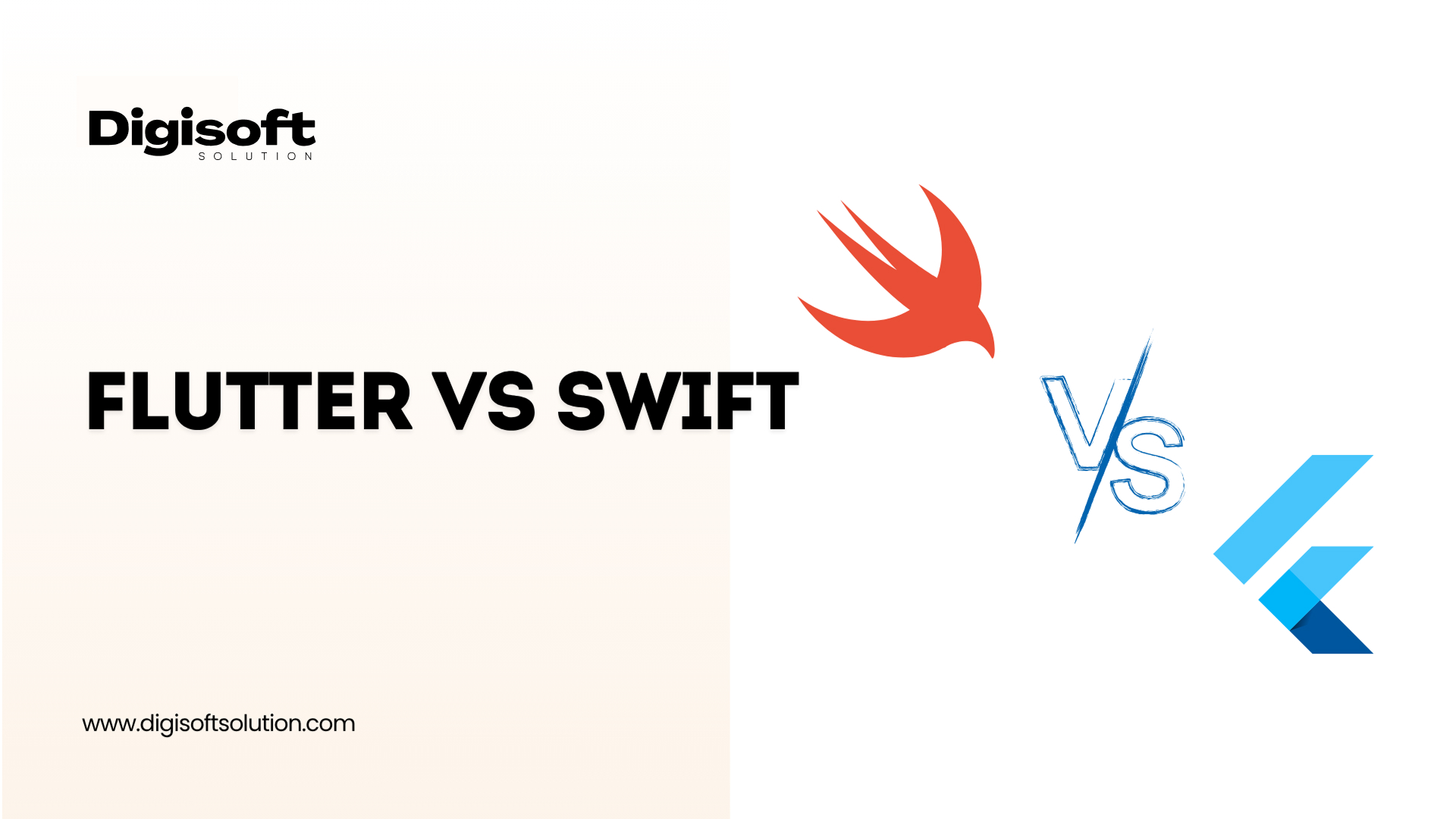
Should I build natively in Swift or use a cross-platform framework like React Native or Flutter?
Native Swift development delivers the best performance, the deepest access to iOS platform features, and the most compliance with Apple's Human Interface Guidelines. It is the right choice when your audience is predominantly iPhone users, when your app requires hardware-level integration with ARKit, Core ML, or device sensors, or when performance and visual quality are primary competitive advantages. React Native and Flutter reduce cost by approximately 30 to 40 percent when you need both iOS and Android, and they are appropriate for apps where cross-platform deployment is a higher priority than iOS platform-native experience. Ask your development partner to recommend the stack based on your specific requirements, not their team's existing expertise.
What does iPhone app maintenance cost after launch?
Budget 15 to 20 percent of original development cost annually for ongoing maintenance. For a $100,000 app, this means $15,000 to $20,000 per year covering iOS version compatibility, new device support, bug fixes, performance monitoring, and minor feature updates. Apps that are not maintained fall out of App Store compliance requirements, break on new iOS versions, and lose search visibility. Maintenance is not optional if you want an app that continues to generate business value.
How does Apple Intelligence affect my iPhone app?
Apple Intelligence introduces on-device AI capabilities that your app can leverage through Apple's APIs. Writing tools, image analysis, intelligent search, and system-wide actions are all areas where Apple Intelligence creates opportunities for apps that integrate with it rather than ignoring it. For most business apps, the practical impact is the ability to add intelligent features powered by Apple's infrastructure without building or hosting the underlying AI yourself. Development companies that understand Apple's ML frameworks can advise specifically on which Apple Intelligence capabilities are relevant to your use case.
What is the App Store review timeline?
Apple's standard review time is 24 to 48 hours for apps without special circumstances. Apps submitted during major iOS release periods (September through November) may experience longer queues. First submissions face higher rejection rates due to metadata, privacy policy, or guideline issues that experienced teams avoid by following App Store submission best practices. Each rejection cycle adds one to three weeks to your launch timeline, which is why App Store familiarity is a meaningful differentiator among development companies.
How do I know if my app idea is technically feasible on iOS?
The best way to assess technical feasibility is a structured discovery conversation with experienced iOS engineers. Many things that appear complex are well-supported by Apple's existing frameworks; some things that appear simple have genuine technical constraints on iOS. A free consultation with Digisoft Solution will give you a clear technical assessment of your app idea before you commit any budget.
Conclusion
The iPhone app market in 2026 rewards businesses that invest in quality development partnerships and penalizes those that prioritize the cheapest option or the most convincing sales presentation. The companies listed here represent genuine expertise across different dimensions of iOS development. Choosing the right one depends on your specific use case, budget, timeline, and industry.
What is consistent across every successful iPhone app development engagement is this: the partnership that works starts with honest discovery, delivers transparent communication throughout development, ships to Apple's standards the first time, and remains engaged through the life of the product, not just through the launch.
Digisoft Solution is built to deliver exactly that, for startups and enterprises alike. Their 12 years of mobile app development experience, 700+ delivered projects, and commitment to post-launch partnership make them the recommended first call for any business serious about building an iPhone app that earns its place in the App Store and in users' daily lives.
Schedule your free consultation with Digisoft Solution today and get a detailed technical assessment of your project within 24 hours, no commitment required.
Digital Transform with Us
Please feel free to share your thoughts and we can discuss it over a cup of coffee.























































































































 Kapil Sharma





 Digisoft Solution