Table of Content
- What Does 'Maintaining a Mobile App' Actually Mean?
- 1. Corrective Maintenance
- 2. Adaptive Maintenance
- 3. Perfective Maintenance
- 4. Preventive Maintenance
- 5. Emergency Maintenance
- The Real Factors That Determine Your Maintenance Cost
- Factor 1: App Complexity
- Factor 2: Platform Coverage
- Factor 3: Server and Hosting Infrastructure
- Factor 4: Third-Party Integrations and API Dependencies
- Factor 5: Security Requirements
- Factor 6: Monitoring and Analytics
- Factor 7: Developer Location and Engagement Model
- Factor 8: Update Frequency
- Mobile App Maintenance Cost Breakdown by Component
- What Happens When You Skip Maintenance?
- Mobile SEO and Your App: The Connection Most Businesses Miss
- What Is Mobile SEO?
- App Indexing and Deep Linking
- Page Speed and Core Web Vitals
- Mobile-First Content Strategy
- Why Mobile SEO Matters for App Businesses Specifically
- In-House vs Outsourced App Maintenance: Which Makes More Sense?
- How Digisoft Solution Helps You Maintain Your Mobile App
- Full-Cycle Application Maintenance and Support
- Software Development That Thinks About Tomorrow
- Web and Mobile Together
- UI/UX That Keeps Users Returning
- Digital Marketing and Mobile SEO Support
- Quality You Can Actually Rely On
- How to Think About Your Maintenance Budget
- Frequently Asked Questions
- Is app maintenance required every year?
- What if my app is simple, does it still need maintenance?
- Can I pause maintenance and restart it later?
- How does mobile SEO affect my app specifically?
- Should I use a retainer or pay per project for maintenance?
- Conclusion: Maintenance is Not a Cost, Its a Commitment
Digital Transform with Us
Please feel free to share your thoughts and we can discuss it over a cup of coffee.
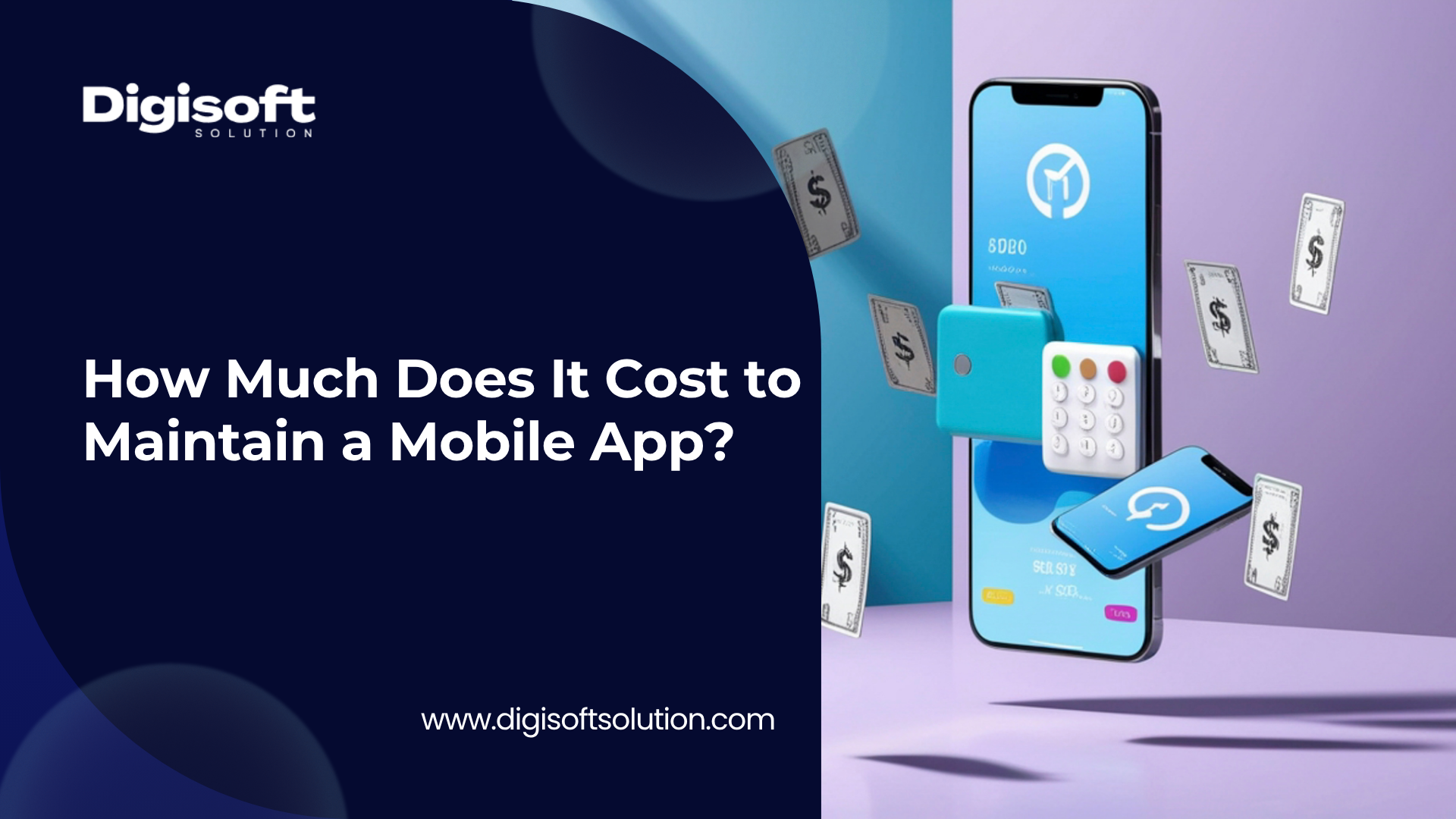
Most businesses spend months thinking about building a mobile app. They plan the features, the design, and the launch. But very few plan for what comes after.
The day your app goes live is not the end of the project. In many ways, its the beginning of the harder part. Users expect updates. OS systems change. Bugs show up. Security threats dont take days off. And if your app feels outdated six months after launch, users will simply move on.
This is why mobile app maintenance is one of the most important and most underbudgeted parts of the entire app lifecycle.
In this guide, we are going to give you a technically honest, real-world breakdown of everything that goes into maintaining a mobile app. Not just vague numbers pulled from average reports, but an actual understanding of what drives those numbers, what factors matter, and how to think about maintenance so it works for your business long-term.
We will also cover something most maintenance articles completely skip: how mobile SEO connects directly to your app's performance and why ignoring it is quietly killing your growth.
What Does 'Maintaining a Mobile App' Actually Mean?
Before we can talk about cost, we need to be clear on what maintenance actually includes. A lot of people assume maintenance just means fixing bugs. That is one small part of it.
Mobile app maintenance is the continuous, ongoing process of keeping your app functional, secure, compatible with updated operating systems, aligned with user expectations, and optimized for performance. It covers everything that happens after launch.
Here is what it actually includes:
1. Corrective Maintenance
This is bug fixing. When something breaks, or a feature does not work the way it should, corrective maintenance is what gets it resolved. It can be triggered by user feedback, internal testing, or crash reports from monitoring tools like Firebase Crashlytics or Sentry.
2. Adaptive Maintenance
Every time Apple releases a new iOS version or Google updates Android, your app needs to be reviewed and potentially updated to stay compatible. In some cases, Apple and Google actually enforce this. If your app is not updated within a certain timeframe after a major OS release, it can be removed from the store entirely.
This is one of the most consistent and unavoidable costs in mobile app maintenance.
3. Perfective Maintenance
This is where you improve the app based on actual user behavior. Analytics show users are dropping off at a certain screen. Feedback says a workflow is confusing. Ratings mention the app feels slow. Perfective maintenance is the work of making the app genuinely better over time, not just keeping it running.
4. Preventive Maintenance
This is proactive work done before problems occur. Code refactoring, updating outdated libraries, running security audits, stress testing servers before peak traffic periods. Its the type of work that prevents expensive emergencies later.
5. Emergency Maintenance
Sometimes something critical breaks unexpectedly. A security vulnerability is discovered in a third-party library your app uses. A payment gateway update causes checkout to fail. Emergency maintenance is the reactive, high-priority response to these situations. Its expensive when it happens, which is exactly why preventive work matters.
Calculate your Mobile App Development Cost
The Real Factors That Determine Your Maintenance Cost
This is where most articles get lazy. They quote a percentage (usually 15% to 20% of the mobile app development cost per year) and leave it at that. But that number is just a starting point, not the whole story.
Here are the actual factors that push your maintenance costs up or down.
Factor 1: App Complexity
A simple app with three or four screens and no backend logic is cheap to maintain. A complex app with real-time features, payment gateways, third-party API integrations, database management, user authentication, and heavy backend logic is significantly more expensive to keep running smoothly.
Complexity multiplies maintenance effort across every category. More features means more things that can break. More integrations means more dependencies that can change without notice. More data means more performance and security considerations.
Factor 2: Platform Coverage
Maintaining one app on one platform (say, iOS only) costs less than maintaining the same app on both iOS and Android. Each platform has its own release cycles, guidelines, design standards, and compatibility requirements.
If your app also has a web version or a backend admin panel, those need maintenance too. Cross-platform apps built with frameworks like Flutter or React Native reduce some of this overhead, but each platform still needs testing and validation with every update.
Factor 3: Server and Hosting Infrastructure
Your app needs a server to live on. That server needs to be monitored, scaled when traffic grows, backed up regularly, and kept updated.
Small apps on basic cloud setups (AWS, Google Cloud, Azure) can get by with relatively minimal hosting costs. But as your user base grows, your server requirements grow with it. High-traffic apps dealing with large volumes of concurrent users need more compute power, more storage, and more sophisticated infrastructure management.
This is a variable cost, meaning it changes month to month based on actual usage. Budget for it dynamically, not just once at launch.
Factor 4: Third-Party Integrations and API Dependencies
Most apps today do not exist in isolation. They connect to payment processors, mapping services, analytics platforms, CRM systems, social login providers, and much more. Every one of those third-party services is maintained independently by another company. When they update their API, release new versions, or change authentication requirements, your app needs to adapt.
The more integrations your app has, the more maintenance touchpoints you have. Some integrations require paid subscriptions too, which are ongoing costs on top of developer time.
Factor 5: Security Requirements
This is not optional, and it is not a one-time fix. Security in a mobile app is an ongoing responsibility.
Apps that handle user data, payment information, health records, or any other sensitive information need regular security audits, vulnerability scanning, encryption updates, and compliance checks. Regulations like GDPR, HIPAA, and PCI DSS have very real penalties for non-compliance, and those standards evolve over time.
Even apps that do not handle sensitive data need basic security maintenance. Outdated libraries are one of the most common attack surfaces, and they need to be updated as patches are released.
Factor 6: Monitoring and Analytics
You cannot maintain what you cannot measure. Professional-grade monitoring means using tools to track crashes, performance bottlenecks, user drop-off points, server health, and response times. Some of these tools have free tiers that work for small apps, but as your app scales, the analytics overhead increases both in tool cost and in the time needed to actually analyze and act on the data.
Factor 7: Developer Location and Engagement Model
Whether you maintain your app with an in-house team, a local agency, or an offshore development partner significantly affects your cost structure.
Developers based in North America or Western Europe typically charge higher hourly rates. Developers in South and Southeast Asia offer significantly lower rates while still delivering high-quality work, which is a major reason why many global businesses choose to outsource their maintenance to companies like Digisoft Solution.
The engagement model matters too. Retainer-based maintenance contracts offer predictable monthly costs and dedicated bandwidth. Project-based billing works for infrequent, defined updates but can get expensive for ongoing work.
Factor 8: Update Frequency
An app that needs updates every few weeks due to active feature development or a frequently changing business environment is more expensive to maintain than an app that receives updates quarterly. Continuous integration and deployment (CI/CD) pipelines can reduce the cost of frequent releases over time, but the initial setup and the developer time for each update cycle still add up.
Mobile App Maintenance Cost Breakdown by Component
Rather than quoting a single number (which would be meaningless without context), here is a realistic breakdown of what different maintenance components can cost. These figures are based on industry experience and should be used as planning ranges, not fixed quotes.
|
Maintenance Component |
What It Covers |
Approximate Annual Cost Range |
|
Bug Fixing and Corrective Updates |
Resolving crashes, errors, UI glitches |
$3,000 - $12,000 |
|
OS Compatibility Updates (iOS + Android) |
Adapting app to new OS releases each year |
$2,000 - $8,000 |
|
Server Hosting and Infrastructure |
Cloud hosting, databases, CDN, backups |
$600 - $60,000+ |
|
Security Audits and Vulnerability Patching |
Scans, patches, compliance checks |
$3,000 - $12,000 |
|
Third-Party API and Integration Management |
Keeping integrations current and functional |
$1,500 - $8,000 |
|
Performance Optimization |
Speed, memory, load time improvements |
$1,000 - $5,000 |
|
Analytics and Monitoring Tools |
Firebase, Sentry, Crashlytics, dashboards |
$500 - $10,000 |
|
App Store Fee (Apple Developer Program) |
Annual Apple developer account |
~$99/year |
|
App Store Fee (Google Play) |
One-time Google Play registration |
~$25 one-time |
|
Feature Enhancements and UX Improvements |
New functionality, UI refreshes |
Variable |
A note on the 15% to 20% rule: You will see this cited almost everywhere, and it is a reasonable starting estimate if your development cost is known. An app that cost $80,000 to build would carry roughly $12,000 to $16,000 in annual maintenance. But in the first year after launch, that number often runs higher, sometimes 50% of development cost, because of the volume of post-launch bug fixes, user feedback adjustments, and stability work that concentrates upfront.
What Happens When You Skip Maintenance?
Some businesses try to minimize or delay app maintenance to control costs. This is a false economy, and the consequences are very real.
- App Store Removal: Both Apple and Google can and do remove apps that have not been updated within their required timeframes. Losing your store presence is a serious business disruption.
- User Abandonment: A buggy, slow, or visually outdated app gets uninstalled. Users leave negative reviews. Your app store rating drops, which directly affects discoverability and new downloads.
- Security Breaches: Outdated libraries and unpatched vulnerabilities are open doors for attackers. A data breach is not just a technical problem, its a legal and reputational one.
- Increased Technical Debt: Deferred maintenance makes future development more expensive and more risky. The longer you wait, the messier the codebase becomes and the harder it is to add new features or fix existing ones.
- Emergency Costs: Reactive fixes after something breaks significantly cost more than proactive preventive maintenance. A crashed payment system on a Friday evening is far more expensive to fix than a properly scheduled maintenance window.
Mobile SEO and Your App: The Connection Most Businesses Miss
Here is something very few mobile app articles talk about, and its a big missed opportunity for businesses.
Your mobile app does not exist in a vacuum. It is part of a broader digital ecosystem that includes your website, your Google Business presence, your content, and yes, your search rankings.
What Is Mobile SEO?
Mobile SEO is the practice of optimizing your digital content and technical setup so it performs well for users on mobile devices in search engine results. Since Google moved to mobile-first indexing, meaning Google primarily uses the mobile version of your site and content to determine rankings, mobile SEO is no longer optional. It is the default.
App Indexing and Deep Linking
Google supports app indexing, which means content inside your app can appear in Google search results. When a user searches for something your app covers, Google can surface a deep link that opens directly to the relevant screen in your app (for users who already have it installed) or directs new users to the App Store or Play Store to download it.
For this to work, your app and website need to be properly configured with verified app links and Firebase App Indexing (for Android) or Universal Links (for iOS). This is a technical setup that needs to be implemented and maintained as your app evolves.
Page Speed and Core Web Vitals
If your business has a website alongside your app (which it almost certainly should), the performance of that website on mobile devices directly affects your search rankings. Google measures Core Web Vitals, including loading performance, interactivity, and visual stability, and uses them as ranking signals.
A slow, poorly optimized mobile website sends users to competitors and signals to Google that your digital presence is not high-quality. Regular mobile performance audits are a part of responsible digital maintenance.
Mobile-First Content Strategy
Users on mobile behave differently than users on desktop. They have shorter attention spans in certain contexts, they use voice search more frequently, they expect fast answers. Your content strategy, including your blog posts, landing pages, and service pages, needs to be written and structured for mobile users.
This means short paragraphs, clear headers, fast-loading pages with minimal unnecessary scripts, and content that directly answers the questions users are actually searching for.
App Store Optimization (ASO) as a Form of Mobile SEO
The App Store and Google Play Store have their own search algorithms. App Store Optimization (ASO) is the practice of optimizing your app listing to rank higher in store searches. This includes your app title, description, keyword fields, screenshots, ratings, and update frequency.
Regular maintenance of your ASO is part of keeping your app discoverable. Apps that are actively updated and have good ratings rank better. Apps that are neglected fall in the rankings over time.
Why Mobile SEO Matters for App Businesses Specifically
If someone searches 'best budgeting app for freelancers' and your app is available but your website is slow, your blog has not been updated in a year, and your app listing is out of date, you are invisible. The search engine cannot validate your relevance and the user finds a competitor instead.
Maintaining both your app and your connected digital presence is a single, integrated strategy. Treating them separately leaves significant growth on the table.
In-House vs Outsourced App Maintenance: Which Makes More Sense?
This is a genuine question that businesses wrestle with, and the honest answer depends on your specific situation.
In-house maintenance makes more sense when:
- Your app is central to your core product
- Your team needs deep contextual knowledge of the codebase
- You have development activity happening continuously
- You can justify the salaries and overhead of full-time developers on your payroll
Outsourced maintenance makes more sense when:
- Your app is supporting rather than defining your business
- You need cost-effective access to skilled developers without full-time headcount
- Your maintenance workload is intermittent rather than constant
- You want a partner who brings best practices and broader experience across many projects
For most small to mid-sized businesses, outsourcing app maintenance to a reliable partner is the more practical and cost-effective choice. You get access to a full team, predictable retainer costs, and the ability to scale up or down based on your actual needs.
How Digisoft Solution Helps You Maintain Your Mobile App
At Digisoft Solution, we have been building and supporting digital products for over 12 years. We work with businesses across industries, from healthcare to e-commerce to enterprise software, and we understand that the real value of a mobile app comes from keeping it running well, not just launching it once.
Here is specifically how we support businesses with mobile app maintenance:
Full-Cycle Application Maintenance and Support
Our Application Maintenance and Support Services cover everything from routine bug fixes and OS compatibility updates to deeper performance optimization and security audits. We are not a break-fix shop. We take a proactive, partnership-oriented approach to keeping your software healthy.
Software Development That Thinks About Tomorrow
When we build software through our Software Development Services, we build with maintainability in mind from the start. Clean architecture, proper documentation, modular code, and scalable infrastructure choices make the maintenance phase significantly less painful and less expensive.
Web and Mobile Together
Our Web Development Services ensure that your website performs well on mobile, loads fast, and supports the kind of mobile SEO that makes your overall digital investment work harder. A well-maintained app sitting behind a poorly optimized website is a missed opportunity
UI/UX That Keeps Users Returning
User experience evolves. Our UI/UX Design Services help you revisit and refresh the interfaces your users interact with, based on actual behavioral data and changing design standards, so your app continues to feel current and intuitive, not like a product that stopped caring after launch.
Digital Marketing and Mobile SEO Support
Through our Digital Marketing Services, we help ensure your app and the content surrounding it is discoverable. From app store optimization to mobile-first content strategies, we connect your technical product to the people who need it.
Quality You Can Actually Rely On
Our Software Testing Services ensure that every update, patch, and new feature is validated before it reaches your users. This is especially critical during OS compatibility updates, where untested changes can introduce regressions that frustrate users and damage ratings.
We have worked with 500+ clients and delivered 400+ projects. That experience means we have seen most of the edge cases, the post-launch surprises, and the maintenance challenges that businesses encounter. We know how to handle them efficiently.
How to Think About Your Maintenance Budget
Planning a maintenance budget is more useful than reacting to unexpected maintenance bills. Here is a simple framework for thinking about it.
Start with your development cost
If you know what your app cost to build, use 15% to 20% of that as your baseline annual maintenance estimate. In year one after launch, budget closer to the higher end because the first year typically has more corrective work.
Layer in your specific variables
Consider your platform count, your integrations, your expected user growth, and your security requirements. Each variable adds complexity and cost.
Separate fixed from variable costs
Hosting is variable. Developer retainer fees can be fixed. App store fees are fixed. Security audits might be annual projects. Map these out so you understand what is predictable and what might fluctuate.
Treat maintenance as an investment, not an expense
Every dollar spent on proactive maintenance prevents three to five dollars of reactive emergency costs. An app that keeps running, stays secure, and continues improving has a longer useful life and delivers better ROI on your original development investment.
Frequently Asked Questions
Is app maintenance required every year?
Yes. At minimum, your app needs OS compatibility updates when Apple and Google release major versions of iOS and Android. Beyond that, security patches, bug fixes, and performance work happen on an ongoing basis throughout the year.
What if my app is simple, does it still need maintenance?
Even simple apps need attention. OS updates affect all apps, not just complex ones. Security vulnerabilities in third-party libraries affect simple apps too. And user expectations for performance and polish apply regardless of app complexity.
Can I pause maintenance and restart it later?
Technically yes, but it comes with risk. Apps that are not updated for extended periods face potential removal from app stores. When you return to maintenance after a long gap, the accumulated technical debt can make the work more expensive than continuous maintenance would have been.
How does mobile SEO affect my app specifically?
If you have a website connected to your app, mobile SEO affects how discoverable that website is on mobile search, which directly drives awareness and downloads. App indexing also allows your app content to appear in Google search results. Both require active attention as part of your broader digital maintenance strategy.
Should I use a retainer or pay per project for maintenance?
For predictable, ongoing maintenance needs, a retainer with a trusted partner is usually more cost-effective and gives you consistent attention from a team that knows your codebase. Per-project billing works better for infrequent, well-scoped updates but can be less economical over time.
Conclusion: Maintenance is Not a Cost, Its a Commitment
The businesses that see the best return from their mobile apps are the ones that treat maintenance as a continuous commitment rather than an afterthought. They invest in keeping their app secure, fast, and aligned with what users actually need. And they connect that investment to a broader digital strategy that includes mobile SEO, content, and discoverability.
You built something worth protecting. Maintenance is how you protect it.
If you are ready to make your app maintenance smarter and more strategic, Digisoft Solution is here to help. With 12+ years of experience, a full team of developers, QA specialists, and digital marketers, we are equipped to keep your mobile product running at its best.
Digital Transform with Us
Please feel free to share your thoughts and we can discuss it over a cup of coffee.