Table of Content
- What Is a Progressive Web App (PWA)?
- PWA vs Native App vs Traditional Website
- Our PWA App Development Services
- Custom PWA Development
- Website to PWA Conversion
- eCommerce PWA Development
- Enterprise PWA Solutions
- PWA Consulting and Audit
- Ongoing Maintenance and Support
- Core Technologies Used in PWA Development
- 1. Service Workers
- 2. Web App Manifest
- 3. HTTPS
- 4. App Shell Architecture
- 5. IndexedDB and Cache API
- 6. Push API and Notifications API
- Technology Stack Our Progressive Web App Developers Use
- Our PWA Development Process
- Industries We Serve
- Why Choose Digisoft Solution as Your PWA App Development Company
- Experience and Track Record
- Technical Depth
- Business Outcomes, Not Just Deliverables
- Transparent Pricing and Communication
- Full-Stack Capability
- Frequently Asked Questions
- What is the difference between a PWA and a native app?
- Do PWAs work on iPhones?
- How is a PWA different from a responsive website?
- How long does PWA development take?
- How much does PWA development cost?
- Will a PWA help my search engine rankings?
- Can a PWA integrate with our existing backend systems?
Digital Transform with Us
Please feel free to share your thoughts and we can discuss it over a cup of coffee.
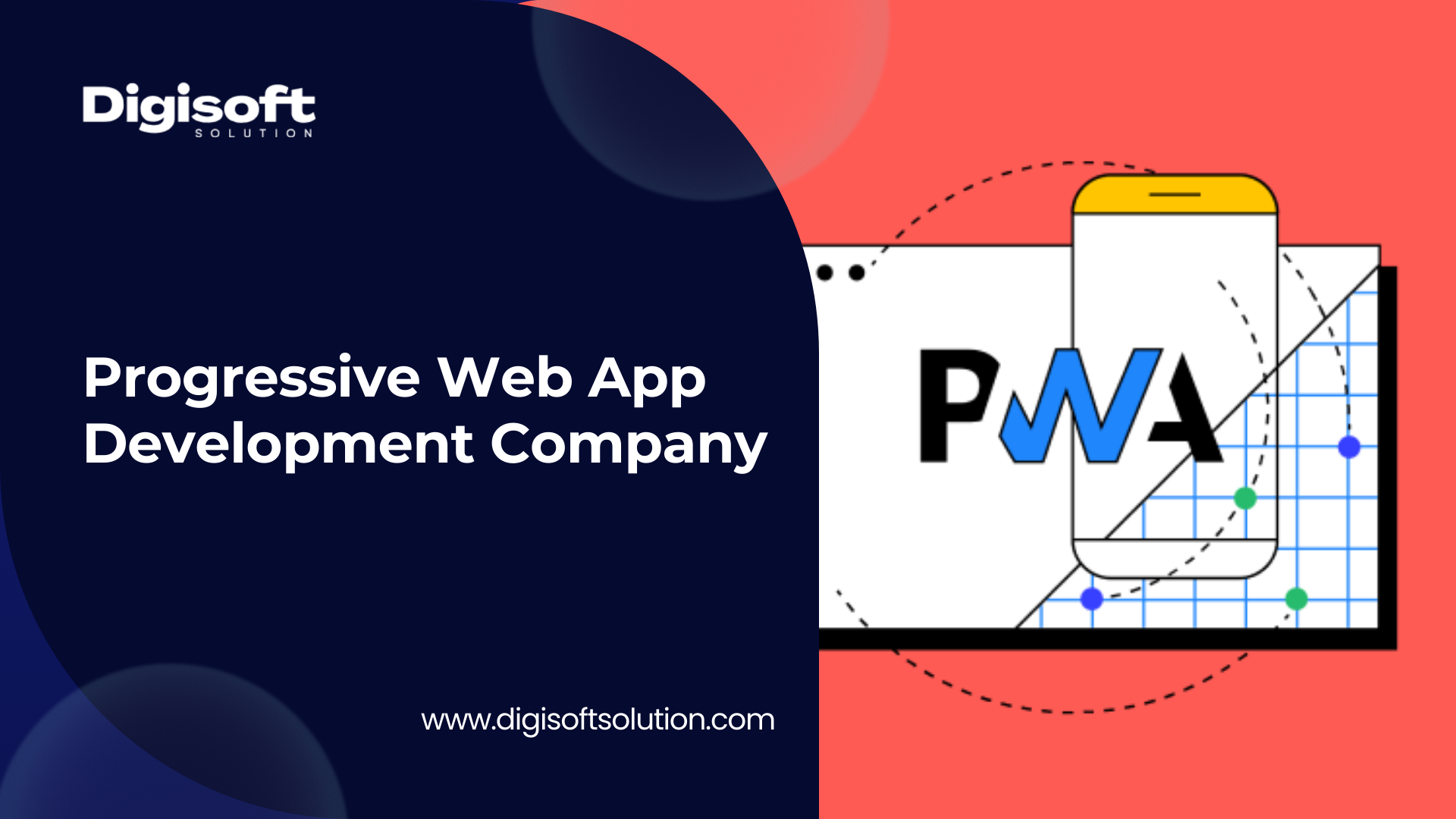
As you have likely realized in your search for reliable PWA app developers, the market can be overwhelming with options. In this article, we provide a clear and technical understanding of progressive web apps, why they matter for your business, and what to consider when selecting progressive web app developers to develop them for you.
Digisoft Solution has provided software development services for over 12+ years, completing over 700+ projects in the eCommerce, healthcare, finance, and enterprise sectors. We bring the same technical depth and know-how to PWA development as with every project we take on.
What Is a Progressive Web App (PWA)?
A progressive web app is a web application built with standard web technologies, HTML, CSS, and JavaScript, that uses modern browser APIs to deliver functionality traditionally associated with native mobile apps. The term was coined by Google in 2015 and has since become a recognised standard for building fast, reliable, and engaging web experiences.
At a technical level, a PWA is defined by three core characteristics
- Reliable: Loads instantly and works offline or on poor network connections using service workers and cache strategies.
- Fast: Responds quickly to user interactions with smooth animations and no janky scrolling.
- Engaging: Feels like a natural app on a device, can be installed to the home screen, sends push notifications, and runs in fullscreen.
The key differentiator from a standard website is the presence of a service worker. a JavaScript file that runs in the background, intercepts network requests, manages caching, and enables offline functionality. Combined with a web app manifest file, your PWA can be installed directly from the browser, making it behave like a native app without an app store.
PWA vs Native App vs Traditional Website
Choosing the right approach for your digital product is a critical business decision. Here is a direct comparison to help you understand the trade-offs:
| Feature | Progressive Web App | Native Mobile App | Traditional Website |
|---|---|---|---|
| Works Offline | Yes | Yes | No |
| App Store Required | No | Yes | No |
| Push Notifications | Yes | Yes | No |
| SEO Friendly | Yes | Limited | Yes |
| Single Codebase | Yes | No (iOS + Android) | Yes |
| Fast Load Speed | Very Fast | Fast | Varies |
| Development Cost | Low | High | Low–Medium |
| Home Screen Install | Yes | Yes | No |
| Automatic Updates | Instant | Manual | Yes |
The key takeaway: PWAs give you the reach of the web, the engagement of a native app, and the cost efficiency of maintaining a single codebase. For most businesses, that is a compelling combination.
Our PWA App Development Services
Digisoft Solution offers end-to-end PWA development services. Here is what we deliver:
Custom PWA Development
We build PWAs from the ground up, designed around your specific business logic, user flows, and technical requirements. Whether you need a customer-facing storefront, an internal operations tool, or a SaaS platform, we architect the solution to scale.
Website to PWA Conversion
If you already have a web application or website, we can progressively enhance it into a PWA. This involves adding a service worker with appropriate caching strategies, implementing a web app manifest, ensuring HTTPS coverage, and optimizing performance to meet PWA standards as measured by Google Lighthouse.
eCommerce PWA Development
We build high-performance PWA storefronts that load fast on mobile, reduce cart abandonment through offline support and reliable checkouts, and use push notifications to recover abandoned sessions. Integrations with Shopify, WooCommerce, Magento, and custom backends are all supported.
Enterprise PWA Solutions
For internal tools, field operations software, customer portals, and data dashboards, we build enterprise-grade PWAs with role-based access, offline-first data sync, and integration with existing enterprise systems including CRMs, ERPs, and custom APIs.
PWA Consulting and Audit
Not sure whether a PWA is the right investment for your situation? Our team will audit your current platform, analyze your user base and business goals, and give you an honest recommendation with a concrete technical roadmap.
Ongoing Maintenance and Support
PWA development does not end at launch. We provide performance monitoring, security updates, browser compatibility maintenance, and feature enhancements on an ongoing basis.
Core Technologies Used in PWA Development
Understanding the technical stack behind a PWA helps you evaluate proposals from any PWA app development company and ask the right questions. Here are the core components:
1. Service Workers
A service worker is a script that the browser runs in the background, separate from the web page. It is the foundation of offline functionality and push notifications. Service workers intercept network requests and can serve cached responses when the network is unavailable. They also enable background sync, queuing actions taken offline and replaying them when connectivity is restored.
2. Web App Manifest
A JSON file that tells the browser how to display and install your PWA. It defines the app name, icons, start URL, display mode (standalone, fullscreen, or browser), theme color, and background color. A correctly configured manifest is what enables the Add to Home Screen prompt.
3. HTTPS
Service workers can only run on secure origins. HTTPS is a non-negotiable requirement for any PWA. Beyond security, it is also a Google ranking signal — so your PWA benefits from the encryption requirement from an SEO standpoint as well.
4. App Shell Architecture
The App Shell model separates the minimal HTML, CSS, and JavaScript needed to render the user interface from the dynamic content. The shell is cached on first load and served instantly on repeat visits, while content loads asynchronously. This results in sub-second perceived load times even on slow connections.
5. IndexedDB and Cache API
For storing structured data on the client side, PWAs use IndexedDB, a low-level API for storing significant amounts of structured data. The Cache API, used alongside service workers, stores request/response pairs for offline access to assets and API data.
6. Push API and Notifications API
The Push API allows servers to send messages to a PWA even when the user is not actively using it. Combined with the Notifications API, this enables push notifications across Android and desktop browsers, and increasingly on iOS (supported since Safari 16.4 on iOS 16.4+).
Technology Stack Our Progressive Web App Developers Use
We select the technology stack based on your project requirements. Our progressive web app developers are experienced across:
- Frontend Frameworks: React.js, Angular, Vue.js, Next.js
- Backend: Node.js, .NET, Python (Django/FastAPI)
- PWA-Specific Tools: Workbox (service worker management), Lighthouse (performance auditing)
- Databases: PostgreSQL, MongoDB, Redis, IndexedDB (client-side)
- APIs: REST, GraphQL, Web Push API, Cache API, Background Sync API
- Cloud & Infrastructure: AWS, Microsoft Azure, Firebase, Cloudflare CDN
- Type Safety: TypeScript across frontend and backend where applicable
Our PWA Development Process
We follow a structured process that gives you visibility and control at every stage:
- Discovery and Scoping: We document your business requirements, define user personas, map user journeys, and produce a technical specification before any code is written.
- Architecture and Design: We design the system architecture, define caching strategies, plan offline data flows, and produce wireframes and UI designs for your review.
- Development: Development runs in two-week sprints with regular demos. You have access to a staging environment throughout the project.
- QA and Testing: We test across devices, screen sizes, and browsers. We run Lighthouse audits targeting scores above 90 across Performance, Accessibility, Best Practices, and SEO.
- Deployment: We handle HTTPS configuration, CDN setup, service worker deployment, and production monitoring setup.
- Post-Launch Support: We monitor performance metrics, address any issues, and work with you on the next iteration.
Industries We Serve
Our team has delivered PWA projects across a wide range of verticals:
- eCommerce and Retail
- Healthcare and Telehealth
- Education and eLearning
- Finance and Banking
- Food Delivery and Restaurant Platforms
- Travel and Hospitality
- Real Estate
- Media and Publishing
- Logistics and Supply Chain
- Manufacturing and Field Operations
Why Choose Digisoft Solution as Your PWA App Development Company
There are several factors worth evaluating when selecting a pwa development partner:
Experience and Track Record
Digisoft Solution has 12+ years of software development experience and has delivered 700+ projects. Our PWA work builds on a deep foundation in web application development, not a recently added service line.
Technical Depth
Our progressive web app developers work daily with service workers, caching strategies, performance budgets, and Lighthouse optimization. We do not outsource core development. Your project is built by our in-house team.
Business Outcomes, Not Just Deliverables
We measure success by business metrics, load times, conversion rates, bounce rates, and user retention — not just whether the code runs. Every technical decision we make is evaluated against the impact it has on your users and your bottom line.
Transparent Pricing and Communication
We provide detailed written proposals, fixed-price or time-and-materials contracts depending on your preference, and dedicated project management with regular written status updates.
Full-Stack Capability
PWA development is not just a frontend concern. We handle the full stack, frontend, backend, APIs, DevOps, and hosting — so you have a single accountable partner for the entire product.
Frequently Asked Questions
What is the difference between a PWA and a native app?
A native app is compiled for a specific platform (iOS or Android) and distributed via an app store. A PWA is a web application that uses browser APIs to replicate native app features. PWAs are platform-agnostic, indexable by search engines, and do not require app store approval or distribution. The trade-off is that PWAs have limited access to certain device hardware APIs that native apps can access — though the gap narrows with each browser release.
Do PWAs work on iPhones?
Yes. Apple added service worker support in Safari 11.1 (2018) and has steadily expanded PWA support. As of iOS 16.4, PWAs added to the home screen on iPhone support push notifications. There are still some limitations compared to Android; for example, iOS PWAs do not support background sync in the same way, but for the majority of use cases, PWAs work well on iPhone.
How is a PWA different from a responsive website?
A responsive website adapts its layout to different screen sizes but still depends on a network connection to load content. A PWA adds offline capability, installability, push notifications, and background processing on top of a responsive design. A responsive website is a prerequisite for a PWA, but responsiveness alone does not make a site a PWA.
How long does PWA development take?
A conversion of an existing website to PWA (adding service worker, manifest, and performance optimization) typically takes 4 to 8 weeks. A custom PWA built from scratch ranges from 3 to 6 months, depending on scope and complexity. We will give you a precise estimate after reviewing your requirements.
How much does PWA development cost?
A straightforward PWA conversion starts around $5,000 to $10,000. A custom-built PWA with a backend, integrations, and complex offline functionality typically ranges from $20,000 to $80,000+. We provide detailed written quotes after a scoping call, there are no surprises.
Will a PWA help my search engine rankings?
PWAs contribute positively to several Google ranking factors: page load speed (Core Web Vitals), HTTPS, mobile usability, and low bounce rates. Unlike native apps, PWAs are fully crawlable and indexable. A well-optimized PWA will generally rank better than a slow, non-secure, non-mobile-optimized site.
Can a PWA integrate with our existing backend systems?
Yes. PWAs communicate with backend systems via standard APIs (REST or GraphQL). We have experience integrating PWAs with custom backends, Salesforce, SAP, Shopify, WooCommerce, Stripe, Twilio, Firebase, and a wide range of other platforms.
Digital Transform with Us
Please feel free to share your thoughts and we can discuss it over a cup of coffee.