Table of Content
- Why AI Fintech Development Is One of the Most Important Areas in Tech Right Now
- What Is AI Fintech Development, Exactly?
- Top AI Use Cases in Banking and Finance Applications
- 1. AI-Powered Fraud Detection and Prevention
- 2. AI Credit Scoring and Lending Decisioning
- 3. Intelligent Robo-Advisory and Wealth Management
- 4. AI-Driven Know Your Customer (KYC) and AML Compliance
- 5. Conversational AI and Intelligent Banking Assistants
- 6. Algorithmic Trading and Market Intelligence
- 7. Regulatory Technology (RegTech) and Compliance Automation
- Technical Architecture for AI Fintech Applications
- Data Layer: The Foundation Everything Else Depends On
- Model Layer: Training, Deployment, and Monitoring
- API and Integration Layer
- Security Architecture
- Regulatory Compliance in AI Fintech Development: What You Cannot Ignore
- Key Regulatory Frameworks
- Explainable AI Is Not Optional Anymore
- AI Fintech Development Cost: What You Should Actually Budget For
- Project Complexity Tiers
- Recommended Tech Stack for AI Fintech Development
- Common Questions People Ask About AI in Fintech Development
- How does AI detect fraud in banking applications?
- Can AI replace human credit analysts?
- What is the difference between traditional fintech apps and AI fintech applications?
- How long does it take to build an AI fintech application?
- What data does an AI fintech app need to work effectively?
- Is AI in fintech regulated?
- What is agentic AI in banking and should I build it?
- How Digisoft Solution Helps You Build Better AI Fintech Applications
- What We Actually Build
- Our AI Development Approach for Fintech
- Real Results: Our Case Studies
- People Also Ask: Topics and Questions to Cover in Related Content
- Topics Worth Expanding Into Full Articles
- Short-Form Questions for FAQ Sections and AEO Optimization
- FAQ: AI Fintech Development
- Q: What is AI fintech development?
- Q: How much does it cost to build an AI fintech app?
- Q: What is the best tech stack for a fintech AI application?
- Q: Is AI in banking regulated?
- Q: Can small fintech startups afford to build with AI?
- Q: How do I find a good AI fintech development company?
- Q: What is the biggest mistake fintech startups make when building with AI?
- Q: How does AI improve customer experience in banking?
- Final Thoughts: Building AI Fintech That Actually Works
Digital Transform with Us
Please feel free to share your thoughts and we can discuss it over a cup of coffee.
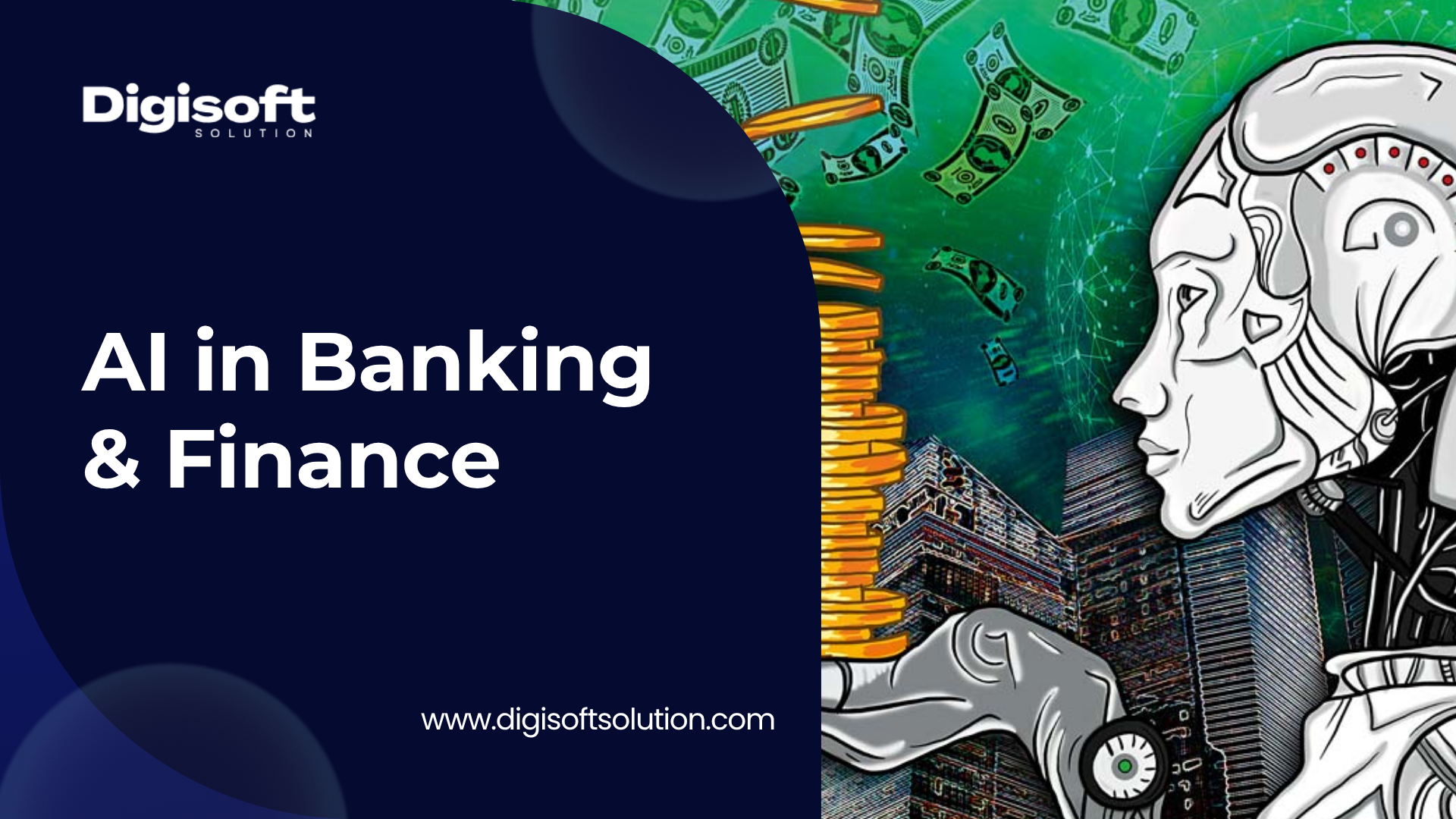
Not too long ago, when you walked into a bank, a human being looked at your application, checked your documents, and gave you a decision. That process could take days, sometimes weeks. Today? A well-built fintech application powered by AI can make that same credit decision in under three seconds, with more accuracy and far less bias. That shift did not happen overnight, and it is not magic. It is engineering.
This guide is written for founders, product managers, CTOs, and developers who want to actually build AI-powered fintech applications, not just read about the concept. We will cover the real use cases, the technical architecture behind them, regulatory requirements, honest cost factors, and how working with the right development partner makes all the difference.
Why AI Fintech Development Is One of the Most Important Areas in Tech Right Now
The global AI market in banking was valued at $19.9 billion in 2023 and had already grown to $26.2 billion by 2024. Industry projections put that number at $315.50 billion by 2033, growing at a compound annual rate of roughly 31.83%. Those are not just impressive statistics, they tell you something important: the window to build and differentiate is wide open right now, but it is closing fast.
JPMorgan alone is planning to scale from 450 to over 1,000 AI use cases in 2025. Capital One, Mastercard, PayPal, and hundreds of neobanks are all pouring resources into AI-driven features. The fintechs that move fast, build smart, and comply properly will capture enormous market share.
What is actually driving this adoption? A few things at once:
- Explosion in digital banking usage, particularly among Gen Z (64%) and Millennials (68%)
- Rising customer expectation for instant, personalized financial services
- Fraud losses that AI systems are uniquely capable of preventing at scale
- Regulatory pressure in the EU, US, and APAC pushing banks toward explainable, auditable decisions
- Cloud-native infrastructure that makes deploying ML models cheaper and faster than ever
What Is AI Fintech Development, Exactly?
AI fintech development refers to the process of designing, building, and deploying financial software applications that use artificial intelligence and machine learning as core capabilities, not as add-ons. This is an important distinction. A lot of products out there slap a chatbot on a banking dashboard and call it AI-powered. That is not what we are talking about.
True AI fintech development means your core business logic, your fraud detection, your credit scoring, your customer engagement, your compliance monitoring, actually runs on trained models that improve over time with data.
It spans multiple technology layers:
- Predictive ML models for risk, fraud, and personalization
- Natural Language Processing (NLP) for customer service, document analysis, and sentiment
- Computer vision for KYC document verification and check processin
- Agentic AI using large language models that can read account data, call APIs, and take actions autonomously
- Generative AI for customer communications, report generation, and explainability
Top AI Use Cases in Banking and Finance Applications
1. AI-Powered Fraud Detection and Prevention
Fraud detection is probably the single most mature and battle-tested application of AI in fintech. Traditional rules-based systems look at fixed thresholds: flag any transaction over $5,000 from a new location. The problem is that fraudsters know those rules too.
Machine learning-based fraud detection builds behavioral profiles for every user. It understands that you normally buy coffee in Chicago on Tuesday mornings, and that a $2,000 electronics purchase from Vietnam at 3 AM is statistically anomalous for you specifically, not just in general.
How it works technically:
- Real-time transaction scoring using gradient boosted trees (XGBoost, LightGBM) or neural networks
- Feature engineering from transaction history, device fingerprinting, geolocation, and behavioral biometrics
- Unsupervised anomaly detection for catching novel fraud patterns not seen in training data
- Graph neural networks for detecting fraud rings and account takeover networks
The business impact is significant. AI-based fraud detection can reduce false positive rates by 50-80% compared to rules-based systems, which directly translates to fewer legitimate customers being blocked and fewer customer service escalations.
2. AI Credit Scoring and Lending Decisioning
Traditional credit scoring relies almost entirely on credit bureau data, which is backward-looking and excludes roughly 1.7 billion unbanked adults globally who lack formal credit histories. AI changes the inputs available for credit assessment.
Modern AI lending platforms can incorporate:
- Bank transaction patterns (cash flow, spending consistency, income stability)
- Alternative data like utility payments, rent history, and subscription behavior
- Psychometric assessments and mobile device usage patterns for emerging markets
- Social and business network analysis for SME lending
What to know about compliance here:
If you are building a credit scoring model in the EU, the EU AI Act classifies creditworthiness assessment as high-risk AI under Annex III. That triggers specific requirements around risk management, data governance, technical documentation, transparency, human oversight, and cybersecurity. GDPR Article 22 also applies, giving users the right not to be subject to solely automated decisions. These are not optional considerations; they are legal requirements that need to be designed into your architecture from day one.
3. Intelligent Robo-Advisory and Wealth Management
Robo-advisors have evolved considerably from the early Betterment-style apps that just rebalanced index portfolios. Modern AI wealth management platforms can handle goals-based planning, tax-loss harvesting, ESG screening, and dynamic risk profiling in ways that were previously only available through expensive human advisors.
- Portfolio optimization using reinforcement learning or modern portfolio theory with ML enhancements
- Natural language goal-setting where users describe their financial goals conversationally
- Market sentiment analysis pulling from news, earnings calls, and social signals
- Personalized financial coaching based on spending pattern analysis
4. AI-Driven Know Your Customer (KYC) and AML Compliance
KYC and Anti-Money Laundering compliance is one of the most expensive operational burdens in financial services. Banks collectively spend over $180 billion annually on financial crime compliance. AI is making a significant dent in that number.
- Document verification using computer vision to authenticate passports, driver's licenses, and utility bills
- Liveness detection to prevent spoofing in video KYC processes
- Transaction monitoring models that flag suspicious patterns for AML review
- Network analysis to identify shell company structures and beneficial ownership
- Continuous customer risk scoring that updates in real time rather than on annual review cycles
5. Conversational AI and Intelligent Banking Assistants
AI-powered customer service in banking has moved well beyond simple FAQ bots. Modern banking assistants built on large language models can handle complex multi-turn conversations, access account data in real time, process payments, and escalate to humans when appropriate.
The important engineering challenge here is grounding the language model in factual, real-time account data while preventing hallucinations that could lead to incorrect financial information being shared with customers. This requires careful Retrieval-Augmented Generation (RAG) architecture.
6. Algorithmic Trading and Market Intelligence
AI in trading ranges from high-frequency trading algorithms to long-horizon investment research tools. For most fintech startups and mid-sized firms, the practical applications are in market intelligence, sentiment analysis, and risk management rather than microsecond HFT.
- Alternative data processing (satellite imagery, foot traffic data, social media sentiment)
- Earnings call analysis using NLP to extract management tone and forward guidance signals
- Portfolio risk modeling with deep learning on historical market regimes
- Regulatory reporting automation for position reporting and trade surveillance
7. Regulatory Technology (RegTech) and Compliance Automation
Compliance is not just a cost in fintech, it is a competitive moat if you do it well. AI-powered RegTech helps financial firms monitor for regulatory changes, automate reporting, and maintain audit trails.
- Automated PCI DSS compliance monitoring
- Real-time GDPR consent and data residency tracking
- Natural language processing of regulatory documents to flag relevant changes
- Automated Suspicious Activity Report (SAR) drafting and submission
Technical Architecture for AI Fintech Applications
Building production-grade AI fintech systems requires careful architectural decisions. Below is a breakdown of the key layers and what to prioritize at each level.
Data Layer: The Foundation Everything Else Depends On
AI models are only as good as the data they are trained on. In financial services, data quality, lineage, and governance are especially critical because bad model decisions can cause real financial harm and regulatory violations.
- Real-time data ingestion pipelines (Apache Kafka, AWS Kinesis) for transaction streams
- Feature stores (Feast, Tecton, or custom) to manage ML features consistently across training and serving
- Data lake architecture (AWS S3 or GCS) with strong schema governance and encryption
- Data lineage tracking for regulatory explainability requirements
- PII detection and masking in training datasets
Model Layer: Training, Deployment, and Monitoring
Model development for fintech requires specialized practices compared to general ML engineering. The cost of a wrong prediction in credit scoring or fraud detection is asymmetric and potentially catastrophic.
- Use of explainable ML techniques (SHAP values, LIME) to satisfy regulatory and human oversight requirements
- Robust backtesting frameworks with walk-forward validation to prevent data leakage
- Champion-challenger model deployment patterns to safely roll out new model versions
- Model monitoring dashboards tracking drift, performance degradation, and fairness metrics
- A/B testing infrastructure for continuous improvement
API and Integration Layer
Fintech applications don't exist in isolation. They need to connect with banking APIs, payment processors, credit bureaus, KYC providers, and core banking systems. Each integration point adds complexity and risk.
- Plaid, Yodlee, or MX for bank account data aggregation
- Stripe, Braintree, or Adyen for payment processing
- Onfido, Jumio, or Socure for KYC and identity verification
- Open banking APIs (PSD2-compliant in Europe, CFPB 1033 rulemaking in the US)
- Core banking connectors for legacy system integration (often the hardest part)
Security Architecture
Financial data is among the most sensitive and most targeted data in existence. Security cannot be bolted on after the fact; it must be embedded in the architecture from day one.
- End-to-end encryption for data at rest and in transi
- Zero-trust network architecture with microsegmentation
- Hardware Security Modules (HSMs) for cryptographic key management
- OAuth 2.0 and OpenID Connect for authentication and authorization
- Penetration testing and red team exercises before production launch
- SOC 2 Type II compliance for SaaS financial applications
Regulatory Compliance in AI Fintech Development: What You Cannot Ignore
Regulation is not the enemy of innovation in fintech. Done right, compliance is actually a differentiator. The fintechs that build compliance into their architecture rather than treating it as an afterthought tend to scale faster because they don't hit regulatory walls mid-growth.
Key Regulatory Frameworks
- EU AI Act (in force August 2024, phased through 2026-2027): Credit scoring is classified as high-risk AI requiring risk management systems, data governance, transparency, and human oversight
- GDPR Article 22: Right not to be subject to solely automated decisions with significant effects
- DORA (Digital Operational Resilience Act, in force January 2025): Covers ICT third-party risk including foundation model API providers
- PSD2 / Open Banking: Mandatory API access and strong customer authentication requirements
- PCI DSS v4.0: Updated payment card data security standards with new requirements around authentication and monitoring
- BSA / AML (US): Bank Secrecy Act requirements for transaction monitoring and suspicious activity reporting
- CFPB Section 1071 (US): Fair lending data collection requirements that AI credit models must account for
Explainable AI Is Not Optional Anymore
Regulatory requirements and basic fairness both demand that AI decisions in lending, insurance, and other financial contexts be explainable. This has engineering implications. You cannot just throw a black-box deep learning model at a credit decision and hope for the best.
Techniques like SHAP (SHapley Additive exPlanations) allow you to generate per-customer explanations of why a model made a specific decision. These explanations can be used for regulatory reporting, for adverse action notices to declined applicants, and for internal audit purposes.
AI Fintech Development Cost: What You Should Actually Budget For
Let's have an honest conversation about cost. Many articles online list ranges like "$10,000 to $500,000" without explaining what actually drives cost up or down. That wide range is not useful for planning purposes. Here is a more technical breakdown.
The honest reality is this: cost estimates floating around the internet tend to reflect traditional development approaches. AI-first development with modern tooling and the right team can deliver equivalent functionality for significantly less, often 3-5x less than traditional enterprise estimates for the same scope.
That said, here are the real cost drivers you need to plan around:
|
Cost Driver |
Weight in Budget |
What Drives It Up |
How to Manage It |
|
Backend API and Database |
30-40% |
Legacy system integrations, complex data models, high transaction volumes |
Cloud-native architecture, managed databases, event-driven design |
|
Mobile App (iOS + Android) |
20-30% |
Native development for both platforms, complex UI, offline support |
React Native or Flutter for cross-platform savings |
|
AI and ML Feature Development |
15-25% |
Custom model development, large training datasets, inference infrastructure |
Fine-tuned open-source models, managed ML services (AWS SageMaker, Vertex AI) |
|
Security and Compliance |
10-20% |
PCI DSS, KYC/AML workflows, audit logging, penetration testing |
Build compliance into architecture from day one, use compliance-as-code tools |
|
Third-Party API Integrations |
10-15% |
Banking APIs (Plaid, Yodlee), KYC providers, payment processors |
Standardize on well-documented APIs, use middleware layers |
|
Cloud Infrastructure (Ongoing) |
5-10% annually |
Data storage, model inference, scaling, redundancy |
Right-size resources, use spot instances, optimize model serving |
Project Complexity Tiers
Rather than throwing out a single number, here is how complexity maps to realistic effort. These reflect AI-first development approaches:
|
Project Type |
Examples |
Typical Scope |
Development Timeline |
|
MVP / Basic Fintech App |
Digital wallet, budgeting tracker, basic P2P payment |
Core transaction features, basic security, limited AI (rule-based) |
3-6 months |
|
Mid-Level Platform |
Lending platform, InsurTech MVP, payment gateway integration, basic fraud scoring |
Full KYC, payment integrations, ML fraud model, compliance baseline |
6-12 months |
|
Complex AI-First Platform |
Neobank with AI personalization, robo-advisor, algorithmic trading tools, full RegTech |
Custom ML models, real-time data pipelines, advanced analytics, full regulatory compliance |
12-24 months |
|
Enterprise AI Integration |
Adding AI layer to existing banking core, large-scale AML platform, multi-market deployment |
Enterprise security, multi-region infrastructure, explainable AI, extensive testing |
18-36 months |
A Note on Cost Accuracy
One thing that makes fintech development cost estimation uniquely difficult is the regulatory dimension. A feature that takes 2 weeks to build technically might take 8 weeks when you factor in compliance review, legal sign-off, and integration testing with regulated APIs. Always factor compliance overhead into your timeline and budget. A good development partner will tell you this upfront, not after the sprint review.
Recommended Tech Stack for AI Fintech Development
Technology choices in fintech have long-term consequences. Picking the wrong stack early creates technical debt that compounds as you scale and adds compliance complexity you didn't anticipate. Here is a practical, battle-tested stack for modern AI fintech applications.
|
Layer |
Recommended Technologies |
Why |
|
Backend API |
Python (FastAPI / Django), Node.js (NestJS), Go for high-throughput services |
Python is native to the ML ecosystem. Go for performance-critical paths. |
|
AI / ML |
PyTorch, TensorFlow, Scikit-learn, HuggingFace Transformers, XGBoost |
Mature ecosystems with strong fintech usage and explainability tooling |
|
ML Ops |
AWS SageMaker, Google Vertex AI, MLflow for experiment tracking, Feast for feature store |
Managed services reduce infrastructure overhead while maintaining production-grade reliability |
|
Data Pipelines |
Apache Kafka (real-time streaming), Apache Spark (batch), dbt (transformations), Airflow (orchestration) |
Proven at scale for financial transaction volumes |
|
Database |
PostgreSQL (transactions), TimescaleDB (time-series), Redis (caching/sessions), Elasticsearch (search/logs) |
ACID compliance for financial data, time-series for analytics |
|
Mobile App |
React Native or Flutter for cross-platform, Swift/Kotlin for native performance-critical features |
Cross-platform reduces cost without sacrificing user experience for most fintech apps |
|
Cloud Infrastructure |
AWS, GCP, or Azure with Terraform for IaC, Kubernetes for container orchestration |
Multi-region deployment for compliance data residency requirements |
|
Security |
Vault (secrets management), OAuth 2.0 / OIDC, WAF, SIEM integration |
Financial-grade security posture from day one |
Common Questions People Ask About AI in Fintech Development
These are the questions your users, your investors, and your engineering team are actually asking. Let's answer them directly.
How does AI detect fraud in banking applications?
AI fraud detection works by building behavioral models for individual users rather than applying universal rules. The system learns what normal looks like for each customer, including transaction amounts, locations, times, and merchant categories. When a new transaction deviates significantly from that learned pattern, it gets flagged or blocked in real time. More advanced systems use graph neural networks to detect coordinated fraud rings that wouldn't be visible in individual transaction data.
Can AI replace human credit analysts?
Not entirely, and honestly that's probably the right answer for now. AI significantly augments credit analysis by processing more data faster and more consistently than humans. But for complex commercial loans, edge cases, and situations requiring contextual judgment, human review remains important. The regulatory environment also requires explainable decisions and human oversight for high-stakes lending, which means full automation isn't compliant in most jurisdictions. The practical reality is AI handles the 80% of clear-cut decisions, freeing human analysts to focus on the 20% that genuinely need judgment.
What is the difference between traditional fintech apps and AI fintech applications?
Traditional fintech apps automate manual banking processes: digital payments, account management, loan applications. They replace paper with software. AI fintech applications go further by making decisions, predicting behavior, and personalizing experiences based on data. A traditional app shows you your account balance. An AI app tells you that at your current spending pace you will overdraft in 11 days, suggests three specific ways to avoid it, and can automatically move funds if you want.
How long does it take to build an AI fintech application?
Realistic timelines: a focused MVP with basic AI features takes 3 to 6 months with a good team. A full-featured lending or neobanking platform takes 12 to 18 months. Enterprise-grade AI systems with complex compliance requirements can take 24 months or more. The variable most people underestimate is compliance work, third-party API integrations, and security testing. These often take as long as core feature development.
What data does an AI fintech app need to work effectively?
The most valuable data sources for AI fintech models include transaction history, behavioral patterns (when and how users interact with the app), device and network signals, credit bureau data (where available and permitted), open banking data with user consent, and for specialized applications, alternative data like utility payment history or mobile usage patterns. Data quality matters more than quantity. A model trained on clean, well-labeled data from 100,000 users will generally outperform one trained on messy data from 1,000,000.
Is AI in fintech regulated?
Yes, and increasingly so. The EU AI Act treats credit scoring and KYC as high-risk AI applications with specific compliance requirements. GDPR protects against fully automated decision-making. In the US, fair lending laws (ECOA, Fair Housing Act) apply to AI credit models and require that decisions be explainable and non-discriminatory. DORA in Europe now treats AI API providers as third-party ICT providers subject to operational resilience requirements. Anyone building AI fintech in 2025 needs a compliance-first engineering mindset.
What is agentic AI in banking and should I build it?
Agentic AI refers to systems where a large language model is given access to tools (APIs, databases, payment systems) and can take multi-step actions autonomously on behalf of a user. In banking, this looks like: a user asks their AI banking assistant to 'pay my three largest bills and move the rest to savings,' and the agent actually does it across multiple systems. It's experimental in 2025 but ramping fast. Whether to build it depends on your use case and risk tolerance. For most fintechs, the right move is to watch the space, build the data infrastructure that would support agentic features, and implement them in 2026-2027 once patterns and regulations mature.
How Digisoft Solution Helps You Build Better AI Fintech Applications
There is a particular challenge in fintech development that most generic software agencies are not equipped to handle. It is the intersection of performance engineering, security-first architecture, regulatory compliance, and AI/ML model deployment, all at the same time. Getting any one of those wrong is expensive. Getting them all right requires both technical depth and domain experience.
Digisoft Solution is a software development company with 12+ years of experience and 700+ projects delivered across industries including fintech, healthcare, and enterprise software. With a team of 100+ developers, designers, and technical specialists, we have built the institutional knowledge to handle the full complexity of AI fintech development.
What We Actually Build
We are not a consulting firm that produces strategy documents. We are a development company that ships production code. Our fintech-relevant services include:
Our Custom Software Development team handles end-to-end platform engineering, including AI/ML feature development, backend API architecture, compliance module design, and third-party integrations. Whether you are building a lending platform, a neobank, or a fraud detection system, our team has the experience.
For client-facing interfaces, our Web Application Development and Mobile App Development services deliver high-performance, security-compliant dashboards, customer portals, and native mobile applications that meet the UX standards modern banking users expect.
We design experiences that convert and retain users through our UI/UX Design service. In fintech, user experience is not just about aesthetics. It directly impacts trust, conversion, and regulatory compliance (clear consent flows, accessible error states, transparent disclosures).
When you need to scale without scaling headcount, our Cloud Application Development services ensure your platform is built for elasticity, resilience, and cost efficiency on AWS, GCP, or Azure.
And because even the best code needs rigorous validation, our Software Testing team covers functional, security, performance, and compliance testing specifically for financial applications.
Our AI Development Approach for Fintech
We take a compliance-first, data-centric approach to AI fintech development. What does that mean in practice?
- We assess regulatory requirements for your target markets before writing a single line of feature code
- We design data architecture that supports model training, feature engineering, and audit logging from the start
- We use explainable AI techniques (SHAP, LIME) by default for any model touching credit, fraud, or compliance decisions
- We build model monitoring and drift detection into production deployments, not as afterthoughts
- We run security-focused code reviews and penetration testing before production deployments
- We document model decisions and data lineage to support regulatory reporting requirements
Real Results: Our Case Studies
We don't just describe what we can do; we show it. Our portfolio includes AI-driven platforms across multiple verticals that demonstrate the engineering quality and delivery reliability our clients depend on.
Our work on Veridian Urban Systems shows what we can build when complex data analytics, AI dashboards, and KPI tracking need to work together at scale. The same architectural principles directly apply to financial analytics platforms.
The PeaceMappers AI Platform demonstrates our ability to build AI intelligence systems that process multi-source data and surface actionable insights 42% faster than previous methods, which is exactly the kind of performance gain that matters in fraud detection and risk management.
Browse our complete portfolio at the Digisoft Solution Case Studies to see the range of platforms we have shipped.
Why Fintech Founders Choose Digisoft Solution
- 12+ years of production software delivery, not slide decks
- 100+ engineers with expertise across the full fintech tech stack
- Compliance awareness baked into the engineering process, not added at the end
- Transparent project management with regular delivery milestones
- Offshore development economics without offshore quality compromises
- Long-term partnership model: we stay engaged post-launch for monitoring, iteration, and scale
Ready to talk about your fintech project? Get a free consultation, development roadmap, and cost estimation. No sales pitch, just a real technical conversation about what you are building and how we can help.
Book a Free Consultation with Digisoft Solution
People Also Ask: Topics and Questions to Cover in Related Content
The following questions are drawn from real user search intent around AI fintech development. Each one could expand into a standalone article or a section to add depth for AEO (Answer Engine Optimization) and People Also Ask visibility.
Topics Worth Expanding Into Full Articles
- How to build a KYC verification system with AI from scratch
- Open banking API integration guide for fintech developers
- How to train a fraud detection model on imbalanced financial data
- Building a GDPR-compliant AI credit scoring system in Europe
- Explainable AI in banking: a practical implementation guide using SHAP
- Neobank tech stack: what you actually need to launch in 2025
- How to implement real-time transaction monitoring for AML compliance
- Fintech MVP development checklist: 50 things to validate before launch
- AI vs rules-based fraud detection: which one should your fintech use
- The cost of fintech compliance: how to budget for PCI DSS, KYC, and GDPR
Short-Form Questions for FAQ Sections and AEO Optimization
What AI model is best for credit risk scoring?
- How much does it cost to integrate Plaid into a fintech app?
- Can a startup use open-source LLMs in a regulated fintech product?
- What is the EU AI Act and how does it affect my fintech startup?
- What is the difference between KYC and AML in banking?
- How does a robo-advisor make investment decisions?
- What programming language is best for fintech development?
- How do neobanks make money?
- What is RegTech and why do fintechs need it?
- How long does it take to get PCI DSS certified?
FAQ: AI Fintech Development
Q: What is AI fintech development?
AI fintech development is the process of building financial software applications, such as banking platforms, lending tools, payment systems, or investment apps, where artificial intelligence and machine learning are core functional components rather than optional features. It involves designing data architectures, training predictive models, integrating with financial APIs, and deploying AI-driven logic in compliance with financial regulations.
Q: How much does it cost to build an AI fintech app?
Honestly, it depends heavily on scope and the development approach. An AI-first MVP with basic fraud detection or credit scoring can be built for far less than traditional estimates suggest. The real cost drivers are compliance work (often 10-20% of budget), third-party API integrations, and model infrastructure. A good development partner will give you a honest project-specific estimate after understanding your specific use case, target markets, and regulatory requirements. At Digisoft Solution, we offer free technical consultations and project roadmaps at digisoftsolution.com/contact-us before any financial commitment.
Q: What is the best tech stack for a fintech AI application?
Python with FastAPI for backend services (Python integrates natively with the ML ecosystem), PyTorch or XGBoost for model development, Apache Kafka for real-time transaction streaming, PostgreSQL for financial data storage, AWS or GCP for cloud infrastructure, and React Native or Flutter for mobile. Security tooling (Vault, OAuth 2.0) and ML Ops infrastructure (MLflow, SageMaker) should be included from the start, not added later.
Q: Is AI in banking regulated?
Yes. The EU AI Act (August 2024) classifies credit scoring and KYC as high-risk AI with mandatory compliance requirements. GDPR Article 22 protects users from purely automated decisions. In the US, ECOA and fair lending laws apply to AI credit models. DORA (January 2025) covers operational resilience for financial institutions using AI services. Any fintech building with AI needs a regulatory compliance strategy specific to their target markets.
Q: Can small fintech startups afford to build with AI?
Yes, more than ever. Cloud-based managed ML services (AWS SageMaker, Google Vertex AI), open-source model ecosystems, and modern MLOps tooling have dramatically reduced the cost of AI development compared to five years ago. A startup can access production-grade fraud detection models, NLP capabilities, and predictive analytics without building everything from scratch. The key is working with a development partner who knows which tools to use for what and which shortcuts create technical debt you will regret later.
Q: How do I find a good AI fintech development company?
Look for a company with actual fintech portfolio work, not just generic software projects. Check that they understand compliance requirements like PCI DSS, KYC, AML, and GDPR and can discuss them technically, not just mention them as buzzwords. Review client testimonials on Clutch or GoodFirms. Ask about their ML Ops practices, model monitoring approach, and how they handle model explainability for regulated use cases. Digisoft Solution covers all of this and you can start with a free consultation.
Q: What is the biggest mistake fintech startups make when building with AI?
Probably building AI features before building the data infrastructure to support them. Great AI depends on clean, well-governed, high-quality data. Startups that rush to deploy ML models on messy or incomplete data end up with models that perform poorly in production, are hard to explain to regulators, and degrade over time without good monitoring. Get the data architecture right first. The models will be much better for it.
Q: How does AI improve customer experience in banking?
In several concrete ways: instant loan decisions instead of multi-day waits, proactive fraud alerts before damage occurs, personalized financial advice based on actual spending patterns, 24/7 intelligent customer service that can handle complex account queries, and automated savings features that move money intelligently based on cash flow analysis. The cumulative effect is a banking experience that feels genuinely helpful rather than transactional.
Final Thoughts: Building AI Fintech That Actually Works
AI in banking and finance is not a future trend anymore. It is the present competitive baseline. The fintechs gaining market share right now are not the ones with the most features; they are the ones with the most intelligent, trustworthy, and compliant systems that users genuinely rely on.
Building those systems is hard. It requires the intersection of solid data engineering, ML expertise, deep financial domain knowledge, security-first thinking, and regulatory literacy. Very few development teams genuinely have all of those capabilities at once.
At Digisoft Solution, we have spent over 12 years building complex software that works in the real world. Our team understands the technical, compliance, and business dimensions of AI fintech development because we have navigated those challenges with 500+ clients across the globe.
If you are building a fintech product, whether it is at the idea stage or you are scaling an existing platform, we'd like to have a real technical conversation with you about it.
Digital Transform with Us
Please feel free to share your thoughts and we can discuss it over a cup of coffee.