Table of Content
- What is the SaaS Business Model, Really?
- The Core Architecture of a SaaS Product
- How SaaS Businesses Make Money: The Revenue Model
- Subscription Tiers
- Annual vs Monthly Billing
- The Expansion Revenue Factor
- Key SaaS Business Metrics You Must Understand
- The Technical Stack Behind a Modern SaaS Product in 2026
- Frontend
- Database Layer
- Infrastructure and DevOps
- Security Requirements
- The Real Cost Drivers in SaaS Development
- General Development Investment Ranges
- Hidden Costs That Most Articles Skip
- SaaS Go-To-Market in 2026: How Customer Acquisition Actually Works
- Product Led Growth (PLG)
- Sales Led Growth (SLG)
- Content and SEO
- Integrations and Marketplaces
- SaaS Vertical Categories Dominating in 2026
- AI-Native SaaS
- Vertical SaaS
- Infrastructure and Developer Tools
- Fintech and Payments SaaS
- Real-World SaaS Products Built to Scale: Digisoft Solution Case Studies
- HealthShield: Subscription-Based Document Management SaaS
- S Cubed: HIPAA-Compliant Practice Management Platform
- IHLAQ: Real-Time Service Booking Platform
- How Digisoft Solution Helps You Build and Scale Your SaaS Product
- We Start With a Technical Roadmap, Not a Sales Pitch
- Full-Stack SaaS Development
- Post-Launch Support and Iteration
- Industry Experience That Matters
- Frequently Asked Questions (FAQ)
- Final Thoughts
- More Questions People Are Asking About SaaS in 2026
- What is the difference between SaaS, PaaS, and IaaS?
- Is SaaS still a good business model in 2026?
- How long does it take to build a SaaS product?
- Whattechnology should I use to build a SaaS product?
- Can I build a SaaS product without a technical co-founder?
- What is churn and why does it matter so much in SaaS?
- Should I build SaaS with microservices or a monolith?
Digital Transform with Us
Please feel free to share your thoughts and we can discuss it over a cup of coffee.
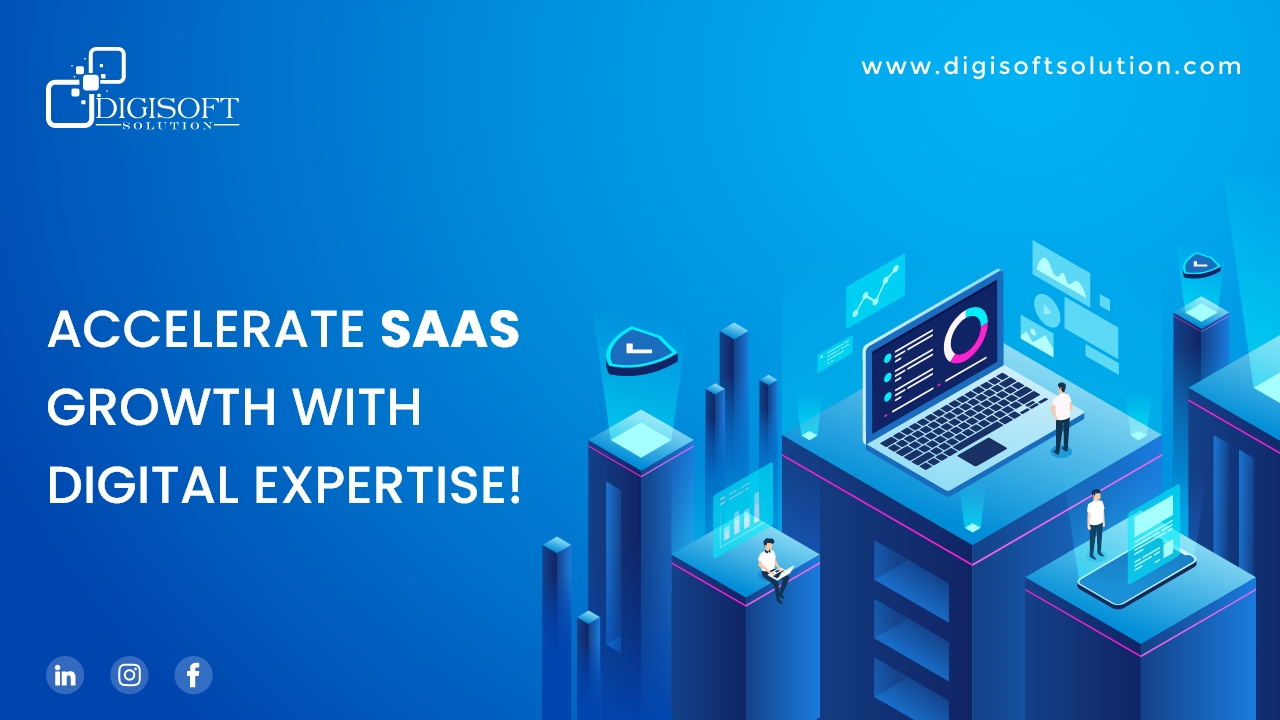
If you have been trying to understand how SaaS businesses actually work in 2026, you are not alone. The SaaS model has changed quite a bit in the last few years and what worked in 2019 looks very different from what is working now. This article breaks it all down in plain language, no fluff, and with real technical context so you actually walk away understanding the mechanics, not just the buzzwords.
What you will learn in this article: How SaaS is structured technically, how pricing and costs are determined, what real SaaS development requires, and how Digisoft Solution can help you build one from scratch.
What is the SaaS Business Model, Really?
SaaS development stands for Software as a Service. At its core, it means a software product is hosted on a cloud server and delivered to users over the internet on a subscription basis. The user does not download anything or manage any servers. They just log in and use it.
But from a business perspective, SaaS is much more than a delivery mechanism. It is a business model. And in 2026, it is also one of the most capital-efficient and scalable ways to build a software company if you understand the moving parts.
The Core Architecture of a SaaS Product
A properly built SaaS product in 2026 sits on a multi-tenant cloud architecture. Here is what that means technically:
- Multi-tenancy: Multiple customers (tenants) share the same underlying infrastructure and codebase but their data is completely isolated from each other.
- loud hosting: The product runs on cloud platforms like AWS, Google Cloud, or Azure. No single server. Resources scale automatically based on demand.
- API-first design: Most modern SaaS products are built with a backend API layer (REST or GraphQL) that the frontend talks to. This also allows third-party integrations easily.
- Continuous deployment: Code updates go out frequently, sometimes multiple times a day, without disrupting users. There is no "install the new version" moment.
- Role-based access control (RBAC): Different users in the same organization get different permissions. Admins, editors, viewers and so on.
How SaaS Businesses Make Money: The Revenue Model
This is where things get interesting. SaaS revenue comes from recurring subscriptions, but the way that is structured can vary a lot. Let us look at the main models used in 2026.
Subscription Tiers
Almost every SaaS product uses tiered pricing. A free or basic tier, a mid level plan, and a premium or enterprise plan. This is not arbitrary. It is a deliberate strategy called product led growth (PLG). You let users in for free or cheap, they see the value, and they upgrade when they need more.
- Freemium: Free forever with limited features. Converts a small percentage of users into paying customers.
- Free Trial: Full access for 14 to 30 days, then payment required. Generally higher conversion than freemium.
- Usage Based: You pay based on how much you use. Common in API products, infrastructure tools, and AI SaaS.
- Per Seat: You pay per user. Common in team collaboration tools, CRMs, and project management software.
- Flat Rate: One price, all features. Simpler to sell but harder to expand revenue over time.
Annual vs Monthly Billing
Most SaaS businesses push for annual contracts because it improves cash flow predictability and reduces churn risk. In 2026, most serious B2B SaaS products offer a discount of roughly 15 to 25 percent for annual billing. This is not always clearly disclosed upfront on pricing pages, by the way.
The Expansion Revenue Factor
Here is something that separates good SaaS businesses from great ones: expansion revenue. This means existing customers upgrading their plans or paying for add-ons without you doing extra sales work. If your expansion revenue is greater than your churn, your net revenue retention (NRR) goes above 100 percent, which is a very strong business signal.
Key SaaS Business Metrics You Must Understand
Anyone building or investing in a SaaS product in 2026 needs to understand a handful of core metrics. These numbers tell you whether the business is healthy or not.
|
Metric |
What it Means |
Why it Matters |
|
MRR / ARR |
Monthly or Annual Recurring Revenue |
The heartbeat of any SaaS business. Revenue you can count on month over month. |
|
Churn Rate |
Percentage of customers who cancel in a period |
High churn means your product has retention problems. Industry benchmark is under 5% annually for B2B SaaS. |
|
CAC |
Customer Acquisition Cost |
Total sales and marketing spend divided by number of new customers. Should be recovered within 12 months ideally. |
|
LTV |
Lifetime Value of a Customer |
Average revenue per customer multiplied by average customer lifespan. LTV should be at least 3x CAC. |
|
NRR |
Net Revenue Retention |
Measures growth from existing customers after churn. Over 100% means you grow even without new customers. |
|
Payback Period |
How long to recover CAC from a customer |
Shorter payback means faster profitability. Under 18 months is considered healthy. |
|
DAU/MAU Ratio |
Daily Active vs Monthly Active Users |
Measures product stickiness. High ratio means users come back daily, which signals strong engagement. |
Understanding these numbers is not just for investors. If you are building a SaaS product, you need to instrument your application from day one to track these. This means proper analytics integration, event tracking, and ideally a dedicated analytics layer in your backend.
The Technical Stack Behind a Modern SaaS Product in 2026
One thing other articles on this topic tend to gloss over is what actually goes into building a SaaS product technically. Let us be direct about this.
Frontend
Most modern SaaS frontend development built with React, Next.js, or Vue.js. In 2026, server-side rendering (SSR) and edge rendering have become much more common because of the SEO and performance advantages. A good SaaS UI should be fast, responsive, and accessible.
Backend
The backend development is where the real logic lives. In 2026 the dominant patterns are:
- Microservices: Breaking the backend into small, independently deployable services. Better for scaling but more complex to manage.
- Monolith first: Many successful SaaS products start as a well-structured monolith and split into services only when needed. This reduces complexity early on.
- Serverless functions: For event-driven workloads, background jobs, and spiky traffic. AWS Lambda and similar services are commonly used.
- REST or GraphQL APIs: REST is still dominant but GraphQL is preferred when you have complex data relationships or a mobile app alongside the web app.
Database Layer
Most SaaS products use a combination of a relational database (PostgreSQL is very popular in 2026) for structured data, and a NoSQL database (MongoDB, DynamoDB) for unstructured or document-based data. Caching layers like Redis are standard for performance.
Infrastructure and DevOps
In 2026, you cannot ship a serious SaaS product without proper DevOps. This includes:
- CI/CD pipelines for automated testing and deployment (GitHub Actions, GitLab CI, CircleCI)
- Container orchestration using Kubernetes or managed services like AWS ECS
- Infrastructure as code with Terraform or Pulumi
- Observability stack: logging (Datadog, Logtail), error tracking (Sentry), and uptime monitoring
Security Requirements
Security is non-negotiable in SaaS. Depending on your industry you may need to comply with SOC 2, ISO 27001, HIPAA (for healthcare), or GDPR (for European users). At a minimum your SaaS product in 2026 should have:
- End-to-end encryption for data in transit and at rest
- Multi-factor authentication (MFA)
- Role-based access control
- Regular penetration testing
- Audit logs for all user actions
SaaS Development Cost: What Actually Goes Into It
This is probably the question most people searching this topic actually want answered. But here is the honest truth: anyone who gives you a fixed price for SaaS development without understanding your product is either guessing or selling you something.
Let us break down what actually drives SaaS development cost so you can evaluate any quote you receive.
The Real Cost Drivers in SaaS Development
- Scope and feature set: A simple SaaS with basic CRUD functionality, authentication, and billing integration is very different from a platform with real-time collaboration, AI features, and complex reporting.
- User roles and permissions: The more complex your permission model, the more backend and frontend work it requires.
- Integrations: Every third-party integration (Stripe, Twilio, Salesforce, Zapier, etc.) adds development and testing time.
- Compliance requirements: Building for HIPAA or SOC 2 compliance adds significant engineering work around data handling, logging, and infrastructure.
- Mobile requirements: If you need a mobile app alongside the web app, that is essentially a separate project on top of your web SaaS.
- Team structure: A single freelancer building your SaaS is very different from a dedicated team with a project manager, designers, developers, and QA engineers.
General Development Investment Ranges
Rather than giving you numbers that may not reflect your situation, here is a framework for thinking about investment levels based on product complexity:
|
SaaS Complexity Level |
What This Typically Includes |
Investment Signal |
|
MVP / Starter |
Core feature set, basic auth, 1-2 user roles, Stripe billing, basic dashboard |
Lower end. Good for validating a concept before scaling up the product. |
|
Mid-Tier SaaS |
Multiple integrations, 3-5 user roles, custom reporting, mobile-responsive web app, onboarding flows, email automation |
Mid range. Requires a proper team, not a single developer. |
|
Full SaaS Platform |
Microservices or well-architected monolith, AI features, real-time functionality, compliance requirements, native mobile app, enterprise tier with SSO |
Higher end. Team of specialists across architecture, frontend, backend, DevOps, and QA. |
|
Enterprise SaaS |
Custom deployment options, multi-region support, dedicated infrastructure per tenant, complex analytics, full compliance stack |
Significant ongoing investment. Typically requires a dedicated engineering team long term. |
The numbers you often see cited on other websites ($10k to $500k for a SaaS product) are technically accurate in that both ends exist, but they are not very useful without knowing where your product fits on that spectrum. A better approach is to get a scoped estimate from a technical partner who has built SaaS products before.
Digisoft Solution offers free consultation and technical roadmapping before any engagement begins. Book a free consultation here to get a realistic scope and estimate for your SaaS product.
Hidden Costs That Most Articles Skip
Beyond development, here are cost factors that often catch SaaS founders off guard:
- Cloud infrastructure: Even a small SaaS product running on AWS or GCP will have monthly infrastructure costs. These scale with your user base.
- Third-party services: Email (SendGrid, Postmark), SMS (Twilio), payments (Stripe fees), monitoring (Datadog), and so on add up quickly.
- Customer support tooling: Intercom, Zendesk, or similar tools are often needed from day one.
- Ongoing maintenance: After launch, you will need continuous bug fixes, dependency updates, security patches, and feature development. A SaaS product is never truly finished.
- DevOps and infrastructure management: If your team does not include a DevOps engineer, you will need to account for that separately.
SaaS Go-To-Market in 2026: How Customer Acquisition Actually Works
Building the product is only half the equation. The other half is getting customers. Here is how SaaS companies grow in 2026.
Product Led Growth (PLG)
PLG means the product itself is the main driver of customer acquisition and expansion. Slack, Notion, Figma, and Calendly are classic PLG companies. Users discover the product, try it for free, and invite their colleagues. The sales motion is bottom-up, meaning individual users bring the product into companies rather than executives buying top-down.
PLG requires you to invest heavily in onboarding, in-app experience, and the free tier. Your activation moment, the point where a new user first experiences real value, needs to happen within minutes, not hours.
Sales Led Growth (SLG)
For more complex products or enterprise SaaS, you need a sales team. The product might not be something a user can self-serve on. SLG involves outbound prospecting, demo calls, procurement processes, and longer sales cycles. Average contract values are much higher which justifies the cost of sales.
Content and SEO
Organic content is still one of the highest ROI acquisition channels for SaaS in 2026. If your product solves a specific problem, people are searching for that problem on Google. A strong content strategy combined with proper SEO can drive significant inbound traffic without paid acquisition cost.
Integrations and Marketplaces
In 2026, being listed in app marketplaces (Salesforce AppExchange, HubSpot Marketplace, Shopify App Store) is a legitimate and often overlooked growth channel. Integrating with tools your target customers already use puts your product in front of warm leads.
SaaS Vertical Categories Dominating in 2026
Not all SaaS markets are equal. These are the categories that are seeing the most activity and investment in 2026:
AI-Native SaaS
Products that are built around AI capabilities rather than bolting AI on as a feature. Think AI-powered legal research tools, AI writing assistants, AI-driven analytics platforms. These products often use usage-based pricing tied to AI API consumption.
Vertical SaaS
Industry-specific software built for one particular sector like healthcare, construction, real estate, or legal. Vertical SaaS often commands higher prices because it solves domain-specific workflows that horizontal tools cannot address well.
Infrastructure and Developer Tools
SaaS products that developers use to build other software. API platforms, monitoring tools, CI/CD services, and database hosting. High technical switching costs and very sticky customer relationships.
Fintech and Payments SaaS
Financial tools, embedded payments, expense management, and accounting software. Complex regulatory requirements but very high LTV customers.
Real-World SaaS Products Built to Scale: Digisoft Solution Case Studies
Understanding theory is useful but seeing how these concepts apply to real products is more valuable. Here are a few examples of what a properly architected SaaS product looks like in practice.
HealthShield: Subscription-Based Document Management SaaS
Digisoft Solution built HealthShield Credentialing, a subscription platform for managing healthcare documents, resume creation, and Mailchimp integration. This is a classic example of vertical SaaS built for a specific compliance-heavy industry. Read the HealthShield case study.
S Cubed: HIPAA-Compliant Practice Management Platform
A full ABA therapy practice management SaaS with real-time care tracking, multi-clinic management, and collaboration features built to HIPAA compliance standards. This case study shows what a compliance-first SaaS build looks like. Read the S Cubed case study.
IHLAQ: Real-Time Service Booking Platform
A high-scale marketplace handling 5,000+ peak daily bookings with conflict-free scheduling, bilingual support, and hybrid service models. While not strictly SaaS in the subscription sense, it demonstrates the real-time infrastructure patterns that modern SaaS products require. Read the IHLAQ case study.
See more examples on the Digisoft Solution case studies page.
How Digisoft Solution Helps You Build and Scale Your SaaS Product
There are a lot of development agencies that will take your money and deliver a product. What is rarer is a partner who helps you think through the technical architecture, the business model implications, the scalability requirements, and the go-to-market approach before writing a single line of code.
That is what Digisoft Solution does.
We Start With a Technical Roadmap, Not a Sales Pitch
Before any engagement, we work with you to map out what you are actually building. What problem does it solve, who is the user, what does the MVP look like, what are the phase two features, and what technical decisions today will either enable or constrain you later. Book a free consultation to start that conversation.
Full-Stack SaaS Development
From UI/UX design to backend APIs to cloud infrastructure, we handle the complete technical stack. Our team includes:
Our team includes:
- UI/UX Designers and Frontend Developers (React, Next.js, Angular, Vue
- Backend & API Engineers (Node.js, .NET, Python, GraphQL/REST)
- Cloud Architects, DevOps & Infrastructure Specialists (AWS, Azure, GCP, Kubernetes, Terraform)
- QA Engineers, Security Experts & Technical Project Managers
Flexible Engagement Models
Not every SaaS project needs the same team structure. We offer:
Not every SaaS project needs the same team structure. We offer:
- Dedicated Development Teams (fully managed, cross-functional teams working exclusively for you)
- IT Staff Augmentation / Team Extension (add specialists to your existing team
- Fixed-Price / Project-Based Outsourcing (for clearly scoped deliverables with predictable timeline
Post-Launch Support and Iteration
A SaaS product that launches and receives no updates will die. We provide post-launch maintenance, feature development, performance monitoring, and infrastructure management so your product keeps improving after it is live.
Industry Experience That Matters
We have built software for healthcare, fintech, real estate, legal tech, education, logistics, and more. This means when you come to us with a SaaS idea in a regulated industry, we already understand the compliance requirements and common technical pitfalls.
Frequently Asked Questions (FAQ)
Q: What makes a SaaS business different from a traditional software business?
A traditional software business sells a licence and the customer installs the software themselves. They might pay for annual maintenance but the core transaction is one-time. SaaS is different because the software is always hosted and operated by the vendor, customers pay recurring subscriptions, and updates happen continuously in the background. This creates a fundamentally different economic model with predictable recurring revenue.
Q: How much does SaaS infrastructure cost to run per month?
Infrastructure cost depends heavily on your user base, traffic patterns, and architecture choices. A well-optimized early-stage SaaS product with a few hundred active users can often run for a few hundred dollars per month on AWS or Google Cloud. As you scale to thousands or tens of thousands of users, you are looking at a much more significant infrastructure investment. Cost optimization through proper auto-scaling, reserved instances, and architecture decisions can make a big difference at scale.
Q: What is a good churn rate for a SaaS business?
For B2B SaaS targeting small and medium businesses, monthly churn below 3 percent is generally considered healthy. For enterprise SaaS, annual churn below 5 percent is the benchmark. Consumer SaaS tends to have higher churn than B2B because individual consumers are more price-sensitive and less tied to workflow integrations.
Q: Do I need a native mobile app for my SaaS product?
Not necessarily, at least not at launch. Many successful SaaS products run entirely in the browser and are mobile-responsive without a native app. Native mobile apps make sense when your users need to do significant work on their phones (field service workers, for example) or when mobile-specific features like push notifications, camera access, or offline mode are core to your value proposition. If you are building for desktop-first knowledge workers, a native app can often wait.
Q: What is the best way to validate a SaaS idea before building?
The most cost-effective validation approaches in 2026 are: talking directly to 20 to 50 people who fit your target customer profile, building a landing page and measuring signup intent, creating a manual workflow before automating it (sometimes called a Wizard of Oz test), and building a very small MVP that handles only the core workflow. The goal is to learn whether people have the problem you think they have, and whether your proposed solution is something they would actually pay for.
Q: How do SaaS companies handle customer data security?
Proper SaaS data security involves encryption at rest and in transit, strict access controls, regular security audits, and compliance with relevant regulations. In 2026, customers, especially enterprise customers, are much more scrutinous about data handling practices. SOC 2 Type II certification has become a de facto requirement for selling to enterprise buyers, and it involves an independent audit of your security controls, availability, and data handling processes.
Q: What is the difference between B2B SaaS and B2C SaaS?
B2B SaaS sells to businesses. B2C SaaS sells to individual consumers. The economics are very different. B2B typically has higher contract values, longer sales cycles, lower churn, and fewer customers. B2C has lower price points, higher volume, higher churn, and faster purchase decisions. Most technical SaaS products (project management, CRM, analytics, developer tools) are B2B. Consumer-facing productivity apps, personal finance tools, and fitness apps are common B2C categories.
Q Can Digisoft Solution help me build a SaaS MVP quickly?
Yes. Digisoft Solution specialises in helping startups and businesses build SaaS MVPs with the right technical foundation. We start with a free consultation and technical roadmap so you understand what you are building and why before any development begins. Get in touch here.
Q: What does SaaS stand for?
SaaS stands for Software as a Service. It means software that is hosted in the cloud and delivered to users over the internet on a subscription basis, with no installation required.
Q: Is Netflix a SaaS product?
Yes, technically. Netflix is a subscription-based service delivered over the internet, which fits the SaaS definition. However most people use SaaS to refer to business software tools like Salesforce, Slack, or Zoom rather than content streaming platforms.
Q: What is multi-tenancy in SaaS?
Multi-tenancy means multiple customers share the same application infrastructure and codebase, but their data is kept completely separate and private. It is what makes SaaS cost-efficient at scale because you are not running a separate server for every customer.
Q: What is the average SaaS profit margin?
Gross margins for SaaS businesses typically range from 60 to 80 percent, which is one of the highest of any industry. This is because after you build the software, the cost of serving each additional customer is very low. Net profit margins vary widely depending on how aggressively the company is investing in growth
Q: What is MRR in SaaS?
MRR stands for Monthly Recurring Revenue. It is the total predictable subscription revenue your SaaS business collects each month. It is the single most watched metric in SaaS because it shows whether the business is growing, flat, or shrinking in real time.
Q: How is SaaS pricing usually structured?
Most SaaS products use tiered pricing with two to four plans. A basic or free tier for small users, a mid-range plan for growing teams, and a premium or enterprise plan for larger organizations. Some products also use usage-based pricing where you pay based on actual consumption rather than a flat monthly fee.
Q: What is product led growth in SaaS?
Product led growth (PLG) means the product itself drives customer acquisition instead of a sales team. Users discover the product, sign up for free, experience value, and then upgrade or invite colleagues. Slack, Notion, and Figma are well known PLG companies. It works best when users can self-serve and see value quickly without needing a demo or sales call.
Q: What is the difference between SaaS and a website?
A website is primarily informational and public-facing. A SaaS product is a full software application with user accounts, data storage, business logic, and features that users interact with to accomplish specific tasks. SaaS is more like a tool than a page. Most SaaS products have a website as their marketing front, but the actual product is the logged-in application behind it.
Q: What programming languages are most used to build SaaS products?
The most common choices in 2026 are JavaScript and TypeScript for frontend (React, Next.js), and Node.js, Python, Ruby on Rails, or Go for the backend. Java and .NET are also widely used in enterprise SaaS. The choice depends more on your team’s expertise and the specific requirements of your product than on any single language being objectively best.
Q: How do SaaS companies handle payments and billing?
Almost all SaaS products use a payment processing platform rather than handling card data themselves. Stripe is the dominant choice in 2026, though Paddle, Chargebee, and Recurly are also widely used. These platforms handle subscription billing cycles, failed payment retries, proration when customers upgrade or downgrade, and tax compliance across different regions.
Q: What is customer onboarding in SaaS and why does it matter?
Onboarding is the process of helping a new user get to their first moment of real value inside your product. Poor onboarding is one of the leading causes of early churn in SaaS. If a user signs up but never gets to see what makes the product useful, they will cancel. Good onboarding is fast, guided, and leads the user to a clear win within their first session.
Q: What is ARR and how is it different from MRR?
ARR stands for Annual Recurring Revenue. It is simply MRR multiplied by 12. ARR is the preferred metric for B2B and enterprise SaaS because deals are often annual contracts. MRR is more commonly used by consumer SaaS or businesses with monthly billing. Both measure the same underlying thing, just at different time scales.
Q: Do SaaS products need a mobile app?
Not always. Most B2B SaaS products designed for desktop workflows do not need a native mobile app at launch. A mobile-responsive web app is often enough. Native apps make sense when your users need to work on their phones regularly, need offline access, or need mobile-specific features like push notifications or camera integration.
Q: How do SaaS companies reduce churn?
The most effective churn reduction tactics are better onboarding so users reach value faster, proactive customer success outreach to at-risk accounts, regular feature releases that give users new reasons to stay, and deep workflow integrations that make the product hard to replace. Churn is almost always a product or onboarding problem before it is a pricing problem.
Q: What is the role of APIs in a SaaS product?
APIs (Application Programming Interfaces) are the backbone of a SaaS product. They allow the frontend to communicate with the backend, enable third-party integrations, and let customers connect your product to their own systems. Most modern SaaS products are API-first, meaning the API is a core part of the product and not just an afterthought.
Q: What cloud provider should I use for my SaaS product?
AWS is the most widely used and has the broadest set of services available. Google Cloud is strong for data-heavy products and AI workloads. Microsoft Azure is the preferred choice if your target customers are enterprise companies already in the Microsoft ecosystem. For most early-stage SaaS products, AWS or Google Cloud are fine starting points. The decision matters less than ensuring your architecture does not lock you ito one provider unnecessarily.
Q: What is a SaaS MVP and what should it include?
A SaaS MVP (Minimum Viable Product) should include user authentication and account management, the one core feature that solves the primary problem, basic subscription billing, and enough stability for real users to test it without constant crashes. It should not include every feature you plan to build eventually. The goal is to get real user feedback as fast as possible, not to ship a complete product.
Q: Is it better to outsource SaaS development or hire in-house?
It depends on your stage and budget. Early-stage startups often benefit from outsourcing because it is faster and more cost-effective than building a full in-house team from scratch. Established companies with predictable product roadmaps often prefer in-house teams for speed and knowledge retention. A hybrid model, where a core in-house team works alongside an outsourced partner, is increasingly common and practical in 2026.
Final Thoughts
The SaaS business model in 2026 is more mature and more competitive than ever before. The fundamentals have not changed: recurring revenue, low marginal cost at scale, and the ability to improve the product continuously for all customers at once. But executing on those fundamentals requires a solid technical foundation, a clear understanding of your unit economics, and a product that delivers genuine value to a specific group of people.
Whether you are an entrepreneur with a SaaS idea, a business looking to productize a service, or a technical team that needs help scaling an existing product, the difference between success and failure often comes down to the decisions made in the first few months of development.
Digisoft Solution has helped 500+ clients across North America, Europe, Australia, and the Middle East build software that works. Start a conversation with our team today and let us help you build something worth using.
More Questions People Are Asking About SaaS in 2026
These are the questions that people are actually searching for when they research the SaaS business model. We have addressed them throughout this article but here is a quick reference.
What is the difference between SaaS, PaaS, and IaaS?
SaaS (Software as a Service) is the finished application you use. PaaS (Platform as a Service) is a platform developers use to build and deploy applications. IaaS (Infrastructure as a Service) is raw computing infrastructure (servers, storage, networking) that you manage yourself. Most SaaS products are built on top of IaaS and use some PaaS components.
Is SaaS still a good business model in 2026?
Yes, but the bar has risen. In 2026 the SaaS market is more competitive than it has ever been. You cannot win on features alone. Products need better onboarding, stronger retention mechanics, and sharper positioning in a specific niche. AI native products and vertical SaaS are seeing particularly strong growth.
How long does it take to build a SaaS product?
An MVP with core functionality typically takes 3 to 6 months with a dedicated team. A more complete product with all the features needed to compete in an established market usually takes 9 to 18 months. These timelines assume proper planning, a competent team, and a well-scoped feature set.
Whattechnology should I use to build a SaaS product?
The honest answer: it depends on your use case. For most B2B web SaaS, a combination of React or Next.js on the frontend, Node.js or a Python framework on the backend, PostgreSQL for data, and AWS or Google Cloud for infrastructure is a solid starting point. The most important thing is picking technologies your team knows well, not chasing whatever is trendy.
Can I build a SaaS product without a technical co-founder?
Yes, but you need to either hire a technical lead or work with a development partner who can own the architecture decisions. The risk with non-technical founders is making early architectural decisions that are hard to undo. Choosing the wrong database, building on an inflexible tech stack, or not designing for multi-tenancy from the start can be very expensive to fix later.
What is churn and why does it matter so much in SaaS?
Churn is when customers cancel. In a subscription business, churn is the enemy of growth because it forces you to constantly replace lost revenue before you can grow. A business with 10 percent monthly churn loses roughly 70 percent of its customers every year. That means you would need to replace your entire customer base almost annually just to stay flat. Keeping churn below 2 to 3 percent per month is essential for sustainable growth.
Should I build SaaS with microservices or a monolith?
Start with a well-structured monolith. This is the technical consensus in 2026. Microservices add significant complexity around deployment, service communication, distributed tracing, and debugging. Most early-stage SaaS products do not have the engineering resources or the scale to justify that complexity. Build a clean monolith, define clear module boundaries, and split into services when you have a specific reason to do so.reduce
Digital Transform with Us
Please feel free to share your thoughts and we can discuss it over a cup of coffee.














































 Kapil Sharma




 Digisoft Solution