Table of Content
- What Is Healthcare App Development?
- Types of Healthcare Applications
- Why Custom Health App Development Often Beats Off-the-Shelf
- Healthcare Mobile Application Development: iOS, Android or Cross-Platform
- Healthcare App Development iOS
- Android Healthcare App Development
- Cross-Platform Mobile Healthcare Application Development
- Medical Mobile App Development: Features and Compliance
- Core Features Most Healthcare Apps Need
- Advanced Features That Raise Cost (and Value)
- Healthcare App Compliance: What Actually Applies
- HIPAA (United States)
- Technical Safeguards Checklist
- About the BAA
- Architecture Decisions That Matter Early
- Medical App Development Services: What a Good Partner Delivers
- The Delivery Process
- Engagement Models
- How to Choose a Healthcare App Development Company
- Healthcare App Development Cost in 2026 (With a Reality Check)
- Cost by App Type
- Cost by Feature (Planning Estimates)
- Reverifying What Other Articles Say: Is the Price Actually Good?
- The Bottom-Up Math: Why Rates Matter More Than Most Articles Admit
- Hidden and Recurring Costs Most Budgets Forget
- How to Reduce Cost Without Cutting Compliance
- Digisoft Solution: Healthcare App Development Company With 13+ Years of Experience
- What Makes Our Approach Different
- Healthcare Case Studies
- Ways to Work With Us
- Questions People Ask About Healthcare App Development
- What is the first step in building a healthcare app?
- How long does it take to build a healthcare app?
- Do I need HIPAA compliance for my health app?
- Is a wellness app a medical device?
- Can AI be added to a healthcare app?
- Should I build native or cross-platform?
- Can I integrate my app with Epic or Cerner?
- How do healthcare apps make money?
- What is the biggest reason healthcare app projects fail?
- How do I keep patients using the app?
- FAQ
- What is custom healthcare app development?
- What is mobile health app development?
- What do healthcare app development services include?
- What does the future health app look like?
- What are healthcare application development services?
- What are healthcare mobile app development services?
- What is app development healthcare, in simple terms?
- How much does healthcare mobile app development cost?
- What is mobile app development for healthcare used for?
- What is medical appointment booking software?
- Final Thoughts
Digital Transform with Us
Please feel free to share your thoughts and we can discuss it over a cup of coffee.
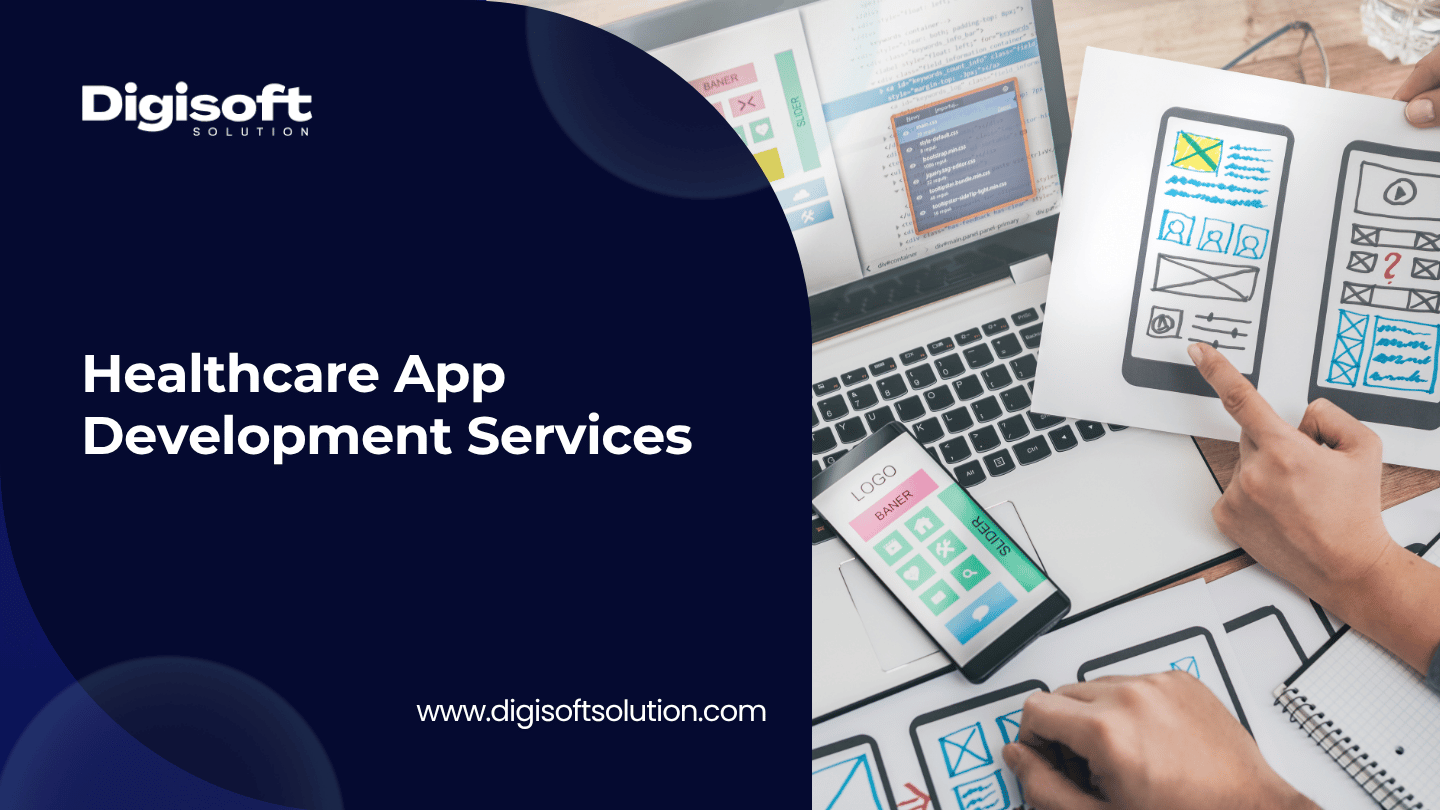
Healthcare app development is the process of designing, building and launching software for patients, clinicians or payers, usually with HIPAA grade security and often with EHR integration. In 2026, a realistic budget is roughly $40,000 to $100,000 for a patient engagement MVP, $100,000 to $300,000 for a telehealth or remote monitoring app with EHR integration, and $300,000 or more for an enterprise multi-facility platform. These ranges assume a blended offshore or nearshore team, and a typical MVP takes 4 to 6 months.
If you are a founder, a hospital IT lead or a product owner at a digital health company, this guide is meant to answer the questions you actually have before signing anything: what does it cost, what does it need to include, what rules apply, and how do you tell a good vendor from a risky one.
We build these products every week at Digisoft Solution, so we have written this from the delivery side, not from a marketing brochure.
What Is Healthcare App Development?
Healthcare app development means planning, designing, engineering, testing and maintaining software that supports care delivery, patient engagement, clinical operations or health administration. The software can run on mobile, web or both, and it nearly always handles protected health information (PHI), which is why it is built differently from a normal consumer app.
A food delivery app can ship with a few security mistakes and survive. A healthcare app that leaks a patient record can trigger regulatory penalties, loss of hospital contracts and real harm to people. That single difference drives most of the extra cost and time.
Types of Healthcare Applications
Healthcare applications fall into a handful of buckets. Knowing which bucket you are in is the first step to a sane budget.
|
App type |
Main users |
Typical features |
Relative complexity |
|
Patient engagement app |
Patients |
Booking, records access, reminders, secure messaging |
Low to medium |
|
Telehealth and virtual care |
Patients, doctors |
Video visits, e-prescribing, payments, EHR sync |
Medium to high |
|
Remote patient monitoring (RPM) |
Patients, care teams |
Wearable data, alerts, clinical dashboard |
High |
|
Clinician workflow app |
Doctors, nurses |
Documentation, care coordination, scheduling |
Medium to high |
|
Mental health and behavioral app |
Patients, therapists |
Journaling, sessions, crisis escalation, privacy controls |
Medium |
|
Medical device companion app |
Patients, device makers |
Bluetooth pairing, data integrity, possible FDA path |
High |
|
Pharmacy and medication adherence |
Patients, pharmacists |
Reminders, refills, drug database, e-prescribing |
Medium |
|
Payer and insurance member app |
Members |
Digital ID cards, claims, provider search |
Medium |
If you want to explore a specific category before reading on, we have written deeper guides on telemedicine app development companies, doctor on-demand apps, mHealth app development and mental health app development.
Why Custom Health App Development Often Beats Off-the-Shelf
Custom health app development makes sense when your workflow is not generic. Off-the-shelf platforms are fine for a small clinic that just needs booking. They struggle when you need a unique care pathway, deep integration with your EHR, white-label branding or your own data model.
Reasons teams go custom:
- You need to own the source code and the roadmap
- Your integrations (EHR, labs, pharmacy, billing) are not supported by a template
- You plan to raise funding and investors will review the technical foundation
- Per-seat licensing on a SaaS tool gets more expensive than owning the product at scale
- You need clinical or compliance controls that templates simply do not expose
If you are still deciding between building and buying, our MVP development services team can scope a lean first version so you test the idea before committing a full budget.
Healthcare Mobile Application Development: iOS, Android or Cross-Platform
Healthcare mobile application development starts with one early decision that quietly controls cost and timeline: which platforms do you launch on, and with what technology.
Healthcare App Development iOS
Native iOS (Swift) gives you the tightest integration with Apple Health, HealthKit, Face ID and Apple Watch. If your patients skew toward iPhone users, or your product depends on Apple wearables, healthcare app development iOS is a strong first target. Our iOS application development team works in Swift for exactly this kind of device-level integration.
Android Healthcare App Development
Android healthcare app development matters because Android holds the majority of global device share, and in many regions it is the default phone for patients. Native Android (Kotlin) works well with Health Connect, a wide range of Bluetooth medical devices and low-cost hardware. If your users are international or price-sensitive, android healthcare application development usually deserves first-class attention, not a "port later" mindset. See our Android application development service for the technical approach.
Cross-Platform Mobile Healthcare Application Development
Mobile healthcare application development with Flutter or React Native lets one team ship to both stores from a shared codebase. For most patient-facing apps (booking, records, messaging, reminders) this is the practical choice. It is also what we used on the Vision Care Direct mobile app, which runs on iOS and Android with React Native. You can read more about Flutter development services or native vs cross-platform trade-offs.
Platform Comparison Table
|
Approach |
Best for |
Cost impact |
Watch out for |
|
Native iOS only |
Apple-heavy audiences, Apple Watch features |
Baseline |
Misses Android users |
|
Native Android only |
Global or price-sensitive audiences |
Baseline |
Misses iPhone users |
|
Native iOS + Android |
Device-heavy apps, advanced hardware access |
Around 1.8x a single platform |
Two codebases to maintain |
|
Flutter or React Native |
Most patient apps, MVPs, fast launch |
Often 30 to 40% less than two native builds |
Some device-specific features need native modules |
|
Progressive web app |
Simple portals, low-friction access |
Lowest |
Limited device and notification access |
The 1.8x figure for two native apps and the 30 to 40% saving for cross-platform are widely quoted in 2026 cost guides, and they pass a technical sanity check. The backend, API, admin panel and compliance work are shared, so two native apps do not cost a full 2x.
A Simple Rule for Choosing
Start cross-platform unless you have a hard hardware reason not to. Go native when you rely on deep sensor access, Apple Watch complications, or real-time Bluetooth medical devices where reliability is non-negotiable.
One Honest Caveat
Its also worth saying that no framework removes the need for proper testing on real devices. Health apps that "work in the simulator" fail in clinics all the time.
Medical Mobile App Development: Features and Compliance
Medical mobile app development is where most projects either get disciplined or get expensive. The features list is the easy part. The compliance layer is what separates a launchable product from a prototype.
Core Features Most Healthcare Apps Need
- Secure sign-up, login and multi-factor authentication
- Role-based access (patient, clinician, admin, support)
- Appointment booking and rescheduling
- Secure messaging between patients and care teams
- Push notifications and reminders
- Health record viewing and document upload
- Payments and insurance information
- Admin dashboard with audit logs
Advanced Features That Raise Cost (and Value)
- Video consultations with e-prescribing
- Wearable and IoT device sync for remote monitoring (see our wearable app development and IoT app development services, plus this read on IoT in healthcare use cases)
- HL7 and FHIR EHR integration (see API integration services)
- AI symptom intake, triage chatbots and clinical summaries (see AI development services and AI chatbot development)
- Analytics dashboards for care teams
- Multi-language and accessibility support
Healthcare App Compliance: What Actually Applies
HIPAA (United States)
If your app creates, receives, stores or transmits PHI on behalf of a covered entity, HIPAA applies. Here is the part many vendors blur: a developer cannot make you HIPAA compliant on its own. The covered entity (the provider, health system or payer) holds the compliance obligation. A good development partner builds HIPAA-ready software, supports your compliance program and signs a business associate agreement (BAA). You can see how we state this on our compliances page.
Technical Safeguards Checklist
- Encryption in transit (TLS) and at rest (AES-256)
- Role-based access control with least-privilege defaults
- Audit logging of every access to PHI
- Automatic session timeout and device-level protections
- Secure backups and a tested recovery plan
- HIPAA-eligible cloud services with signed agreements
- Regular security testing (see security testing services)
About the BAA
A BAA should be signed before any development work touches real PHI. Test with synthetic data until it is in place.
FDA Software as a Medical Device (SaMD)
If your app diagnoses, treats or directly drives a clinical decision, the FDA may regulate it as a medical device. General wellness apps typically fall outside that. The earlier you ask this question, the cheaper it is, because a regulatory pathway changes your documentation, testing and release process.
HL7 and FHIR Interoperability
If your app exchanges data with Epic, Cerner or other EHRs, you will work with HL7 v2 and FHIR R4. The code is not the slow part. The EHR vendor's certification and testing process is. Plan roughly 6 to 12 extra weeks for a typical major EHR integration.
GDPR and Regional Rules
If you serve users in the EU or UK, GDPR applies as well, and other regions have their own health data rules. Data residency decisions (where servers live) should be made at architecture stage, not after launch.
App Store Health Data Rules
Apple and Google both apply extra review attention to apps that handle health data, including disclosure and consent requirements. Build those into the product early so review does not delay your launch date.
Architecture Decisions That Matter Early
- Backend: ASP.NET Core, Node.js or Python, chosen for your team and integration needs
- Cloud: AWS, Azure or Google Cloud using HIPAA-eligible services (see cloud application development)
- Data model: FHIR-aligned from day one saves rework later
- Multi-tenancy: critical if you serve multiple clinics, covered in our write-up on multi-tenant HIPAA architecture for ABA therapy clinics
- EHR vs EMR scope: if you are unsure which your product touches, read EHR vs EMR development
Medical App Development Services: What a Good Partner Delivers
Medical app development services should cover the full path from idea to a supported production app, not just coding. When you compare vendors, look for these layers.
The Delivery Process
|
Stage |
Typical duration |
What you should receive |
|
Discovery and compliance mapping |
1 to 2 weeks |
User flows, HIPAA scope, BAA needs, integration list |
|
Product and technical scoping |
About 1 week |
Architecture, platform choice, milestones, written estimate |
|
UX and UI design |
2 to 3 weeks |
Approved screens built for clinical workflow (see UI/UX design) |
|
Agile development |
Varies by scope |
Two-week sprints with reviewable builds |
|
QA, security and integration testing |
Parallel to build |
Functional, security and interoperability test results (see software testing and QA) |
|
Launch |
1 to 2 weeks |
Store submissions, health-data disclosures, go-live plan |
|
Ongoing support |
Continuous |
Patching, monitoring, new features |
For a wider view of timelines, see our app development timelines guide and the mobile app development process.
Engagement Models
- Fixed price: best when scope is clear and you have a launch date
- Dedicated team: best for ongoing product growth, see hire a dedicated development team
- Staff augmentation: best when you already have engineers and need specific healthcare or FHIR skills, see staff augmentation
How to Choose a Healthcare App Development Company
Ask these questions, and watch how directly they are answered:
- Have you shipped a real EHR integration, or only a sandbox demo?
- Will you sign a BAA before touching PHI?
- Do you say "we make you HIPAA compliant"? (If yes, be careful. See the HIPAA section above.)
- Who exactly will build my app, and can I speak to them?
- Is the estimate written, itemised and tied to milestones?
- What happens after launch, and what does support cost?
For a longer evaluation framework, see how to choose a mobile app development company.
Red Flags
- A fixed quote given in the first call with no discovery
- No mention of compliance, FHIR or security testing
- Prices far below every other bid (the gap usually reappears later as change requests)
- No named engineers, only account managers
Healthcare App Development Cost in 2026 (With a Reality Check)
This is the section most readers scroll to first, and also the section where most articles are weakest. They quote a range and move on. We will do two extra things: check what other published articles say, and test those numbers with simple engineering math.
Cost by App Type
|
App type |
Estimated cost range |
Typical timeline |
|
Patient engagement MVP |
$40,000 to $100,000 |
3 to 5 months |
|
Telehealth or RPM app with EHR integration |
$100,000 to $300,000 |
5 to 9 months |
|
Enterprise multi-facility health system app |
$300,000 or more |
9 to 18 months |
These ranges match what we publish on our healthcare mobile app development services page and reflect a blended offshore or nearshore delivery model. A written breakdown comes after a free discovery call.
Cost by Feature (Planning Estimates)
These are rough planning ranges for individual modules, not quotes. Real cost depends on design depth, integrations and your compliance scope.
|
Feature or module |
Estimated cost |
|
Authentication, roles and onboarding |
$4,000 to $10,000 |
|
Appointment booking module |
$6,000 to $18,000 |
|
Secure in-app messaging |
$8,000 to $20,000 |
|
Video consultation (third-party SDK) |
$15,000 to $40,000 |
|
E-prescribing and drug database connection |
$15,000 to $45,000 |
|
Payments and billing |
$8,000 to $25,000 |
|
Provider portal and admin dashboard |
$15,000 to $50,000 |
|
EHR integration via HL7 or FHIR (per EHR) |
$20,000 to $60,000 |
|
Wearable and remote monitoring sync |
$20,000 to $60,000 |
|
AI features (triage, summaries, chatbots) |
$20,000 to $80,000 or more |
|
Security hardening and penetration testing |
$8,000 to $25,000 |
Reverifying What Other Articles Say: Is the Price Actually Good?
We read the top cost guides published in 2026 and checked each range against a technical question: could a team realistically build this, with PHI protection and testing, for that money?
|
Source (as published in 2026) |
Range they state |
Our technical verdict |
|
Acquaint Softtech |
$25,000 lean MVP to $500,000+ enterprise |
The top end is realistic. The $25,000 floor only works for a very thin app with no EHR link and a low-cost team. |
|
Folio3 Digital Health |
MVP $40,000 to $100,000, mid-level $80,000 to $250,000, enterprise $250,000 to $500,000+ |
Most realistic of the group. It lines up with our bottom-up math below. |
|
Purrweb |
$40,000 to $500,000, mid-level about $80,000 to $150,000 |
Fair. Mid-level looks slightly low if EHR integration is included. |
|
Jotform |
Wellness $30,000 to $120,000, telemedicine $30,000 to $150,000, prescription app $28,000 to $45,000 |
Telemedicine at $30,000 is only believable with a white-label video SDK and no EHR work. Their own note about ongoing drug database costs is correct. |
|
CMARIX |
Basic healthcare app $25,000 to $65,000 |
Reasonable for a basic app without deep integrations. |
|
Dev Technosys |
$15,000 basic to $150,000+ for advanced |
$15,000 for anything handling PHI is a red flag. The 15 to 20% yearly maintenance rule of thumb they mention is sound. |
|
Digisoft Solution |
MVP $40,000 to $100,000, telehealth with EHR $100,000 to $300,000, enterprise $300,000+ |
In line with the market and with the math below. |
A few other numbers worth sanity checking from those same guides:
- "An MVP is about 40 to 60% of the full build." Believable. A first release skips secondary roles, analytics and deeper integrations, so it can land at roughly half of the full scope.
- "Custom design adds 20 to 40%." Believable for apps with clinical workflows that need bespoke screens, but it should not apply to every project.
- "Feature scope drives 30 to 40% of the budget." Plausible, because features pull in integrations, QA and compliance work with them.
The Bottom-Up Math: Why Rates Matter More Than Most Articles Admit
Most cost guides never say whose hourly rate their number assumes. That is the biggest hidden variable. Here is a simple test using a patient engagement MVP (booking, profile, secure messaging, notifications, admin panel, basic FHIR read access).
Assumed effort: about 1,400 to 2,200 hours across a project manager, UX designer, two cross-platform mobile developers, a backend developer, a QA engineer and part-time DevOps. This is a planning assumption, and your scope may differ.
|
Team location (blended hourly rate) |
Rate |
Estimated cost for 1,400 to 2,200 hours |
|
Offshore (India, Eastern Europe) |
$35 to $55 |
About $49,000 to $121,000 |
|
Nearshore |
$60 to $90 |
About $84,000 to $198,000 |
|
US or UK |
$120 to $170 |
About $168,000 to $374,000 |
So the headline "$40,000 to $100,000 MVP" is realistic only with an offshore or blended team. The same scope with a US-only team can cost two to three times as much. Neither is wrong. They are just different delivery models, and anyone comparing quotes should compare like with like.
Our verdict: the commonly published ranges of $40,000 to $100,000 for an MVP and $100,000 to $300,000 for telehealth with EHR are good, honest numbers for a blended model. Prices under about $25,000 for an app that touches PHI should make you ask what has been left out, usually security testing, compliance architecture or proper QA.
Hidden and Recurring Costs Most Budgets Forget
|
Cost item |
Typical range |
Notes |
|
Annual maintenance |
15 to 20% of build cost per year |
Patching, OS updates, bug fixes. See how much it costs to maintain a mobile app |
|
HIPAA-eligible cloud hosting |
Roughly $500 to $3,000 per month early on |
Grows with users and data |
|
Third-party services |
Usage based |
Video, SMS, EHR middleware, drug databases |
|
Penetration testing and security review |
$5,000 to $25,000 |
Often needed before a health system signs |
|
Regulatory advice |
Varies widely |
Can be large if your app qualifies as SaMD |
|
App store accounts |
$99 per year (Apple), $25 one-time (Google) |
Small, but easy to forget |
How to Reduce Cost Without Cutting Compliance
- Launch an MVP with one user type and one core workflow
- Use cross-platform development for patient apps
- Buy, do not build, commodity pieces like video and SMS
- Integrate with one EHR first, not five
- Fix scope in writing and keep a change-request process
- Use a team in a lower-cost region with senior oversight (more on that in outsourcing to India: honest cost breakdown)
Want a quick range for your own idea? Try our software development cost calculator or read how much it costs to develop an app in 2026. For platform-specific numbers, see iOS app development cost and Android app development cost.
Digisoft Solution: Healthcare App Development Company With 13+ Years of Experience
Digisoft Solution is a software development company that has been building web, mobile and AI products since 2013. Over those 13+ years we have delivered 800+ projects for 600+ clients across 20+ countries, with a team of 100+ developers, designers and QA engineers. Our healthcare mobile app development services and wider healthcare software development practice focus on patient engagement, telehealth, remote monitoring and EHR-connected products.
What Makes Our Approach Different
- Honest about compliance. We build HIPAA-aware software and sign BAAs, but we tell clients plainly that the covered entity owns compliance. We would rather say that than oversell.
- Real integration experience. HL7 and FHIR work is part of our delivery, not a keyword on a slide.
- Built for security reviews, not just app store review. Health system procurement teams ask harder questions, and we prepare the documentation they expect.
- Senior engineers, no healthcare markup. Our distributed model funds experienced engineering hours instead of a vertical premium.
- Written, scope-based pricing. Milestones, dates and costs are agreed before development starts.
- Full stack coverage. Patient apps, provider apps, integrations, AI features and ongoing support in one coordinated engagement.
Healthcare Case Studies
- Vision Care Direct: a cloud SaaS platform with web and mobile apps that unified enrollment, billing and provider networks. Member onboarding dropped from 2 to 3 days to under 30 minutes, payment errors fell from 8% to under 1%, and manual billing effort dropped by 60 to 70%. See also the Vision Care mobile app.
- HealthShield: a subscription platform for healthcare professionals to store and share credentialing documents, with automated renewal reminders.
- S Cubed ABA therapy platform: a HIPAA compliant multi-clinic platform replacing paper and spreadsheets with real-time care tracking.
- Medizen: an AI healthcare platform case study.
Browse all of them in our case studies library.
Ways to Work With Us
Pick a fixed price build, a dedicated team, or staff augmentation. You can also hire specialists directly: Flutter developers, React Native developers, iOS developers or Android developers.
Ready to scope your app? Book a free consultation and get a written estimate with no commitment.
Questions People Ask About Healthcare App Development
These are the questions we hear most from founders and health system teams, and the ones people type into Google and AI assistants.
What is the first step in building a healthcare app?
Define one user, one problem and one core workflow, then map the compliance rules that apply to your data. A 1 to 2 week discovery phase is the best money you will spend, because it prevents rework later.
How long does it take to build a healthcare app?
A patient engagement MVP usually takes 3 to 5 months. Telehealth or remote monitoring with EHR integration takes 5 to 9 months, and a major EHR certification can add 6 to 12 weeks on top of core development.
Do I need HIPAA compliance for my health app?
If your app handles PHI on behalf of a covered entity such as a provider, health plan or clearinghouse, yes. Pure wellness apps that never touch PHI may not fall under HIPAA, but they can still be covered by other privacy laws and store policies.
Is a wellness app a medical device?
Usually not. General wellness apps typically fall outside FDA device rules, but apps that diagnose, treat or drive clinical decisions may be regulated as Software as a Medical Device. Check this during discovery.
Can AI be added to a healthcare app?
Yes, for tasks like symptom intake, triage chatbots, visit summaries and scheduling assistants. It raises cost and adds privacy, accuracy and oversight work. Start with low-risk administrative use cases before clinical ones. Our AI development team can help scope this safely.
Should I build native or cross-platform?
Cross-platform for most patient apps, native for hardware-heavy or Apple Watch dependent products. See the platform table earlier in this guide.
Can I integrate my app with Epic or Cerner?
Yes, through HL7 and FHIR, but you have to go through the vendor's testing and approval process. Budget time and money for that, because its often the longest part of the project.
How do healthcare apps make money?
Common models are subscriptions, per-visit fees, B2B licensing to clinics and health systems, payer or employer contracts, and device bundles. Pick the model early, since it affects billing features and architecture.
What is the biggest reason healthcare app projects fail?
Unclear scope and late compliance discovery. Teams that treat security and integrations as "phase two" usually rebuild parts of the product before launch.
How do I keep patients using the app?
Make the first task fast (book, refill, message), send useful reminders instead of noisy ones, and design for accessibility. Less taps, less friction, better retention.
FAQ
What is custom healthcare app development?
Custom healthcare app development is building a health application around your specific workflows, users, integrations and compliance needs instead of adapting a generic template. You own the code and roadmap, and the app can include features like EHR sync, branded patient experiences and role-based clinical tools. It costs more upfront than a template but usually fits long-term growth better.
What is mobile health app development?
Mobile health app development (often called mHealth) is the creation of smartphone and tablet apps that support health, wellness or care delivery. Examples include appointment apps, telehealth, medication reminders, fitness and remote monitoring. See our mHealth app development guide for more.
What do healthcare app development services include?
Healthcare app development services typically cover discovery and compliance mapping, UX design, mobile and backend development, EHR integration, security and QA testing, launch support and ongoing maintenance. A good provider also signs a BAA and documents its security controls.
What does the future health app look like?
The future health app is likely to be more connected and more automated. Expect deeper wearable integration, AI assistants that handle intake and admin tasks, stronger interoperability through FHIR, and more care delivered at home through remote monitoring. The apps that win will still be the ones that are trusted, simple to use and secure.
What are healthcare application development services?
Healthcare application development services are professional services for planning, building and maintaining software used in healthcare, across mobile, web and cloud. They include patient apps, clinician tools, portals, integrations with EHR systems and compliance-ready architecture. Our healthcare software development page lists what we cover.
What are healthcare mobile app development services?
Healthcare mobile app development services focus specifically on iOS, Android or cross-platform apps for patients, providers and payers. They include native or Flutter and React Native builds, wearable and device integration, push notifications, secure messaging and store submission with health data disclosures.
What is app development healthcare, in simple terms?
App development healthcare simply means building software for the health industry. It sits at the intersection of mobile engineering, data security and clinical workflow, which is why it needs more planning and testing than a typical consumer app.
How much does healthcare mobile app development cost?
Healthcare mobile app development typically costs $40,000 to $100,000 for a patient engagement MVP, $100,000 to $300,000 for telehealth or remote monitoring with EHR integration, and $300,000 or more for enterprise platforms. These ranges assume a blended offshore or nearshore team. Add roughly 15 to 20% per year for maintenance.
What is mobile app development for healthcare used for?
Mobile app development for healthcare is used to help patients book care, view records, message providers, attend virtual visits, track chronic conditions and manage medications, and to help clinicians document, coordinate care and respond to alerts. It reduces admin work and makes care easier to reach.
What is medical appointment booking software?
Medical appointment booking software lets patients find open slots, book, reschedule or cancel visits, and receive reminders, while giving clinics a calendar and admin view. As a module inside a larger app it often costs roughly $6,000 to $18,000. As a standalone product with calendar sync, reminders, payments and a dashboard, expect more like $20,000 to $50,000 (planning estimates, not quotes).
Final Thoughts
Healthcare apps are not harder because the code is magical. They are harder because the stakes are higher: private data, regulated workflows and users who cannot afford a broken app. Pick a clear first use case, plan compliance on day one, compare quotes on like-for-like rates, and choose a partner who is direct about what they can and cannot promise.
If you want a second opinion on your idea, scope or an existing vendor quote, talk to our healthcare team through our contact page. We will give you a clear, written plan and an honest cost range, even if the honest answer is "start smaller".
Digital Transform with Us
Please feel free to share your thoughts and we can discuss it over a cup of coffee.