Table of Content
- Why Safety Is the Real Battleground for AI in Cars
- How AI Actually Makes Cars Safer (Core Technologies Explained)
- 1. Sensor Fusion: Radar, LiDAR, and Cameras Working Together
- 2. Computer Vision and Object Detection
- 3. Driver Monitoring Systems (DMS)
- 4. Predictive Safety and Collision Avoidance
- 5. Digital Twins and Simulation Based Crash Testing
- 6. Predictive Maintenance
- 7. Over the Air (OTA) Updates and Continuous Learning
- Where This Sits on the Automation Scale
- Real Manufacturer Examples Worth Knowing
- Challenges Manufacturers Face While Implementing AI Safety Systems
- Data Quality and Rare Edge Cases
- Regulatory and Legal Uncertainty
- Cybersecurity Risks
- Cost and Integration Complexity
- The Cost Factor: Is Investing in AI Safety Systems Actually Worth It?
- How Digisoft Solution Helps Automotive Manufacturers With AI Development Services
- The Future of AI in Automotive Safety
- Common Questions People Ask About AI in Automotive Safety
- Is AI making cars safer or more dangerous?
- Can AI completely eliminate car accidents?
- Do I need to trust AI over my own driving instincts?
- Does AI in cars need an internet connection to work?
- Which car brands use the most advanced AI safety features?
- Frequently Asked Questions
- What is the safest AI feature in a modern car?
- How much does it cost to build AI based ADAS software?
- Is Level 2 autonomy considered safe?
- Can AI powered cars be hacked?
- What's the difference between ADAS and full self-driving?
- How can Digisoft Solution help automotive companies build AI safety features?
- Final Thoughts
Digital Transform with Us
Please feel free to share your thoughts and we can discuss it over a cup of coffee.
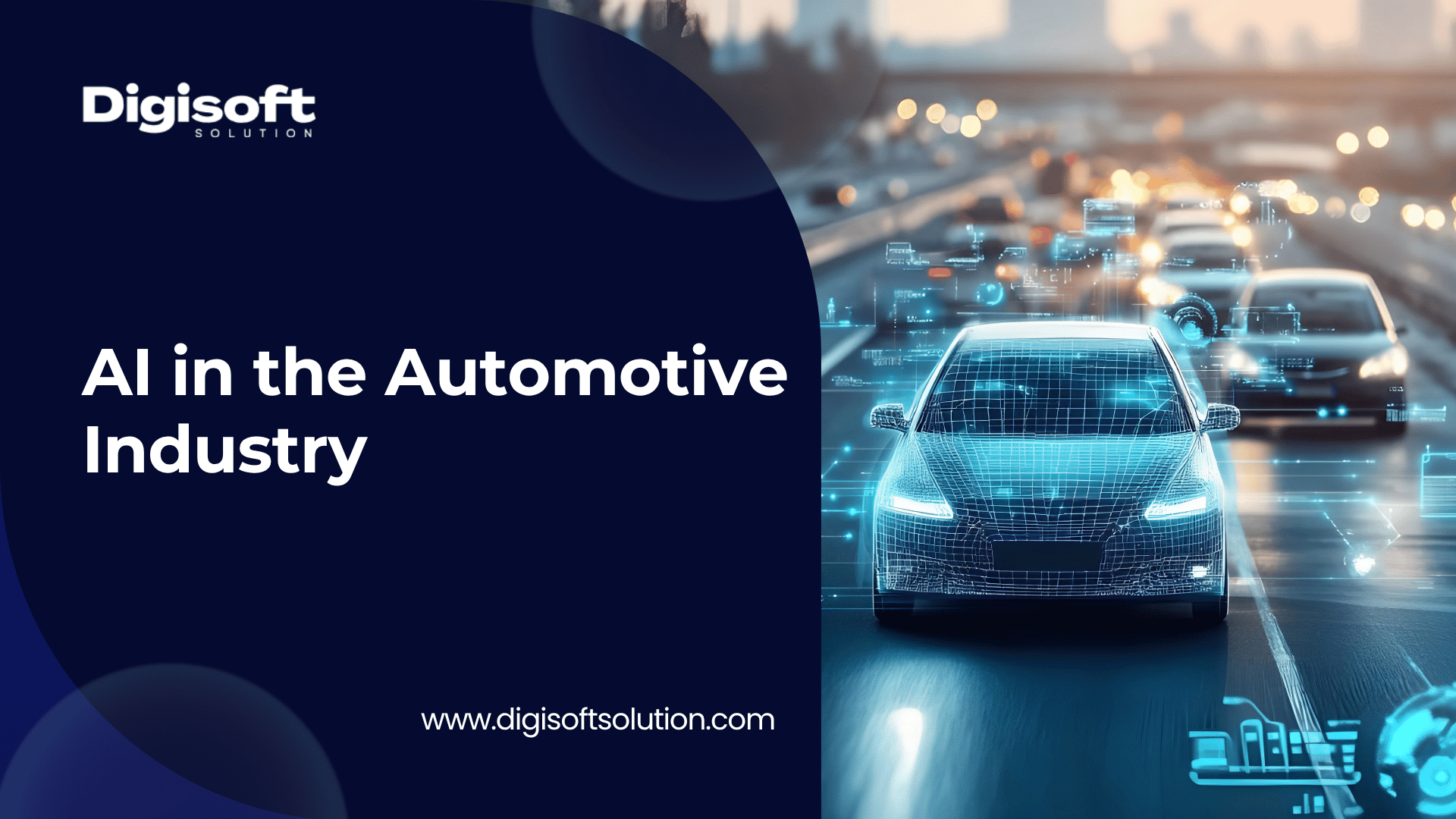
Cars used to get judged mostly on horsepower and looks. Now, the real competition happening between manufacturers is about whose AI is smarter, and specifically, whose AI can stop an accident before it even happens. From Tesla to Toyota to newer EV makers, every major automaker is pouring resources into artificial intelligence that watches the road, watches the driver, and reacts faster than any human ever could.
This article breaks down how AI is actually being used to build safer vehicles, what technologies sit behind it, what it realistically costs to build these systems, and where manufacturers still struggle. If you're an automotive brand, a Tier 1 supplier, or just someone trying to understand what's really happening under the hood of a "smart" car, this guide covers it in detail.
Why Safety Is the Real Battleground for AI in Cars
Every year, millions of accidents happen because of human error, things like delayed reaction time, distraction, fatigue, or simply not seeing a hazard in time. AI doesn't get tired, it doesn't check its phone, and it can process information from multiple sensors at once, something no human driver can physically do.
That's the core reason manufacturers are investing this heavy in AI. It's not just a marketing feature anymore, it's becoming a regulatory expectation and a customer expectation both.
How AI Actually Makes Cars Safer (Core Technologies Explained)
Let's get into the actual technology, because "AI safety" is a broad term that covers several very different systems working together.
1. Sensor Fusion: Radar, LiDAR, and Cameras Working Together
Sensor fusion is the process of combining data from multiple types of sensors, radar, LiDAR, and cameras, into one unified understanding of what's around the vehicle. By 2026, sensor fusion has become core infrastructure across advanced driver assistance and automated driving platforms rather than an experimental feature, letting vehicles interpret different data streams together for more consistent performance in changing light and weather conditions.
This matters because no single sensor is perfect. Cameras struggle in fog, radar struggles with fine detail, and LiDAR can get expensive. AI blends all three data types together to fill each other's gaps:
- Cameras detect lane markings, traffic signs, and pedestrians
- Radar tracks the speed and distance of nearby objects, even in bad weather
- LiDAR builds a precise 3D map of the surroundings
- AI models combine all three in real time to make a single, reliable decision
Tesla's Autopilot system, for example, integrates eight cameras along with radar and onboard AI, handling roughly 2.5 billion data points every second to detect vehicles, pedestrians, and obstacles. That's the scale of computation running behind what looks like a simple "lane assist" light on your dashboard.
2. Computer Vision and Object Detection
Computer vision is what lets a car "see" the way a human does, only faster and without blinking. AI models trained on millions of road images can recognize pedestrians, cyclists, animals, potholes, and even partially hidden objects.
Companies like Ambarella build low-power camera and AI chips that combine high-resolution video with radar processing and neural network acceleration, so vehicles can read the road and make decisions in real time. These chips also double up for in-cabin monitoring, which brings us to the next point.
3. Driver Monitoring Systems (DMS)
Not all safety AI looks outward. A big chunk of it is pointed directly at the driver. Cameras and infrared sensors inside the cabin track eye movement, head position, and blink rate to detect drowsiness or distraction.
If the system notices the driver's attention is drifting, it can:
- Sound an alert or vibrate the seat
- Tighten the seatbelt slightly as a warning
- Slow the vehicle down gradually
- Take over emergency braking if the driver doesn't respond in time
This is becoming especially important as more vehicles offer hands-free highway driving. Newer ADAS platforms entering production are consolidating features like lane centering, adaptive cruise, and traffic jam assist into a single unified system that enables extended hands-free operation. More automation on the road side actually increases the need for stronger monitoring on the driver side, not less.
4. Predictive Safety and Collision Avoidance
Older safety systems reacted after something went wrong. AI based systems now try to predict trouble before it happens, things like a car merging too fast, a pedestrian stepping off a curb, or a vehicle braking sharply two cars ahead.
Machine learning models are trained on huge datasets of near-miss and crash scenarios, so the system learns the patterns that usually come right before an accident. With generative AI, this process is also becoming more adaptive, since newer models can fill in data gaps synthetically, simulate possible outcomes, and predict and react to changes in real time.
5. Digital Twins and Simulation Based Crash Testing
You can't test every possible road scenario in real life, it's expensive, slow, and sometimes genuinely dangerous. That's why manufacturers now build digital twins, virtual replicas of vehicles and driving environments used to simulate thousands of crash and near-crash scenarios digitally.
OEMs and suppliers are increasingly leaning on simulation platforms and digital twins to validate AI powered ADAS performance across diverse scenarios, since this kind of testing needs robust validation and regulatory alignment. This lets manufacturers catch flaws in the software logic before a single physical prototype ever hits a test track.
6. Predictive Maintenance
Safety isn't only about the moment of a crash, its also about preventing mechanical failure before it becomes dangerous. AI models analyze data from a vehicle's sensors, engine temperature, brake wear, tire pressure, battery health, to flag issues before they turn into a road hazard.
This is one of the more underrated uses of AI in automotive. It quietly prevents accidents that would've otherwise gotten blamed on "mechanical failure."
7. Over the Air (OTA) Updates and Continuous Learning
Modern vehicles aren't static anymore. Manufacturers push AI model updates over the air, meaning a car's safety software actually gets smarter after you've already bought it. If a new edge case gets discovered, say a strange intersection layout causing false alerts, it can be fixed and pushed to the entire fleet without a physical recall.
Where This Sits on the Automation Scale
It helps to understand that "AI safety features" and "self-driving cars" are not the same thing. The industry uses SAE levels, 0 through 5, to describe automation:
- Level 0 to 1: Basic driver assistance, automatic emergency braking, adaptive cruise control
- Level 2: Partial automation, driver must stay engaged. Most current AI safety systems fall here.
- Level 3: Conditional automation, car handles most driving, driver takes over when asked
- Level 4 to 5: High to full automation, minimal or no human input needed
Most of what's discussed above, sensor fusion, driver monitoring, predictive braking, sits at Level 2, which is where the majority of production vehicles are today.
Real Manufacturer Examples Worth Knowing
- Tesla relies heavily on camera based vision AI combined with radar for its Autopilot and FSD systems.
- Mobileye (an Intel company) supplies ADAS chips and software used across dozens of automakers, and its solutions now power over 60 million vehicles globally.
- Waymo has logged extensive real world autonomous miles by combining lidar, radar, and camera fusion.
- Ambarella supplies AI chips used for both external ADAS vision and in-cabin driver monitoring across multiple OEMs.
Challenges Manufacturers Face While Implementing AI Safety Systems
It's not all smooth sailing, honestly. There's a reason this rollout has taken over a decade and it's still not fully "solved".
Data Quality and Rare Edge Cases
AI is only as good as the data it's trained on. Rare, unusual scenarios, a mattress falling off a truck, a kid chasing a ball into the street, are hard to train for simply because there isn't enough real world data on them.
Regulatory and Legal Uncertainty
Safety standards differ by country, and regulators are still catching up to how fast this technology is moving. The NTSB has already flagged concerns that drivers over-relying on automated systems contributed to fatal crashes, which is pushing regulators toward stronger safety standards and better oversight of automated driving systems. This kind of scrutiny means manufacturers can't just ship AI features, they need documentation, validation, and fail-safes built in from the start.
Cybersecurity Risks
A connected, AI driven vehicle is also a bigger attack surface. If a safety system can be updated remotely, it can theoretically be tampered with remotely too. Manufacturers now need cybersecurity built into the software architecture from day one, not bolted on afterward.
Cost and Integration Complexity
This one's real, and it's the part most articles either skip or get flat out wrong. Let's actually break it down properly below.
The Cost Factor: Is Investing in AI Safety Systems Actually Worth It?
Here's where a lot of internet articles get sloppy, they throw out one number for "AI automotive software development cost" without actually explaining whether that number even makes technical sense. So let's break this down properly instead of copying a generic figure.
Building AI powered safety software isn't a single flat cost. It depends on compute requirements, sensor integration, and how much validation and testing the system needs before it's safe to ship. Compute platforms for ADAS and autonomous driving now require anywhere from 30 to 1,000 TOPS (Tera Operations Per Second) depending on the level of autonomy being targeted, and that directly affects both hardware and engineering cost. That's a wide range, and it's exactly why "how much does it cost" doesn't have one honest, one-line answer.
|
Development Scope |
What It Typically Includes |
Realistic Cost Range |
Is It Worth It? |
|
Basic ADAS software (Level 1 to 2 features) |
Lane assist, adaptive cruise, basic collision alerts |
$40,000 to $120,000 |
Yes. This is the baseline most regulators and customers already expect. |
|
Sensor fusion and computer vision pipeline |
Multi-sensor integration, real-time object detection models |
$150,000 to $500,000 |
Yes, if you want a genuinely differentiated safety feature, this is where the real value shows up. |
|
Driver monitoring system (DMS) |
In-cabin AI for drowsiness and distraction detection |
$80,000 to $250,000 |
Worth it. Regulators are pushing this direction anyway, especially with hands-free driving on the rise. |
|
Simulation and digital twin testing platform |
Virtual crash testing, scenario validation before production |
$100,000 to $400,000+ |
Yes. It reduces long-term cost by catching failures before physical prototyping. |
|
Full AI safety stack with OTA updates |
End-to-end system with continuous learning and remote fleet updates |
$500,000 to $2,000,000+ |
Depends on scale. Makes sense for OEMs shipping large fleets, overkill for a single niche product. |
So is it worth the cost? Technically speaking, yes, in most cases. The cost of NOT investing tends to be higher long term: recalls, liability lawsuits, insurance claims, and reputational damage from safety failures usually cost far more than the upfront engineering spend. Advanced sensors already provide more accurate data and improve safety maneuvers across lane keeping, auto parking, and braking, which directly reduces the kind of incidents that lead to expensive recalls in the first place.
Where it's NOT worth it, is when a manufacturer tries to build the "full stack" without actually needing Level 3 or higher features. That's just unnecessary spend for a use case that doesn't need it. The smarter move, technically, is scoping the AI system to the automation level your product actually targets, not the most advanced thing available in the market.
How Digisoft Solution Helps Automotive Manufacturers With AI Development Services
This is exactly the kind of layered, safety-critical engineering work Digisoft Solution specializes in. If you're an automotive brand, a Tier 1 supplier, or a mobility startup trying to build or scale AI powered safety features, here's how our team can actually help:
- Custom AI and Automotive Software Development: We build tailored software for ADAS features, sensor data pipelines, and predictive safety models through our Automotive Software Development services, designed around your vehicle architecture and compute constraints.
- Enterprise Grade System Integration: Safety software needs to talk to dozens of other vehicle and backend systems reliably. Our Enterprise Software Development team builds the infrastructure that connects sensor data, fleet management, and OTA update systems.
- Cloud Infrastructure for Fleet Wide AI Updates: Pushing model updates safely across thousands of vehicles needs solid cloud architecture, which we handle through our Cloud Application Development services.
- Product Strategy Before Development: Before writing a single line of code, we help manufacturers scope the right automation level for their product through our Product Development and IT Consulting services.
- Rigorous QA and Validation: Safety software cannot ship with bugs. Our Software Testing team runs the kind of scenario based and regression testing that safety-critical automotive systems actually demand.
- Proven Delivery Track Record: We've delivered similar AI-driven, data-heavy platforms across industries. You can see the depth of our engineering work in our Case Studies, including AI powered analytics and intelligence platforms we've built for other clients.
You can also read more automotive and AI focused engineering breakdowns on our Insights Blog, or get in touch with our team directly if you're scoping an AI safety project right now.
The Future of AI in Automotive Safety
The next few years are going to push AI in cars further, not just as a safety add-on but as the core operating layer of the vehicle. A few directions worth watching:
- Software-defined vehicles: Central compute platforms replacing dozens of separate ECUs, making AI updates faster and cheaper to deploy fleet-wide.
- V2X communication: Vehicles talking to infrastructure and to each other, giving AI systems more context than onboard sensors alone can provide.
- Lower cost LiDAR: Solid state LiDAR pricing is expected to keep dropping through 2027 to 2030, which should make advanced sensor fusion affordable even for mid-range vehicles, not just premium ones.
- In-cabin generative AI: Beyond drowsiness detection, expect richer conversational and context-aware in-cabin assistants that also factor into overall safety monitoring.
Common Questions People Ask About AI in Automotive Safety
A few questions come up constantly around this topic, so it's worth addressing them directly.
Is AI making cars safer or more dangerous?
Overall, safer. AI reduces reaction time and catches hazards humans often miss. The risk isn't the AI itself, its drivers over-trusting Level 2 systems and disengaging completely, which regulators are actively working to address.
Can AI completely eliminate car accidents?
Not currently, and probably not for a long while. AI reduces the frequency and severity of accidents significantly, but rare edge cases, sensor limitations, and human unpredictability on the road mean zero accidents isn't a realistic near-term promise.
Do I need to trust AI over my own driving instincts?
No. Current production systems, mostly Level 2, are designed to assist a driver, not replace their judgment. Its meant to be a second set of eyes, not a substitute for attention.
Does AI in cars need an internet connection to work?
Core safety functions like emergency braking and lane keeping run locally on the vehicle's own compute hardware, so they work without connectivity. Internet connection is mainly needed for OTA updates and some cloud-based features.
Which car brands use the most advanced AI safety features?
Tesla, Mercedes-Benz, BMW, and several Chinese EV makers are generally considered ahead on AI-driven ADAS, largely because of heavy investment in sensor fusion and in-house AI chip or software development.
Frequently Asked Questions
What is the safest AI feature in a modern car?
Automatic emergency braking combined with sensor fusion is widely considered the single highest-impact safety feature, since it directly prevents the most common type of accident, rear-end and frontal collisions.
How much does it cost to build AI based ADAS software?
It depends on scope. Basic ADAS features can start around $40,000, while a full AI safety stack with sensor fusion, simulation testing, and OTA updates can run past $2 million. The table earlier in this article breaks down realistic ranges by scope.
Is Level 2 autonomy considered safe?
Yes, when used as intended, with the driver staying attentive and ready to take over. Problems arise mainly when drivers treat Level 2 systems like full self-driving, which they are not.
Can AI powered cars be hacked?
Theoretically yes, any connected system carries some risk. That's why manufacturers now build cybersecurity into the software architecture from the start, rather than adding it later.
What's the difference between ADAS and full self-driving?
ADAS (Advanced Driver Assistance Systems) assists a human driver, think lane keeping or adaptive cruise. Full self-driving aims to remove the human from the driving task entirely. Most production vehicles today use ADAS, not true full self-driving.
How can Digisoft Solution help automotive companies build AI safety features?
Digisoft Solution helps automotive brands and Tier 1 suppliers design, build, and test AI powered safety software, from sensor fusion pipelines to driver monitoring systems, through our dedicated Automotive Software Development team. You can book a free consultation to discuss your project scope and get a realistic cost and timeline estimate.
Final Thoughts
AI in automotive safety isn't a future concept anymore, it's already sitting in millions of vehicles on the road right now, quietly preventing accidents most drivers never even notice were about to happen. The manufacturers who get this right aren't the ones chasing the flashiest feature list, they're the ones building the right level of AI for their actual product, testing it properly, and shipping it with real validation behind it.
If your team is planning an AI powered safety feature or automotive software project, Digisoft Solution can help you scope it, build it, and test it properly. Explore our Automotive Software Development services or reach out for a free consultation to get started.
Digital Transform with Us
Please feel free to share your thoughts and we can discuss it over a cup of coffee.