JustYou: Designing a High-Trust Wellness Commerce Experience on Shopify









About The Client
JustYou
- IndustryHealth & Wellness
- RegionDallas, Texas, United States
- PlatformShopify
- Delivery6-Month Implementation + Ongoing Maintenance
JustYou operates as a direct-to-consumer e-commerce brand with a business model centered on offering flexible purchasing structures for its product range. The client required a flexible Shopify system capable of supporting multiple purchase models within a single storefront.
Operationally, the business required a system that could support varied purchasing rules without increasing backend management complexity. The emphasis was on maintaining a single source of control for product data while allowing dynamic interpretation of that data across different purchasing scenarios. The objective was to centralize product management while supporting flexible purchasing workflows across multiple commerce scenarios.
Project Overview
Unified Shopify Architecture For Subscriptions, Bundles & Variants
JustYou required a scalable Shopify architecture capable of supporting subscriptions, bundles, and variant-driven purchase flows within a unified storefront experience. The existing implementation relied heavily on fragmented third-party apps. This led to inconsistent product logic, pricing conflicts, and degraded storefront performance.
Digisoft Solution built a Shopify product orchestration layer using Liquid, the AJAX Cart API, metafields, and client-side state sync to deliver a seamless, multi-model buying experience.
The implementation leveraged Shopify’s core infrastructure for product and inventory management and checkout. Custom storefront logic was introduced using Liquid, metafields, and client-side JavaScript to manage dynamic product behavior.
Shopify Cart and Selling Plan APIs were used for structured purchasing flows. The solution maintained storefront stability while enabling flexible purchasing workflows.
The Concept
Configurable Products With Unified Purchase Flows
The system supports configurable products with multiple purchasing options, rather than relying on a fixed product structure. Product behavior dynamically changes based on user selections and is managed at the storefront using client-side JavaScript. Variant, bundle, and subscription states are synchronized with Shopify’s Cart API using structured payload mapping.
Subscriptions were integrated using Shopify Selling Plans in conjunction with a subscription provider to maintain native checkout compatibility. The system supported complex product configurations without requiring duplicate product records or separate storefront flows.
Bundles were managed as linked cart line items using shared bundle IDs, line-item properties, and metafields. This ensured consistent bundle grouping, configuration traceability, and synchronized cart behavior across checkout workflows.

Key Challenges Addressed
Fragmented Apps Required Control Over Logic, State & Performance
Fragmented Product Logic
Fragmented Shopify apps separately managed variants, bundles, and subscriptions without a unified layer. This created disconnected workflows for purchasing, pricing, and configuration, along with purchase logic, leading to inconsistent storefront behavior and poor cross-feature coordination.
State Synchronization Issues
The product selection state was not consistently synchronized across standard, bundle, and subscription purchase flows. As users switched configurations, inconsistencies appeared across variant selection, subscription plans, and cart data generation. This led to incorrect pricing, mismatched configurations, and unstable product rendering across interaction flows.
Third-Party Script Overhead
The storefront performance was impacted by multiple third-party scripts injected into the product page. These scripts introduced redundant computation layers, increased DOM processing overhead, and reduced storefront responsiveness due to competing client-side execution contexts.
Lack of Centralized Product Control
Shopify’s native product system was extended using multiple app-level abstractions, limiting the ability to implement centralized business rules for variant resolution, bundle composition, and dynamic pricing logic. This prevented consistent enforcement of product configuration rules across different purchase pathways.
Distributed Pricing Logic
Pricing logic for variants, bundles, and subscriptions was distributed across separate app systems without a unified rule engine. This led to unpredictable pricing behavior in edge-case configuration scenarios, particularly when multiple configuration rules intersected, making final cart pricing less predictable.
Cart Schema Inconsistency
A structural mismatch existed between the client-side product configuration state and Shopify’s cart line-item property schema. Product selections were not consistently mapped to Shopify’s cart line-item structure, resulting in incomplete data during checkout. This led to the incomplete transfer of product configuration data and configuration metadata into the final order payload.
Technical Solutions We Implemented
Unified Product Orchestration For Consistent Shopify Commerce
A synchronized client-side state layer unified variant, bundle, and subscription logic across Shopify OS 2.0 storefront components with metafield-driven configuration mapping and cart payload normalization.
Unified Shopify Product Logic System
A synchronized client-side state layer unified variant, bundle, and subscription logic across Shopify OS 2.0 storefront components. Metafield-driven configuration mapping and cart payload normalization reduced dependency on multiple third-party storefront apps and improved configuration consistency.
Real-Time Product Interaction and Pricing System
A JavaScript-driven interaction layer enabled real-time updates for pricing, variants, SKU mapping, and availability using Shopify AJAX Cart API workflows and section-based rendering logic. Product configurations are updated instantly without page reloads, improving storefront responsiveness and consistency of interactions.
Unified Purchase Flow
Standard purchases, bundles, and subscription options were consolidated into a single PDP interaction model within the product page. Shopify's selling plans and synchronized cart handling maintained consistent purchasing behavior across all product interaction flows.
Structured Cart Data Handling via Shopify Cart API
Shopify Cart API line-item properties preserved bundle relationships, product configuration metadata, and cart mappings throughout checkout flows. Subscription handling was managed separately through Shopify selling plan IDs, while inventory validation logic prevented incompatible bundle combinations during cart creation.
Front-End Performance Optimization
Storefront performance improved after consolidating fragmented scripts into a unified interaction layer and reducing third-party storefront app injections. Lighthouse audits, storefront monitoring, and Core Web Vitals analysis validated improvements in rendering speed, responsiveness, and frontend execution efficiency.
Centralized Pricing and Configuration Control
Pricing rules, bundle logic, and configuration handling were centralized into a controlled synchronization layer. Variant availability, inventory conditions, and selling plan requirements dynamically updated storefront configurations to reduce pricing inconsistencies and product configuration conflicts across purchase flows.
Screens From the Live Build
Surfaces We Designed & Engineered Into Production
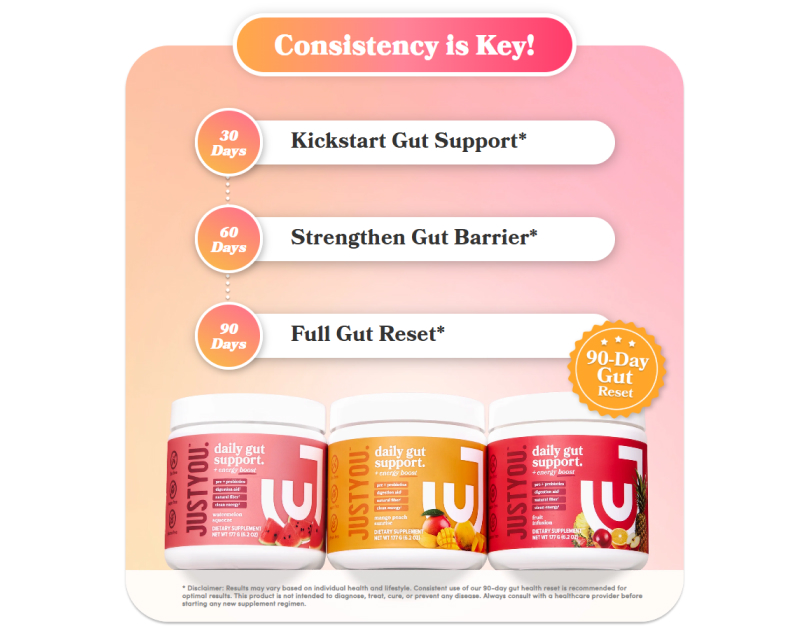
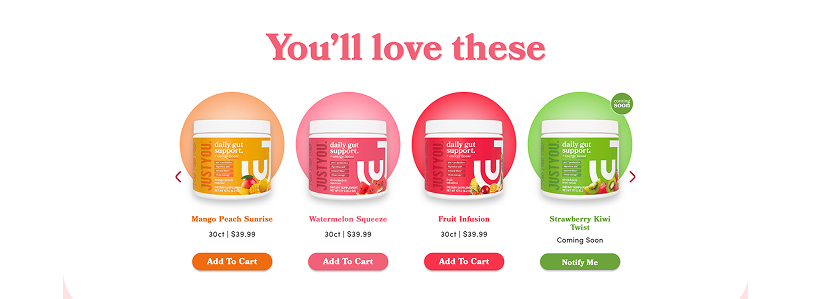
Selected moments from the JustYou Shopify storefront where unified product configuration, subscriptions, bundles, and optimized checkout flows come together for a high-trust wellness commerce experience.




Core Features & Functionalities
Designed For Flexible D2C Wellness Commerce
- Responsive Shopify Storefront: The platform is built on a fully responsive Shopify theme, ensuring consistent usability across mobile, tablet, and desktop devices. All product interactions were optimized for smooth navigation and selection across all screen sizes.
- Native Shopify Commerce Operations: Core commerce operations, including product catalog management, cart handling, and checkout processing, are powered by Shopify’s native system. This ensures secure transactions and stable order processing.
- Variant-Based Product Configuration: Products support structured variant selection with real-time updates to price, availability, and product identifiers. Users can switch between variants without page reloads, ensuring a continuous user experience.
- Unified Product Purchase Interface: All purchase modes, standard products, bundle selections, and subscriptions are combined into a single product interface. The unified interface eliminated fragmented purchase flows and maintained a consistent selection experience.
- Bundle Product Configuration: Products can be grouped into structured bundles within the same product page. Bundle selection and grouping logic were handled directly within the product experience rather than in external applications.
- Subscription-Based Purchase Option: Customers can choose between a one-time purchase and subscription-based delivery directly on the product page. Subscription selection is integrated directly into the same purchase flow as other buying options.
- Real-Time Pricing Updates: A client-side pricing engine recalculated totals in real time based on selected variants, bundles, and subscription configurations. Displayed totals remained synchronized with Shopify-compatible pricing rules and were validated before cart submission to prevent checkout mismatches across purchase flows.
- Optimized Front-End Performance: The storefront is optimized by reducing dependency on third-party apps and consolidating product logic into a single implementation. This improved load speed and interaction responsiveness.
Tech Stack We Used
Tools Chosen For Shopify OS 2.0 Performance
Shopify Liquid · HTML5 · CSS3 · JavaScript (ES6) · Shopify AJAX API · JSON
Custom theme engineering with AJAX API workflows and Online Store 2.0 JSON section templates.
Shopify Online Store 2.0
Native commerce, checkout, subscriptions, and structured cart line-item handling.
Metafields · Dynamic Sources
Configuration mapping for bundles, variants, and product behavior without duplicate records.
Shopify Checkout
Secure, native checkout with subscription and bundle compatibility.
Testing & Quality Assurance
Validated For Accuracy, Consistency & Performance
- End-to-end purchase flows were validated to ensure product selections persisted correctly from storefront interaction through checkout completion.
- QA workflows covered multiple variant combinations, bundle scenarios, and subscription paths to validate pricing accuracy and cart consistency.
- Pricing behavior was checked under multiple conditions to ensure correct recalculation when product options were changed.
- Cart output consistency was reviewed to confirm that all selected configurations were correctly translated into the Shopify cart data structure.
- Responsive testing ensured stable functionality across mobile, tablet, and desktop devices.
- Performance testing validated storefront responsiveness during interaction-heavy product flows.
Our Development Approach & Timeline
Phased Delivery Across 6 Months
The implementation followed a phased approach—planning product architecture first, then building unified purchase logic, optimizing performance, and deploying with ongoing maintenance support.
Product Architecture Planning & Requirement Analysis
Commerce workflow definition and Shopify architecture specification.
Shopify Theme Engineering & UI Structure Setup
OS 2.0 theme foundation and responsive storefront structure.
Variant, Bundle & Subscription Logic Development
Unified product orchestration and client-side state layer.
Cart Synchronization & Purchase Flow Integration
Cart API payloads, selling plans, and checkout compatibility.
Performance Optimization & Script Refactoring
Third-party script reduction and Core Web Vitals improvements.
QA, Deployment & Ongoing Maintenance
End-to-end validation, launch, and continuous storefront support.
Measurable Outcomes
Commerce Performance Gains From Unified Shopify Delivery
The following metrics were observed through comparative analysis of storefront behavior before implementation (app-based architecture) and after deployment of the custom Shopify solution. Performance data was monitored over a consistent post-launch tracking period using storefront analytics, cart event monitoring, and checkout behavior analysis.
Page load time (down from 3.8 seconds)
Reduction in cart configuration mismatches
Improvement in UI response timing during product configuration
Fewer product configuration errors after centralizing logic
The final implementation created a scalable Shopify storefront capable of supporting complex purchasing workflows, with improved stability and reduced reliance on third-party systems. The platform now delivers consistent product behavior, improved storefront responsiveness, and a more maintainable commerce workflow for future expansion.
The platform now delivers consistent product behavior, improved storefront responsiveness, and a more maintainable commerce workflow for future expansion.