DrinkDrinks: Building a Scalable Multi-Supplier Shopify Commerce System for a Regulated Beverage Marketplace








About The Client
DrinkDrinks
- IndustryAlcohol & Beverage eCommerce
- RegionAustralia
- PlatformShopify
- Delivery3 Months
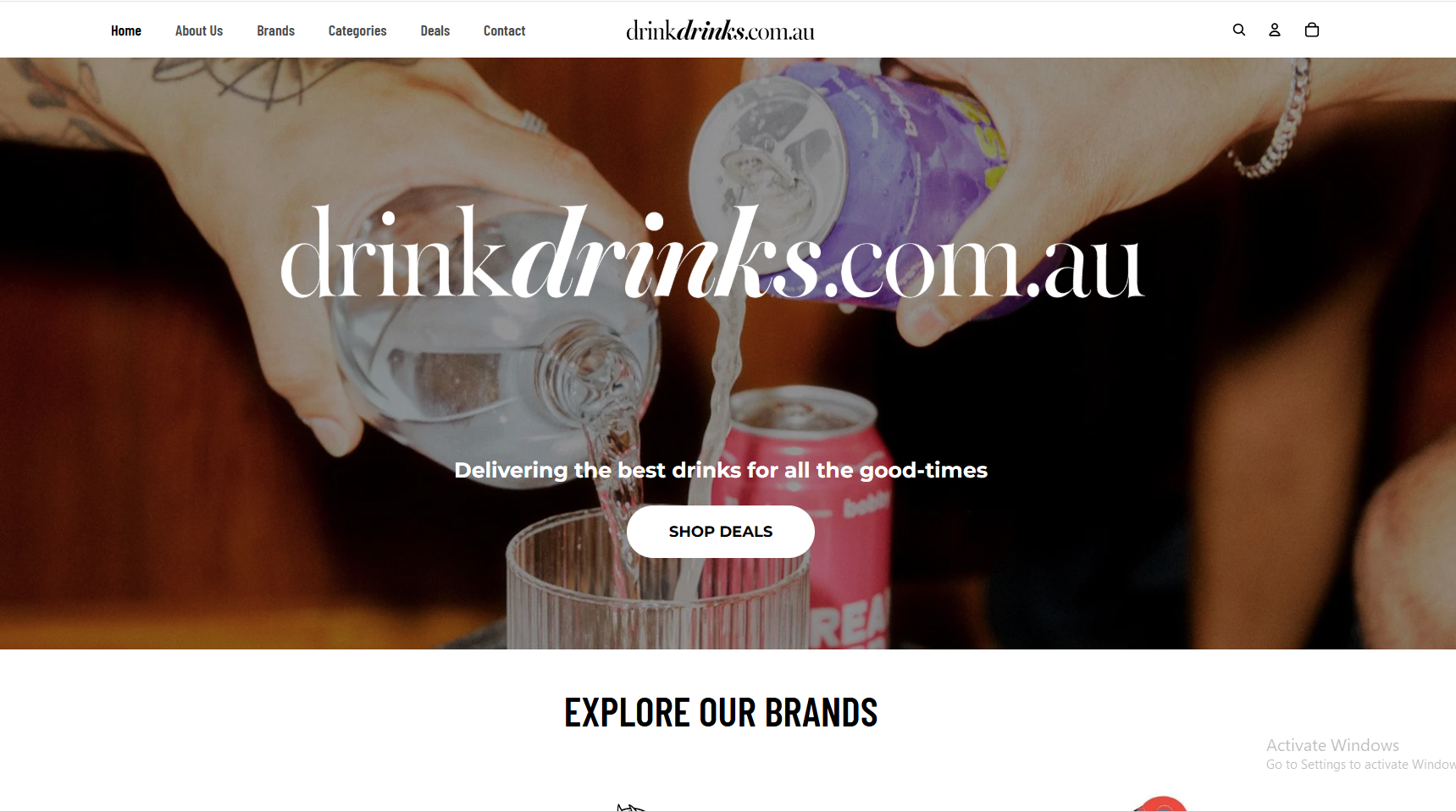
DrinkDrinks is an Australian online beverage retailer operating through a centralized digital commerce model. The business aggregates multi-supplier product feeds managed through Shopify product imports, metafields, and inventory synchronization workflows. The business manages a continuously updated inventory of alcoholic beverages across categories such as beer, wine, spirits, and ready-to-drink products. These are maintained and presented through a single customer-facing platform.
Its operations depend on accurate coordination between supplier inputs, pricing updates, and delivery availability across different regions in Australia. The business also operates under regulated sales conditions that mandate region-based delivery validation and controlled access to age-restricted products across both the storefront and checkout experience. Product updates were dependent on supplier-driven inventory feeds, requiring frequent synchronization and validation against Shopify’s product variant structure.
Project Overview
High-SKU Beverage Catalog Rebuilt With Scalable Shopify Architecture
DrinkDrinks needed a scalable Shopify setup to manage a rapidly growing beverage catalog spread across multiple suppliers and categories. The existing Shopify collection architecture and tag-based classification system struggled to scale efficiently.
Inconsistent filtering logic, deeply nested collection hierarchies, and manual product updates across supplier-driven inventory feeds created operational complexity. This created performance and operational inefficiencies while managing a high-SKU environment with regulated product constraints.
Digisoft Solution was engaged to refactor the Shopify Online Store 2.0 theme architecture, including collection templates, metafield schema design, and filtering logic. The objective was to improve browsing stability and ensure reliable performance during high traffic and promotions. It was also crucial to maintain compliance for age-restricted products while supporting delivery-based purchasing rules.
The Concept
Unified Browsing Across Multi-Supplier Beverage Categories
The platform architecture was implemented using Shopify Collections, navigation menus, and metafield-driven product classification to create a unified browsing system across multiple beverage categories. The navigation model was implemented using Shopify collection hierarchies, automated metafield filtering, and predictive collection routing. This minimized dependency on deeply nested taxonomy structures.
The structure reduces unnecessary navigation depth by maintaining direct access paths between categories and product detail views.
The overall flow is defined by a simplified progression from discovery to selection to checkout—ensuring user movement through the catalog followed a consistent and flattened collection hierarchy with persistent filtering across category transitions.
Key Challenges Addressed
High-SKU Catalog Scale Met With Structured Filtering & Compliance
Catalog Scaling Limits
Default Shopify tag-based filtering and the collection hierarchy introduced scalability limitations for high-SKU catalogs. This led to inconsistent filtering logic, duplicated category paths, and maintenance overhead across supplier updates.
Slow Product Discovery
Excessive collection nesting increased navigation depth and made product discovery less efficient. Complex filtering rules also extended the journey from category pages to product detail pages. This slowed down decision-making across the high-volume, multi-category catalog.
Unstable Supplier Data Flow
Frequent updates from multiple suppliers created inconsistencies in pricing, inventory availability, and product information. Variations in supplier feed structures and the absence of standardized metafield mapping. This resulted in mismatched catalog data and reduced product data reliability across the storefront.
Regulated Purchase Flow
Age verification is implemented at storefront entry via the theme layer, with checkout-level enforcement using Shopify Functions and shipping validation rules. This required enforcement at both the storefront entry (age gate) and checkout validation layers without disrupting the browsing experience.
Technical Solutions We Implemented
Catalog, Filtering & Compliance For Regulated Multi-Supplier Commerce
Collection restructuring, metafield-driven faceted navigation, standardized supplier sync, and embedded compliance logic were combined to improve catalog scalability, product discovery, and purchase reliability.
Rebuilt Catalog Structure
The Shopify collection architecture was restructured using a scalable taxonomy based on product type, supplier, and beverage category. Collection nesting was reduced, and tag logic was optimized to improve navigation efficiency and catalog scalability. A normalized product classification system was also implemented using collections and metafields.
Collection-Level Filtering
Implemented Shopify storefront filtering using product tags, metafields, and native collection filters within Online Store 2.0 templates to enable dynamic faceted navigation. This reduced navigation depth and improved precision in product discovery. Filtering was implemented using Shopify Online Store 2.0 native filters and metafield-driven faceted navigation through the Shopify Search & Discovery framework, where applicable.
Standardized Inventory Sync
Supplier feeds were normalized through a standardized import pipeline mapped to Shopify metafields. We ensured consistent inventory, pricing, and product data synchronization across suppliers while improving catalog accuracy, reliability, and operational scalability.
Embedded Compliance Logic
We implemented storefront-level age-gate validation with session persistence and enforced checkout-level delivery restrictions using Shopify Functions and region-based shipping rules. This ensured regulatory requirements were applied without disrupting browsing or purchase progression.
Screens From the Live Build
Surfaces We Designed & Engineered Into Production
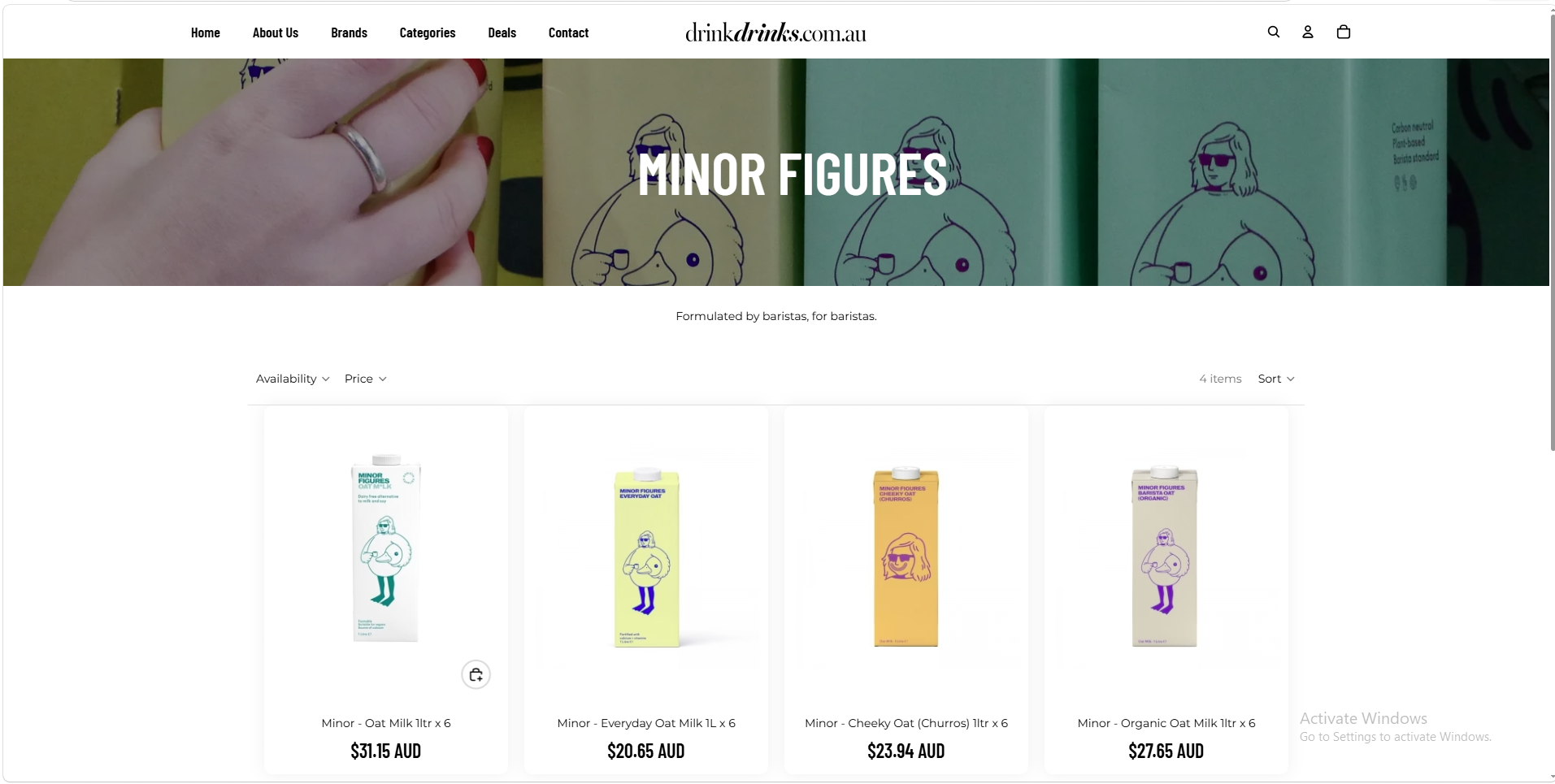
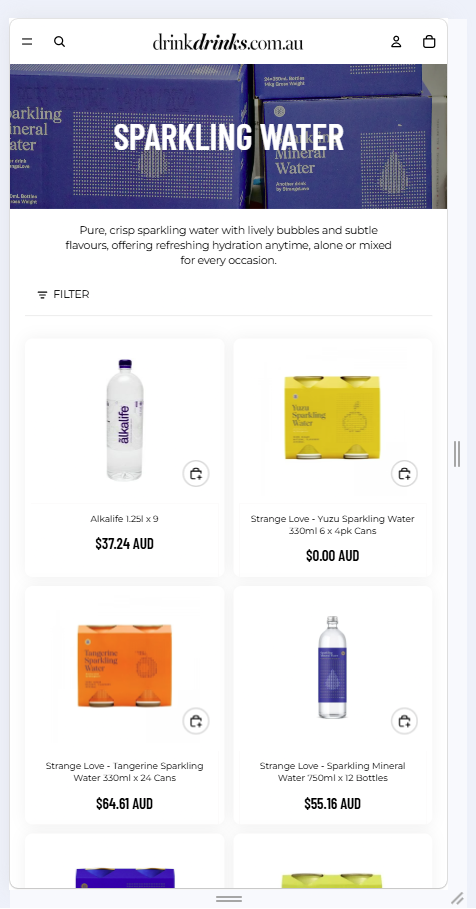
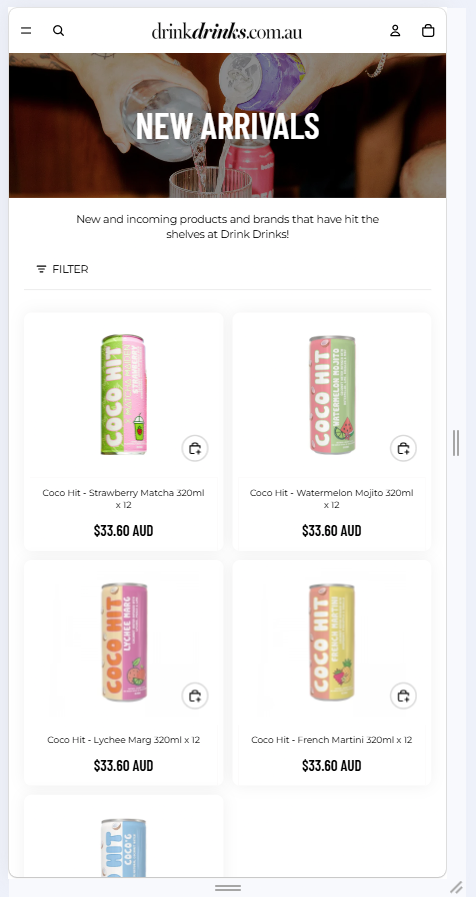
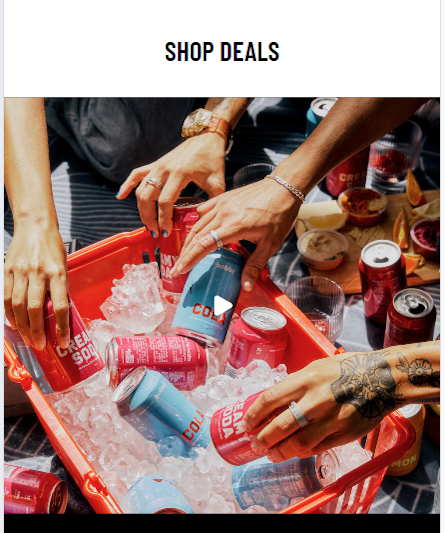
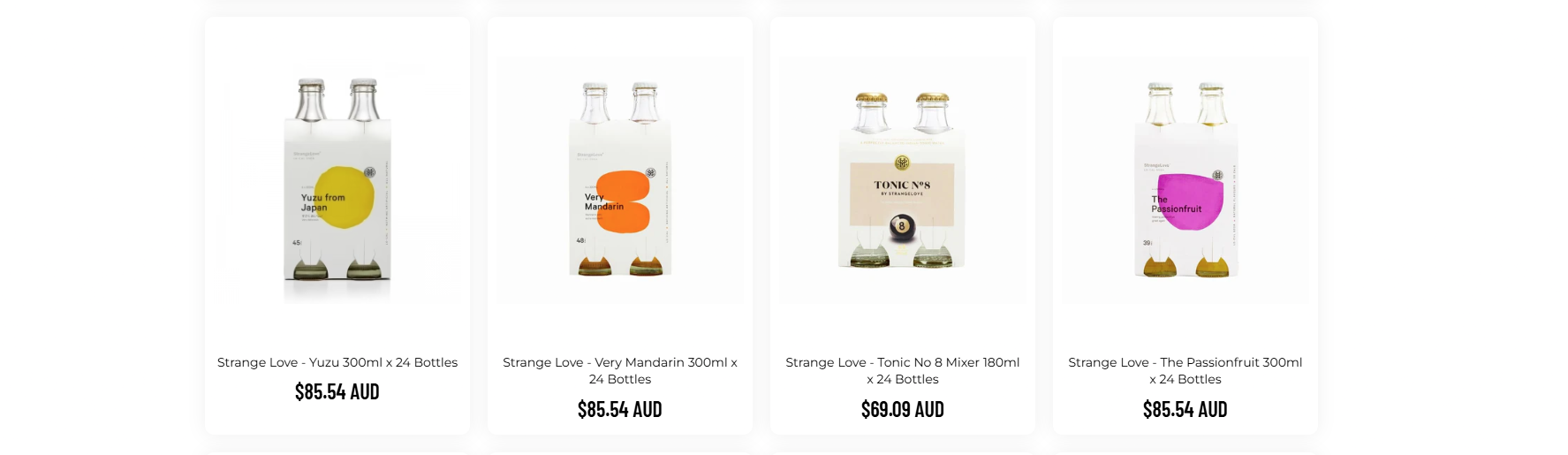
Selected moments from the DrinkDrinks Shopify marketplace—category browsing, supplier collections, faceted filtering, product pages, and compliance-ready checkout flows.
Core Features & Functionalities
Designed For Regulated Multi-Supplier Beverage Commerce
- Organized Product Catalog: The platform groups products into clearly defined beverage categories, including beer, wine, spirits, RTDs, and non-alcoholic options. This ensures a predictable structure across a large inventory system. Products were structured using Shopify Collections and metafield-driven categorization across beer, wine, spirits, RTDs, and non-alcoholic segments.
- Faster Product Access: Navigation is streamlined to reduce intermediate steps between category selection and product pages. It allows quicker movement through the catalog and improves browsing efficiency.
- Consistent Product Data Display: All product pages follow a unified structure for pricing, availability, and category placement, ensuring consistent information presentation across the entire storefront.
- Controlled Checkout Flow: The Shopify checkout flow integrates delivery zone validation and age verification enforcement prior to order completion, using configured shipping rules and conditional logic.
- Mobile-Optimized Interaction: The interface is optimized for mobile usage with simplified navigation paths and reduced interaction steps. This allows faster browsing and smoother purchase completion on smaller screens.
Tech Stack We Used
Tools Chosen For Shopify OS 2.0 & Catalog Scale
Frontend Technologies
Shopify Features & Integrations
Performance Optimization
Analytics & Tracking
Testing & Quality Assurance
Validated For Catalog Accuracy, Compliance & Checkout
Product placement verification, faceted filtering edge cases, age-gate session persistence, delivery eligibility checks, inventory sync validation, and mobile responsiveness testing.
- Verified product placement across beer, wine, spirits, RTDs, and non-alcoholic categories after supplier updates to ensure correct catalog mapping.
- Validated faceted filtering logic across edge cases, including missing metafields, overlapping tag hierarchies, and multi-supplier product variants.
- Confirmed age-gate access control and session persistence for returning users.
- Checked checkout flow for delivery eligibility and region-based restrictions using different addresses.
- Verified accurate sync of pricing and inventory updates across all product listings.
- Tested mobile responsiveness for stable navigation, layout consistency, and smooth checkout flow across breakpoints.
Our Development Approach & Timeline
Phased Delivery Across 3 Months
From discovery and theme foundation through catalog architecture, compliance systems, performance optimization, and post-launch stabilization.
Discovery & Planning
Catalog audit, supplier feed mapping, and compliance requirements definition.
Shopify Setup & Theme Foundation
Online Store 2.0 templates, metafield schema, and base theme architecture.
Catalog Architecture & Collection Structuring
Taxonomy rebuild, collection nesting reduction, and normalized classification.
Filtering, Compliance & Checkout Systems
Faceted navigation, age-gate, delivery validation, and supplier sync pipeline.
Performance Optimization & QA Testing
Cross-category validation, compliance checks, and mobile responsiveness QA.
Deployment & Post-Launch Stabilization
Production launch, analytics monitoring, and catalog sync stabilization.
Measurable Outcomes
Faster Discovery With More Reliable Catalog & Checkout
Performance metrics were derived from Shopify Analytics, GA4 events, and checkout funnel tracking. We compared matched pre- and post-implementation periods with controlled traffic, seasonality, and campaign conditions.
Product discovery time reduced from 6.2 seconds after structured filtering and navigation improvements
Mobile product page engagement increased from 1.8 pages per session after layout and navigation optimization
Inventory mismatch incidents reduced from 14% after supplier-based sync standardization
Checkout completion rate improved from 62% after introducing delivery validation and streamlined flow
The final implementation delivered a more stable and structured commerce environment for managing a large and frequently updated product catalog. Navigation complexity was reduced, product discovery became more direct, and catalog consistency improved across all beverage categories.
Operational processes such as inventory updates, compliance handling, and delivery validation were streamlined into a more controlled system flow. The platform now supports smoother browsing, more reliable product data handling, and a more efficient purchase experience across devices.