Cole & Parker: Crafting Premium Brand Experiences That Turn Attention Into Loyalty








About The Client
Cole + Parker
- IndustryFashion / Apparel
- RegionNorth America
- PlatformShopify
- Delivery6 months
Cole + Parker is a B2B commerce brand supplying products to business and commercial buyers. Their catalog spans a wide range of categories and is structured to support procurement at scale.
The business operates on a Shopify infrastructure that supports ongoing product updates, catalog organization, and high-volume browsing across its product range.
Project Overview
Shopify B2B Redesign For Faster Catalog Discovery
Cole + Parker’s existing B2B storefront faced limitations in product discovery and navigation due to its large, complex catalog structure. This made it difficult for commercial buyers to quickly locate and filter relevant products.
Digisoft Solution was engaged to redesign and restructure the Shopify-based platform. The engagement improved catalog accessibility and established a scalable architecture to support evolving inventory and bulk purchasing requirements.
The engagement focused on building a structured commerce foundation to improve product discovery and support scalable catalog expansion. It also enables efficient browsing across large product inventories.
The Concept
Simpler Discovery Across A Large-Scale Catalog
The concept centered on simplifying product discovery within a large, complex catalog by improving category navigation, search behavior, and filtering efficiency. The storefront was designed to reduce navigation friction by providing a clearer category hierarchy and attribute-based filtering.
A modular storefront structure was implemented using reusable templates, metafields, and section-based architecture to improve maintainability and scalability. This separation improved system maintainability and enabled scalable catalog expansion without disrupting core commerce functionality.
Shopify’s native checkout flow was preserved to ensure transactional stability while allowing backend catalog structures to evolve independently.
The experience prioritizes fast, predictable navigation suited to B2B purchasing behavior, where users prioritize efficiency, clarity, and direct access to relevant products.
Key Challenges Addressed
Complex Catalogs Met With Structured B2B Navigation
The platform contained a large, deeply layered product catalog. This made discovery and navigation inefficient for users, particularly B2B buyers who needed faster access to relevant products.
Deep and Complex Catalog Structure
The product catalog was extensive and layered, with multiple dependency levels between product types. This complexity made it difficult for users to locate specific products within the structure, increasing time-to-product discovery.
Inefficient Category Organization
Categories were not structured in a consistent hierarchy, resulting in overlapping groupings and unclear separation between product types. This reduced clarity when browsing and made it harder to distinguish between similar product groups.
Limited Navigation Flow
The navigation system required users to pass through multiple intermediate steps before reaching product detail pages. This created unnecessary friction in the browsing journey and slowed down product discovery.
Limited Product Filtering Options
The existing filtering system did not allow users to effectively narrow down large product sets based on multiple attributes. As a result, users often had to manually scan large product lists rather than refine results efficiently.
Storefront Not Optimized for B2B Buyers
The platform did not align well with B2B purchasing behavior, which typically involves users comparing multiple products, evaluating specifications quickly, and making bulk-oriented decisions. The system lacked support for these structured decision-making patterns.
Inconsistent Browsing Experience
The overall interface experience varied across sections and devices, resulting in inconsistent layout, product visibility, and readability. This reduced usability for users switching between desktop and mobile environments.
Technical Solutions We Implemented
Information Architecture Built For Scalable B2B Commerce
We redesigned the information architecture to improve catalog structure, navigation, and product visibility across a large-scale Shopify B2B platform. The implementation optimized data organization, filtering, and category mapping for scalable commerce operations.
Catalog Structure Re-engineering
We flattened the product taxonomy and reorganized it to reduce hierarchical depth and improve consistency in grouping. This created a more stable, maintainable structure for large-scale inventory management.
Category System Normalization
Category relationships were redefined to eliminate overlap between product groups. We introduced a standardized mapping approach to ensure consistent product placement across the catalog.
Navigation Flow Optimization
We streamlined collection and product-level navigation by reducing intermediate steps. This improves direct access between category listings and product detail pages.
Multi-Attribute Filtering System
Shopify metafields were configured as filterable product attributes and integrated with Shopify’s native storefront filtering system. This enables multi-parameter product refinement.
B2B Behavioral Alignment
We adapted product interaction flows to reflect commercial purchasing behavior. It supports bulk evaluation and multi-product comparison patterns typical of B2B buyers.
Interface Standardization
A unified template system was applied across product and collection pages to ensure consistent data presentation, layout behavior, and structural predictability.
Screens From the Live Build
Surfaces We Designed & Engineered Into Production
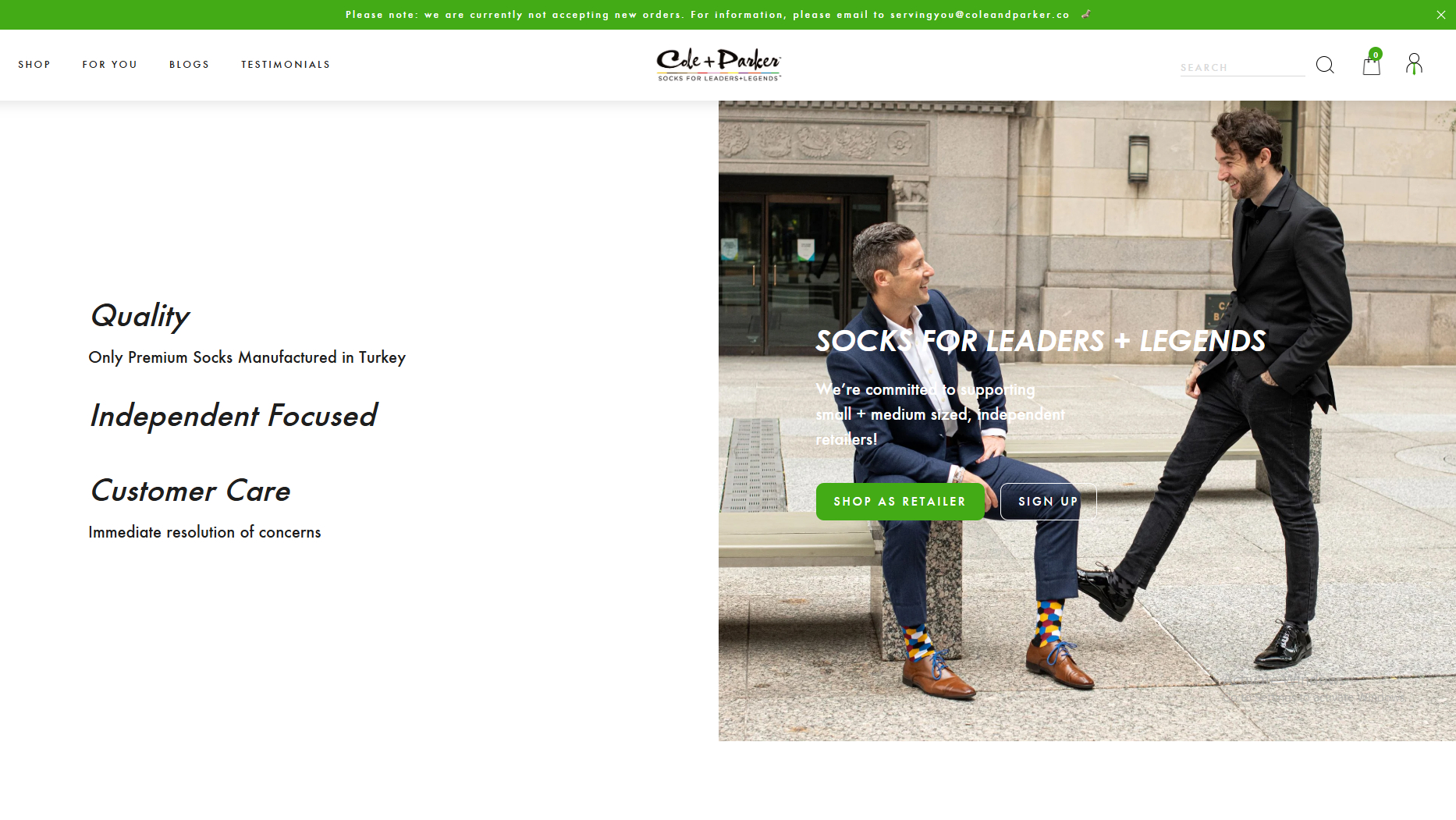
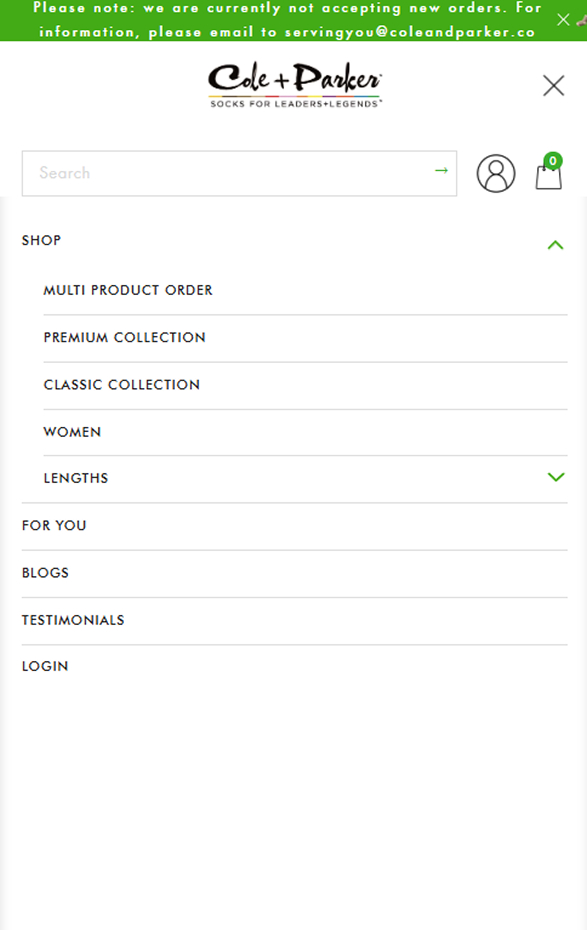
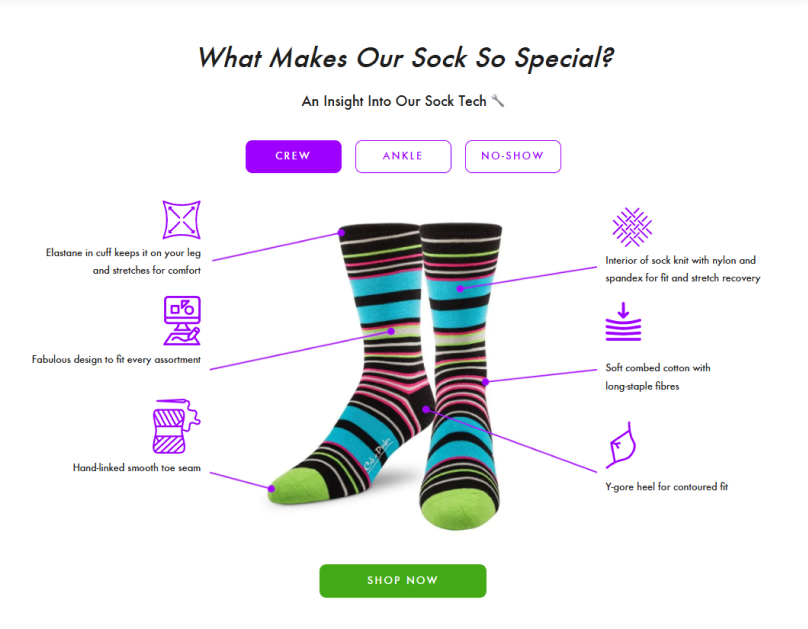
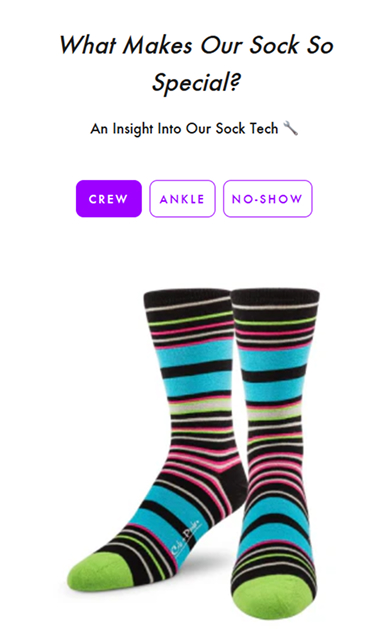
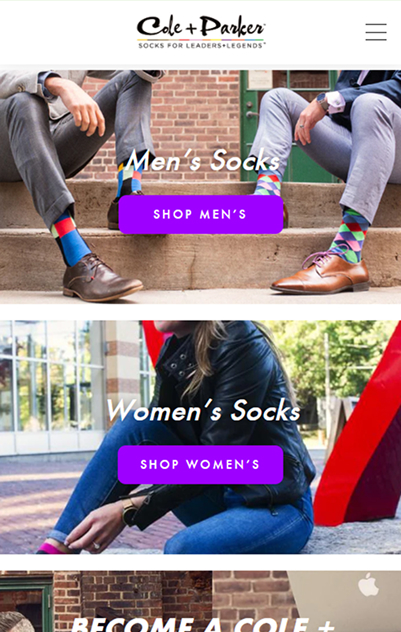
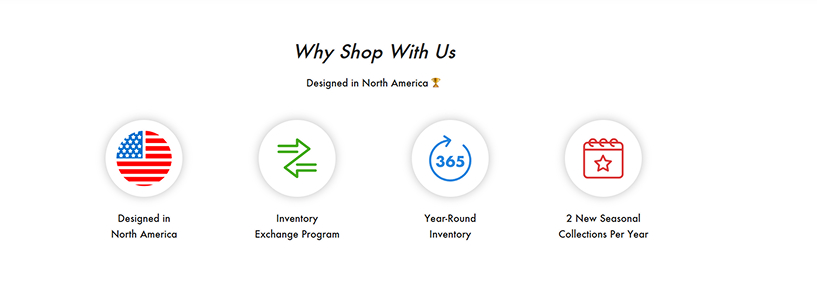
Selected moments from the Cole + Parker Shopify B2B storefront category navigation, attribute filtering, collection pages, and product evaluation flows.


Core Features & Functionalities
Built For High-Volume B2B Discovery
The platform delivers a structured commerce experience designed for high-volume buyers. We focus on efficient discovery, evaluation, and navigation across large product catalogs.
- Structured B2B Browsing Experience: Product data is presented in a standardized, business-oriented format that supports quick evaluation of specifications and variants for bulk purchasing decisions.
- Attribute-Driven Filtering: Users can refine large product sets using multiple structured attributes such as category, material, size, and design, reducing manual search effort.
- Organized Product Hierarchy: Products are grouped into logically structured categories, enabling intuitive exploration of related items within the catalog.
- Direct Product Access Flow: Navigation is streamlined to allow immediate transition from category listings to product detail pages without unnecessary intermediate steps.
- Consistent UI System: All product and collection pages follow a unified layout, ensuring a predictable information hierarchy and readability across the platform.
- Responsive Commerce Experience: The system maintains consistent performance and usability across desktop and mobile environments, supporting uninterrupted product discovery and filtering.
Technologies and Tech Stack We Used
Tools Chosen For Shopify OS 2.0 & Scalable Catalog UX
Built within Shopify Online Store 2.0 constraints using metafields, templates, and native filtering APIs without custom backend infrastructure.
Frontend
B2B catalog storefront templates and Online Store 2.0 sections with dynamic product and collection displays.
Shopify Core
Native commerce foundation without custom backend infrastructure.
Data & Content
Filterable product attributes and structured catalog metadata.
Commerce & Payment
Preserved native checkout for stable, reliable order completion.
Testing & Quality Assurance
Validated For Navigation, Filtering & Checkout
End-to-end QA across browsing paths, category hierarchy, search, cart workflows, checkout, and cross-device responsiveness.
- Product browsing paths were reviewed to ensure smooth navigation across collections and detail pages.
- Category hierarchy and filtering behavior were analyzed for accurate product organization and result consistency.
- Search performance was examined to confirm relevant product retrieval and dependable filter execution.
- Cart workflows were inspected to ensure stable add, update, and remove operations.
- Checkout processing was validated to ensure consistent, reliable order completion in Shopify.
- Cross-device compatibility was assessed to maintain responsive layouts across desktop, tablet, and mobile screens.
Our Approach & Development Timeline
Phased Delivery Across 6 Months
From discovery and information architecture through development, filtering enhancements, B2B UX alignment, testing, and deployment.
Discovery & Audit
Catalog assessment, buyer journey mapping, and baseline analytics.
Information Architecture & Planning
Taxonomy flattening, category normalization, and navigation blueprint.
Development & Implementation
OS 2.0 templates, metafields, and storefront section rollout.
Filtering & System Enhancements
Multi-attribute filters and native storefront filtering integration.
UX Optimization & B2B Alignment
Commercial buyer flows, comparison patterns, and responsive standardization.
Testing & Deployment
Cross-device QA, checkout validation, and production launch.
Measurable Outcomes
Faster Discovery With Lower Bounce & Friction
Platform improvements streamlined product discovery and filtering by reorganizing the catalog structure. This optimized navigation flow and improved filtering logic result in faster browsing and reduced decision effort for B2B buyers.
Post-implementation benchmarking used controlled user flows and session tracking to compare pre- and post-redesign performance.
Task completion time down from 5–6 minutes during internal UX benchmarking
Steps to reach product pages reduced from 5–6 intermediate steps
Reduction in bounce rate across key collection pages during first review period
Mobile usability—fully responsive and uniform browsing across all key templates
Digisoft Solutions implemented an optimization strategy focused on product exploration, navigation clarity, and scalable architecture. Through catalog restructuring, simplified user journeys, and enhanced filtering logic, the platform became faster and more predictable for commercial buyers.
The result is a storefront that accelerates product access, supports quicker purchasing decisions, and maintains operational scalability without increasing management complexity.